When your dog starts coughing, it’s easy to worry. Is it just a tickle or something serious? One common illness behind that hacking sound is kennel cough. This condition is contagious and can spread quickly among dogs, especially in places like boarding kennels, dog parks, or shelters. Knowing the signs of kennel cough can help you keep your dog healthy and prevent the illness from spreading to other pets.
In this article, you’ll discover the main symptoms of kennel cough, how the disease spreads, what it looks like at different stages, and when it’s time to call the vet. You’ll also learn about the risk factors, how to tell kennel cough apart from other illnesses, and practical tips for care and prevention.
Let’s explore everything you need to know to spot kennel cough early and protect your furry friend.
What Is Kennel Cough?
Kennel cough, also known as canine infectious tracheobronchitis, is a respiratory infection affecting dogs. The name comes from how easily it spreads in places where many dogs are together. Kennel cough isn’t caused by just one germ. It’s usually a mix of bacteria and viruses, with the most common being Bordetella bronchiseptica and the canine parainfluenza virus.
The infection attacks the lining of the dog’s windpipe and upper airways. This makes dogs cough and sometimes develop other symptoms. Kennel cough is similar to a cold in humans, but it can be much worse, especially for puppies, older dogs, or those with weak immune systems.
How Kennel Cough Spreads
Kennel cough is highly contagious. Dogs catch it mainly through:
- Direct contact: Nose-to-nose greetings, licking, or playing.
- Airborne droplets: Coughing and sneezing spread tiny germs into the air.
- Contaminated surfaces: Bowls, toys, bedding, or hands that touched an infected dog.
Some dogs can carry and spread the germs without looking sick. This makes kennel cough hard to control in crowded places. The germs can survive on surfaces for several hours, so regular cleaning is important.
Who Is Most At Risk?
Any dog can catch kennel cough, but some are more at risk:
- Puppies: Their immune systems are still developing.
- Senior dogs: Their defenses are weaker.
- Dogs with health problems: Heart disease, lung issues, or immune disorders.
- Dogs in group settings: Boarding facilities, shelters, grooming salons, doggy daycares, or busy parks.
Dogs that bark a lot or pull hard on the leash can also irritate their windpipes, making them more likely to get sick if exposed.
Classic Signs Of Kennel Cough
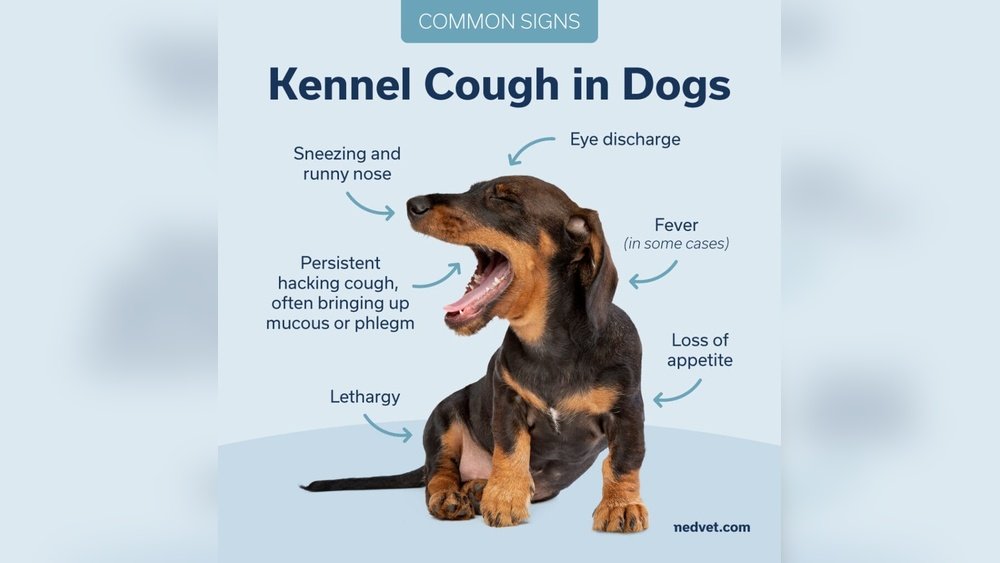
The most noticeable sign is a dry, hacking cough. People often describe it as sounding like the dog has something stuck in its throat or is trying to clear its airway. But kennel cough can show up in different ways.
Here are the most common symptoms:
1. Persistent, Hacking Cough
Dogs may cough in short bursts, and the cough often sounds harsh or honking. It’s usually worse at night, after activity, or when the dog gets excited.
2. Gagging Or Retching
Some dogs act like they’re trying to vomit or bring up something. Sometimes, a small amount of white foam or phlegm comes out.
3. Sneezing And Runny Nose
Mild sneezing and a clear nasal discharge often go along with the cough.
4. Watery Eyes
Some dogs have mild eye discharge, especially in the first few days.
5. Normal Appetite And Energy
Most dogs with mild kennel cough keep eating and playing as usual, though the cough can make them tired.
6. Mild Fever
A slight temperature rise is possible, but high fever is less common in mild cases.
The cough can last anywhere from 1 to 3 weeks. In most healthy dogs, the illness is mild and goes away on its own. But it can get worse or lead to more serious problems, especially in high-risk dogs.
Kennel Cough Vs. Other Illnesses
Not every cough is kennel cough. Other conditions can look similar but need different treatment. Here’s a comparison of kennel cough with other common causes of coughing in dogs:
| Condition | Key Signs | Appetite & Energy | When to Worry |
|---|---|---|---|
| Kennel Cough | Dry, honking cough; mild sneezing | Usually normal | High-risk dogs or cough >2 weeks |
| Canine Influenza | Cough, fever, runny nose, lethargy | Reduced | Fast breathing, high fever |
| Pneumonia | Wet, productive cough; breathing trouble | Poor appetite, tired | Difficulty breathing, blue gums |
| Heart Disease | Night cough, exercise intolerance | Decreased | Fainting, collapse |
If your dog stops eating, becomes very tired, or has trouble breathing, see a vet right away. These are not typical of mild kennel cough and can mean something more serious.
Detailed Breakdown Of Kennel Cough Symptoms
The Cough Itself
The cough is the most obvious sign. It’s often described as:
- Goose-honk sound: A deep, harsh noise that stands out.
- Sudden onset: It may start suddenly, sometimes a few days after exposure.
- Triggered by excitement: Pulling on the leash, barking, or even gentle pressure on the neck can set it off.
- Lasts 1-3 weeks: Even after other symptoms fade, the cough may linger.
Gagging And White Foam
Dogs with kennel cough often gag at the end of a coughing fit. They might bring up a small amount of white, foamy spit. This can look like vomiting, but it’s just the result of irritated airways.
Sneezing And Runny Nose
While less common than coughing, mild sneezing and a clear, watery nasal discharge may be present. Thick, green, or yellow discharge is less typical and could mean a more serious infection.
Eye Discharge
Some dogs develop watery or slightly sticky eyes. This is usually mild and temporary.
Slight Fever
Most dogs don’t get a high fever with kennel cough. If the temperature goes above 103°F (39. 4°C), it’s time to consult the vet.
Behavior Changes
With mild kennel cough, most dogs act normal. They eat, drink, and play. But the cough can interrupt sleep and make some dogs seem tired or less active.
Less Common And Complicated Signs
While most cases are mild, kennel cough can turn into something more serious, especially for puppies, seniors, or dogs with other health issues.
Warning Signs Of Complications
- Lethargy: Your dog seems unusually tired or weak.
- Loss of appetite: Refuses food for more than a day.
- High fever: Temperature above 103°F (39.4°C).
- Labored breathing: Fast, shallow, or difficult breathing.
- Thick green or yellow discharge: From nose or eyes.
- Blue or pale gums: Can signal poor oxygen levels.
These symptoms suggest the infection has spread to the lungs or turned into pneumonia. Immediate veterinary care is needed.
Rare But Serious Outcomes
In some cases, kennel cough can lead to:
- Pneumonia
- Chronic bronchitis
- Death (very rare, usually in high-risk dogs)
Quick action is key if your dog shows severe symptoms.
The Stages Of Kennel Cough
Kennel cough doesn’t always look the same from start to finish. Here’s how the illness typically progresses:
1. Incubation Period
After exposure, dogs may not show symptoms for 2 to 14 days. During this time, they can still spread the germs.
2. Early Signs
First symptoms include:
- Occasional dry cough
- Mild sneezing
- Slight runny nose
Some dogs show only these mild signs and recover quickly.
3. Peak Illness
The cough becomes more frequent and intense, often triggered by excitement or exercise. Gagging and retching are common. Dogs may seem a bit tired, but most still eat and drink normally.
4. Recovery
Coughing fits become less common after about a week. Most dogs feel better within 2 to 3 weeks. A mild cough may linger even after other symptoms have gone.

Credit: rousehillfamilyvets.com.au
Diagnosing Kennel Cough
Vets usually diagnose kennel cough based on symptoms and history, especially if your dog was recently in a high-risk place. There isn’t one single test for kennel cough, but your vet may use:
- Physical exam: Listening for the classic cough.
- Swab tests: Checking for bacteria or viruses in discharge.
- X-rays: If pneumonia or other issues are suspected.
- Blood tests: To rule out other illnesses.
If your dog is high risk or not improving, these extra tests can help find the exact cause.
What To Do If Your Dog Shows Symptoms
If your dog starts coughing, here’s how to respond:
- Isolate your dog: Keep them away from other dogs for at least 2 weeks, even if symptoms are mild.
- Watch for severe signs: If your dog stops eating, becomes very tired, or struggles to breathe, call the vet immediately.
- Keep things calm: Limit excitement, barking, and leash pulling. Too much activity makes the cough worse.
- Avoid collars: Switch to a harness to reduce neck pressure.
- Provide a clean, humid environment: A humidifier or sitting in a steamy bathroom can soothe the airways.
- Keep up with food and water: Offer small, tasty meals and fresh water.
- Don’t use human cough medicine: Some are toxic to dogs.
If the cough lasts more than 2 weeks or gets worse, always check with your vet.

Credit: www.petmd.com
Home Care Tips For Mild Cases
Most healthy adult dogs recover from kennel cough at home. Here’s how to help:
- Rest is important: Encourage quiet time and low activity.
- Keep air clean: Avoid smoking, strong cleaners, or dust.
- Soothing food: Warm, soft foods can help if the throat is sore.
- Monitor for changes: Write down symptoms and any changes in appetite or energy.
Non-obvious tip: Dogs can get bored during recovery. Safe chew toys and gentle brain games can help keep them entertained without too much activity.
When Veterinary Care Is Needed
While mild cases often get better on their own, some dogs need professional help. See your vet if:
- The cough is severe or lasts more than 2 weeks
- Your dog is very young, old, or has other health issues
- There’s loss of appetite, high fever, or breathing trouble
- Cough produces blood or thick, colored mucus
Vets may prescribe antibiotics for bacterial infections or cough suppressants for comfort. Dogs with complications may need hospitalization.
Medications And Treatments
Treatment depends on how sick your dog is:
- Mild cases: Rest, fluids, and monitoring.
- Moderate/severe cases: Cough suppressants, antibiotics, or anti-inflammatory medicine.
- Complicated cases: Oxygen support or IV fluids in the clinic.
Some over-the-counter cough medicines for humans contain ingredients that are dangerous for dogs. Always use only what your vet recommends.
Kennel Cough Recovery Time
How long does it take for a dog to get better? Most healthy dogs recover in 1 to 3 weeks. Puppies, seniors, or dogs with other problems may take longer.
Here’s a quick look at recovery times:
| Dog’s Health | Typical Recovery Time | Possible Complications |
|---|---|---|
| Healthy adult | 1–3 weeks | Rare |
| Puppy/senior | 2–4 weeks | Pneumonia, slow recovery |
| Chronic illness | 3–6 weeks | Severe respiratory illness |
If your dog’s cough is not improving after three weeks, check with your vet.
Preventing Kennel Cough
Prevention is always better than cure. Here are some smart steps:
- Vaccination: The Bordetella vaccine helps protect against the main bacteria behind kennel cough. It’s required by most kennels and groomers. The vaccine is given as a shot, nose drops, or oral dose. It doesn’t prevent all cases but usually makes the illness milder.
- Avoid crowded places: Limit visits to dog parks or daycare during outbreaks.
- Good hygiene: Clean your dog’s bowls, bedding, and toys often.
- Air circulation: Kennels and shelters should have good ventilation.
- Quarantine new dogs: Keep new pets separated for a few days before introducing them to your pack.
Non-obvious insight: Always ask about recent kennel cough cases before booking a stay at a kennel or daycare. Facilities that quickly inform clients about outbreaks show they care about your pet’s health.
Special Considerations For Puppies And Senior Dogs
Young puppies and older dogs are more likely to get sick and develop complications. Their immune systems are not as strong, so even mild cases can turn serious.
- Puppies: May cough less but become tired, lose appetite, or develop pneumonia quickly.
- Senior dogs: May have heart or lung problems that make kennel cough more dangerous.
These dogs should see a vet sooner, even with mild symptoms.

Credit: www.northpointeanimalhospital.com
How Vets Help Control Kennel Cough
Veterinarians play a key role in stopping kennel cough from spreading:
- Reporting outbreaks: Some areas require vets to notify health authorities.
- Advising isolation: Vets tell owners how to keep sick dogs away from others.
- Guiding treatment: Choosing the right medicines and monitoring for complications.
Many clinics also require up-to-date vaccines for boarding or grooming.
Kennel Cough Myths And Misunderstandings
There’s a lot of confusion about kennel cough. Let’s clear up some common myths:
- Myth: Only dogs in kennels get kennel cough.
Any dog can catch it, even if they never go to a kennel. Parks, vet clinics, and grooming salons are common sources.
- Myth: Kennel cough is always mild.
Most cases are mild, but pneumonia and death can happen, especially in high-risk dogs.
- Myth: The vaccine prevents all cases.
The vaccine reduces the risk and makes illness milder, but doesn’t guarantee total protection.
- Myth: Humans can’t catch kennel cough.
It’s extremely rare, but people with weak immune systems can become infected with certain strains. Always wash hands after handling a sick dog.
Kennel Cough And Multiple Pets
If you have more than one dog, kennel cough can spread quickly. Here’s what to do:
- Isolate the sick dog: Use a separate room if possible.
- Clean shared items: Wash bowls, bedding, and toys with hot, soapy water.
- Wash your hands: After touching the sick dog, before handling others.
- Monitor other pets: Watch for coughing or sneezing.
Some dogs may carry and spread germs without showing symptoms. If possible, delay introductions until all pets are healthy.
Long-term Effects: Can Kennel Cough Cause Lasting Damage?
In most healthy dogs, kennel cough clears up with no lasting effects. But in a small number, especially those with other health problems, it can lead to:
- Chronic cough
- Bronchitis
- Reduced lung function
Early treatment and good care lower this risk. If your dog keeps coughing weeks after recovery, see your vet for a check-up.
Cost Of Treating Kennel Cough
Treatment costs can vary. Here’s a general idea:
| Type of Care | What’s Included | Estimated Cost (USD) |
|---|---|---|
| Home care | Rest, food, water, monitoring | $0–$50 |
| Vet visit (mild case) | Exam, cough medicine | $50–$150 |
| Vet visit (severe case) | X-rays, blood tests, antibiotics | $150–$500 |
| Hospitalization | IV fluids, oxygen, intensive care | $500–$2000+ |
Prevention, especially through vaccination, is often much less expensive than treating a severe case.
Real-world Example: Spotting Kennel Cough Early
Let’s say you pick up your dog from daycare, and a day later, you hear a dry, honking cough. Your dog still wants to eat and play, but the cough is loud and happens several times an hour. You check for other signs—no fever, no thick discharge, and energy is normal.
You keep your dog home, limit activity, switch to a harness, and watch for changes. After a few days, the cough gets softer and happens less often.
This is a typical, mild case. But if your dog became tired, refused food, or had breathing trouble, a vet visit would be needed.
How To Prevent The Spread In The Community
Kennel cough is a community problem. Here’s how responsible owners can help:
- Notify your daycare, kennel, or groomer if your dog gets sick after a visit. This helps them alert other owners.
- Keep sick dogs home until at least 7 days after the last cough.
- Follow your vet’s advice on isolation and care.
- Educate friends and neighbors about the signs.
Quick action and honest communication can stop outbreaks.
Frequently Asked Questions
What Does Kennel Cough Sound Like?
Kennel cough is famous for its honking, dry cough. Many owners say it sounds like a goose honk or as if the dog is trying to clear its throat. Sometimes, it ends with gagging or retching. You can hear examples of kennel cough sounds on the American Kennel Club website.
Can Vaccinated Dogs Still Get Kennel Cough?
Yes, but the Bordetella vaccine usually makes the illness milder and shorter. No vaccine is 100% effective, but it greatly reduces the risk of severe disease.
How Long Is Kennel Cough Contagious?
Dogs with kennel cough are usually contagious for up to three weeks after symptoms start. Some can spread germs even before coughing begins. Keep your dog away from others for at least 2 weeks after the last cough.
Can Humans Catch Kennel Cough From Dogs?
It’s rare, but people with weak immune systems (young children, elderly, or those with medical conditions) can sometimes get infected with certain strains. Good hygiene, like washing hands, lowers the risk.
When Should I Call The Vet For Kennel Cough?
Call your vet if your dog:
- Coughs for more than 2 weeks
- Shows signs of lethargy, loss of appetite, or breathing trouble
- Has a high fever (above 103°F)
- Coughs up blood or thick, colored mucus
Kennel cough is usually mild, but high-risk dogs or those with complications need quick care.
Spotting kennel cough early and understanding its signs is the best way to keep your dog and others safe. With good knowledge, fast action, and the right prevention steps, most dogs recover quickly and are soon back to their happy, playful selves.
We’re the dedicated team behind MyPawSafe.com, with over a decade of combined experience in veterinary care, pet emergency response, and animal behavior. While we prefer to let our work speak for itself, our mission is clear: to provide science-backed, vet-approved advice that helps pet owners prevent accidents and save lives.