If you’re a dog owner, seeing your pet choke can be terrifying. Dogs are naturally curious and often chew on objects, toys, or food that may block their airway. Quick action is essential because choking can become fatal within minutes.
Knowing what to do—and what not to do—can make the difference between life and death for your dog. This guide will help you recognize when your dog is choking, what steps to take immediately, and how to prevent future incidents.
By the end, you’ll feel more confident and prepared if your dog ever faces this emergency.
How To Tell If Your Dog Is Choking
Dogs often cough or gag, but choking is different. It means something is blocking their airway, stopping them from breathing properly. Recognizing choking early helps you act fast and avoid panic.
Even experienced owners can sometimes confuse gagging, coughing, or reverse sneezing with true choking. It’s important to observe your dog’s behavior closely and look for several signs happening at the same time. Choking can progress quickly, so don’t wait too long to decide.
Common Signs Of Choking
- Difficulty breathing: Your dog might gasp, wheeze, or make noisy sounds. You may notice their chest moving fast, and their nostrils flaring as they struggle for air.
- Pawing at the mouth: Dogs try to remove the object with their paws. Some may also rub their face on the ground or furniture in desperation.
- Blue or pale gums: Lack of oxygen causes gum color changes. Check your dog’s gums by gently lifting their lip. Healthy gums are pink; blue or pale means serious trouble.
- Drooling or foaming: Excess saliva often happens during choking. This can look like thick bubbles around the mouth, and the drool may be sticky and hard to wipe away.
- Coughing or gagging: Persistent, intense coughing may signal choking. The cough usually sounds more frantic and is not relieved after a few moments.
- Collapse: In severe cases, dogs may faint due to no oxygen. If this happens, breathing support must start immediately.
Some dogs may also panic, moving around wildly or even running away out of fear. If you see sudden, intense distress, investigate right away.
What You Might Mistake For Choking
Some behaviors, like coughing from kennel cough or vomiting, may look similar. If your dog can still breathe, bark, or make noise, it’s probably not choking. True choking means they can’t make much sound.
Reverse sneezing, which sounds like snorting or honking, is usually harmless and passes in less than a minute. If your dog is able to inhale and exhale, even if it sounds strange, it’s likely not a full blockage.
Tip: Try to remember what your dog was doing before the signs started. If they were chewing on something, choking is more likely.
Example Scenario
Imagine your dog eats a big piece of bone and suddenly starts pawing at its mouth, struggling to breathe. This is a classic sign of choking—don’t wait to see if it passes.
Another example: You give your dog a new toy, and minutes later, they start coughing and drooling heavily, with blue gums. Quickly check for choking signs rather than assuming it’s excitement or play.
Immediate Steps: What To Do If Your Dog Is Choking
Speed is critical. Dogs can lose consciousness in just a few minutes without oxygen. Here’s what you should do:
Step 1: Stay Calm And Safe
Your reaction matters. Panic can make things worse. Speak calmly and approach your dog gently. Choking dogs may bite out of fear.
Dogs in distress may not recognize even their owners. Move slowly, use a soft voice, and avoid sudden grabs. If someone else is present, ask for help so one person calms the dog while the other checks the mouth.
Step 2: Check The Mouth
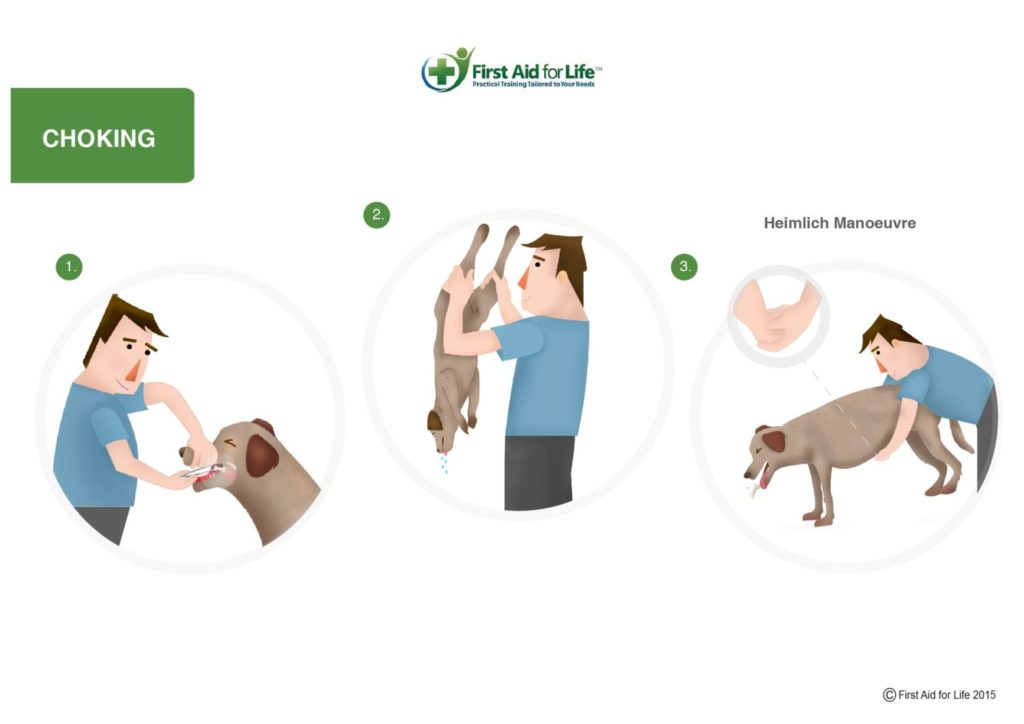
Carefully open your dog’s mouth. Look for any visible object. If you see something:
- Use your fingers to sweep it out, but only if you can do it safely.
- Don’t push the object deeper.
- Avoid tools unless you’re trained.
To open your dog’s mouth, place one hand over the top of the muzzle and gently press the lips over the teeth to help keep the mouth open without getting bitten. Use your thumb and fingers to gently part the jaws.
If you can see the object and it’s loose, use your index finger to hook it out carefully. Don’t try to grab something you can’t see clearly—it’s easy to push it further or injure your dog’s throat.
Step 3: Assess Breathing
If your dog is still breathing, coughing, or gagging, encourage them to continue. Coughing may help dislodge the object naturally.
Let your dog move their head downward if they want. Gravity can help bring the object closer to the mouth. Don’t force your dog to lie down or stand if they are trying to cough.
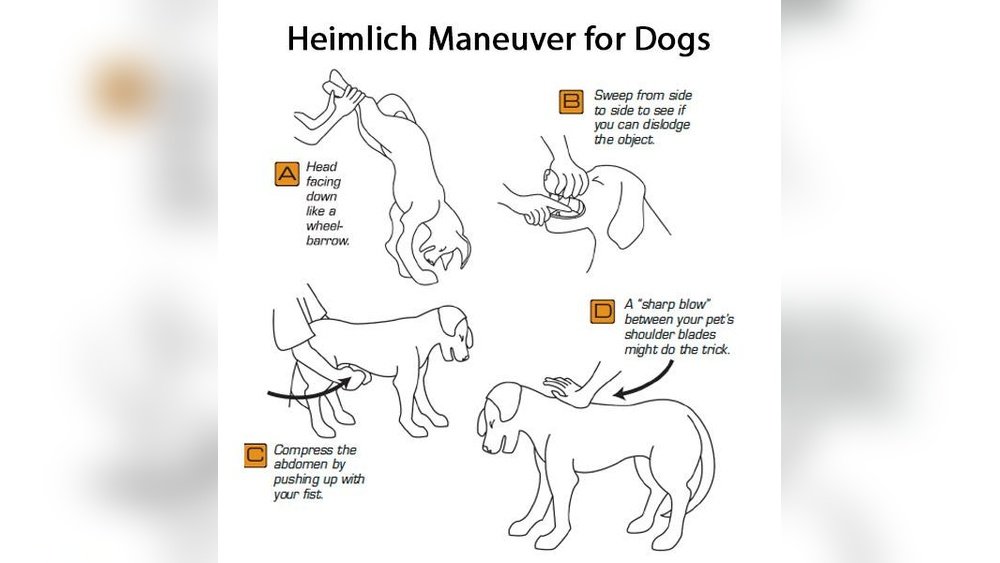
Step 4: Perform The Heimlich Maneuver
For dogs who aren’t breathing, you need to act fast. The Heimlich maneuver for dogs is different from humans. Here’s how:
For Small Dogs (under 30 Lbs)
- Hold your dog upside down by their thighs, so their head faces down.
- Gently shake to help the object fall out.
- If needed, use your fingers to sweep their mouth again.
Try to support your dog’s back and head so they don’t get hurt. If you can’t lift your dog, lay them on their back and apply firm, quick pushes just below the rib cage.
For Medium And Large Dogs
- Stand behind your dog.
- Place your hands just below their rib cage.
- Make a fist and press inward and upward, like a “J” motion.
- Repeat 3–5 times.
- Check the mouth for the object after each attempt.
For very large dogs, you may need to lay them on their side, kneel behind their back, and use both hands to give strong but controlled thrusts.
Step 5: If Your Dog Is Unconscious
If your dog collapses, start CPR immediately. Here’s a quick outline:
- Lay your dog on their side.
- Clear the airway if possible.
- Begin chest compressions and rescue breaths.
For chest compressions, use both hands (for medium and large dogs) over the widest part of the chest. Compress about one-third the depth of the chest, 100–120 times per minute. For rescue breaths, close the mouth and breathe into the nose until the chest rises.
Alternate 30 compressions with 2 breaths.
Step 6: Get To The Vet Asap
Even if you remove the object, your dog needs a vet check. Choking can cause internal injuries, swelling, or breathing problems.
Bruising, inflammation, or aspiration (inhaling food or saliva into the lungs) may not show up right away but can be life-threatening if untreated.
When Not To Intervene
If your dog is coughing and breathing, let them try to clear the object naturally. Intervening too early can push the object deeper.
Sometimes, dogs will clear mild blockages on their own. If your dog’s gums stay pink and they are active, watch closely but do not panic.
Heimlich Maneuver For Dogs: Detailed Instructions
Many owners panic during emergencies. Knowing the Heimlich maneuver for dogs can save lives. Here’s a more detailed guide for each size:
| Dog Size | Position | Action Steps | Extra Tips |
|---|---|---|---|
| Small Dogs | Hold upside down | Shake gently, sweep mouth | Use towel for grip |
| Medium Dogs | Stand behind | Press below rib cage, sweep mouth | Watch for bite risk |
| Large Dogs | Side-lying or standing | Use both hands, strong upward thrusts | Check pulse if unconscious |
Extra Details For Large Dogs
If your dog is too big to lift, lay them on their side. Place your hands just below the ribs and push upward toward the spine.
Try to feel for the soft spot just behind the last rib, but do not press on the actual ribs to avoid breaking them.
If your dog is overweight or has a deep chest, use more force, but always be careful not to use excessive strength.
Common Mistakes During Heimlich
- Using too much force (can cause injuries)
- Not checking the mouth after each attempt
- Forgetting to call the vet after
- Giving up too soon—sometimes it takes several tries
Another mistake is focusing only on the Heimlich and not checking the mouth again after each thrust. The object may come loose and need to be removed quickly.
What Not To Do If Your Dog Is Choking
Certain actions can make choking worse. Here’s what you should avoid:
- Don’t use tools: Never use tweezers, sticks, or other objects unless you’re trained.
- Don’t delay: Waiting too long can be fatal.
- Don’t ignore aftercare: Always visit the vet after a choking incident.
- Don’t panic: Stay calm and focused—your dog needs your help.
- Don’t push the object deeper: If you can’t reach it, don’t force it.
Also avoid slapping your dog’s back or shaking them harshly. This can cause more injury than help. Only use gentle, controlled movements.
When To Seek Emergency Help
Sometimes, home intervention isn’t enough. Here are signs you need emergency vet care right away:
- Dog is unconscious or not breathing
- Object is stuck and unreachable
- Gums are blue or pale
- Dog is lethargic or can’t stand
Call your vet or emergency clinic before arrival so they’re ready. If you’re unsure, it’s better to seek help than risk your dog’s life.
If you live far from an emergency clinic, consider keeping a list of 24-hour veterinary hospitals in your area. Time is critical, and being prepared can save your dog’s life.
Aftercare: What To Do After A Choking Incident
Even if your dog seems fine, choking can cause problems you can’t see. Here’s what to do next:
Vet Examination
Your vet will check for:
- Internal injuries
- Swelling in the throat
- Aspiration pneumonia (from inhaled objects)
- Damage to teeth or gums
The vet may take X-rays to check for hidden objects or injuries. Sometimes, they will prescribe anti-inflammatory medication, pain relief, or antibiotics if there is risk of infection.
Watch For Symptoms
Monitor your dog for the next 48 hours. Look for:
- Difficulty breathing
- Coughing or gagging
- Loss of appetite
- Lethargy
Other signs include noisy breathing, hoarse barking, or drooling. Even a mild cough after choking could mean throat irritation or something more serious.
Recovery Tips
- Offer soft food for a few days.
- Keep your dog calm and quiet.
- Follow any vet instructions.
Don’t let your dog chew on hard toys or bones right after an incident. Rest and gentle care can help healing.
If you notice your dog’s condition worsening, return to the vet immediately. Complications can develop after choking, even if your dog seemed okay at first.
How To Prevent Choking In Dogs
Prevention is easier than emergency care. Here’s how to reduce the risk:
Choose Safe Toys And Treats
Select toys that are too large to swallow. Avoid bones, rawhide, and small items.
Dogs love to chew, but not all items are safe. Always check toys for loose parts or damage. If a toy breaks, throw it away.
Supervise playtime, especially with new toys or treats. Some “indestructible” toys can still break and become choking hazards.
| Item Type | Risk Level | Safer Alternative |
|---|---|---|
| Rawhide bones | High | Rubber chew toys |
| Small balls | High | Large tennis balls |
| Cooked bones | Very high | Dental chews |
| Stuffed toys with squeakers | Medium | Durable plush toys |
Feed Carefully
- Cut food into small, manageable pieces.
- Avoid giving bones or gristle.
- Supervise mealtime, especially with multiple dogs.
If you feed kibble, check the size—choose a formula with pieces large enough that your dog chews them. For treats, break them up for smaller dogs.
Feeding competition can cause dogs to gulp food. If you have several dogs, feed them separately to reduce rushing.
Keep Dangerous Items Out Of Reach
Dogs chew on anything they find. Keep socks, buttons, coins, and other small items off the floor.
Remember, puppies are especially curious. Childproof your house by putting away shoes, small toys, and electrical cords.
Know Your Dog’s Chewing Habits
Some breeds, like Labradors and Terriers, are more likely to chew and swallow objects. If your dog is a strong chewer, extra supervision is needed.
Rotate toys regularly to prevent boredom and destructive chewing. Chewing is natural, but it’s your job to make it safe.
Train To Drop Objects
Teach your dog the “drop it” command. This helps in emergencies when they grab something dangerous.
Start training with safe toys and treats. Reward your dog for letting go of objects on command. Practice often so it becomes a habit.
If your dog grabs something unsafe, stay calm. Use your training, and avoid chasing, which can turn it into a game.
Understanding Dog Anatomy And Choking Risks
Dogs have unique anatomy compared to humans. Their trachea (windpipe) is flexible, and their mouths are larger relative to their throat. This makes it easier for objects to get stuck.
Many dogs have a strong bite force and wide jaws, letting them pick up objects that barely fit in their mouth. Unlike humans, they don’t always chew before swallowing.
Why Certain Breeds Are At Higher Risk
Some breeds have higher choking risks:
- Brachycephalic breeds (like bulldogs and pugs) have narrow airways.
- Toy breeds are prone to swallowing small objects.
- Large breeds may choke on big bones.
Brachycephalic dogs can choke on even small amounts of food or saliva due to their unique airway. Owners of these breeds need to be extra careful.
Age Matters
Puppies are more likely to chew and swallow objects. Older dogs may have dental problems that increase choking risk.
Senior dogs may lose teeth, causing them to swallow larger pieces of food instead of chewing well. Adjust their diet as they age and get regular dental checks.
Credit: firstaidforpets.net
The Difference Between Choking And Other Breathing Problems
It’s important to know when your dog is actually choking and not experiencing another issue. Here’s a comparison:
| Problem | Main Signs | Action Needed |
|---|---|---|
| Choking | Noisy breathing, pawing at mouth, blue gums | Immediate action, Heimlich maneuver |
| Asthma attack | Wheezing, fast breathing, coughing | Calm dog, call vet |
| Allergic reaction | Swelling, hives, drooling | Emergency vet care |
| Kennel cough | Loud cough, no airway blockage | Vet visit, not emergency |
If you’re not sure, act as if it is choking and be ready to call the vet.
Real-life Example: Choking Incident And Outcome
Let’s look at a real case. In 2026, a Labrador in Texas swallowed a tennis ball. The owner noticed the dog couldn’t breathe and tried the Heimlich maneuver. The ball was dislodged, and the dog survived, but needed a vet check for throat injuries.
Key lessons: Immediate action worked, but the owner still needed professional care. The vet found swelling and minor bruising—proving that aftercare is essential.
Another example: A small terrier started choking on a chunk of cheese. The owner quickly swept the cheese out of the mouth, but the dog coughed for hours after. A vet visit revealed irritation and mild aspiration, which was treated early.

Credit: its-adogslife.co.uk
Statistics On Dog Choking
Choking is not rare. According to the American Veterinary Medical Association, about 5% of emergency vet visits involve airway blockages. Most cases happen due to:
- Bones (30%)
- Toys (25%)
- Food (15%)
- Household items (20%)
- Unknown objects (10%)
Dogs under 2 years old are twice as likely to choke as older dogs.
Also, studies show that more choking incidents happen during holidays, when dogs get new toys or extra treats.
Non-obvious Insights Most Owners Miss
Many owners don’t realize that:
- Even partial blockages can be deadly. A dog may still breathe but not enough for survival. If in doubt, act fast.
- Repeated choking can cause lasting throat damage. If your dog chokes more than once, ask your vet for a full throat exam.
Additionally, some underlying health issues (like megaesophagus or laryngeal paralysis) can make choking more likely. If choking happens often, ask your vet to check for other problems.
How To Prepare For Dog Emergencies
Preparation reduces stress during emergencies. Here’s how to get ready:
- Keep your vet’s phone number handy.
- Know the route to the nearest emergency clinic.
- Learn basic dog CPR and Heimlich steps.
- Have a pet first-aid kit at home.
Consider taking a pet first-aid class. Practice the Heimlich technique on a stuffed animal so you are confident if the real moment comes.
Keep important papers (like your dog’s medical history) in an easy-to-grab spot. In a crisis, every minute matters.
Choking In Puppies Vs Adult Dogs
Puppies chew more and have smaller airways, making them more likely to choke. Adult dogs might choke on bones or large chunks of food.
Puppies also use their mouths to explore the world. They don’t always know what’s safe, so close supervision is key.
Extra Tips For Puppies
- Puppy-proof your home.
- Supervise playtime closely.
- Use puppy-sized toys.
Avoid giving puppies access to children’s toys, socks, or household objects. Replace damaged toys right away. Introduce the “drop it” command early—it can be a lifesaver later.
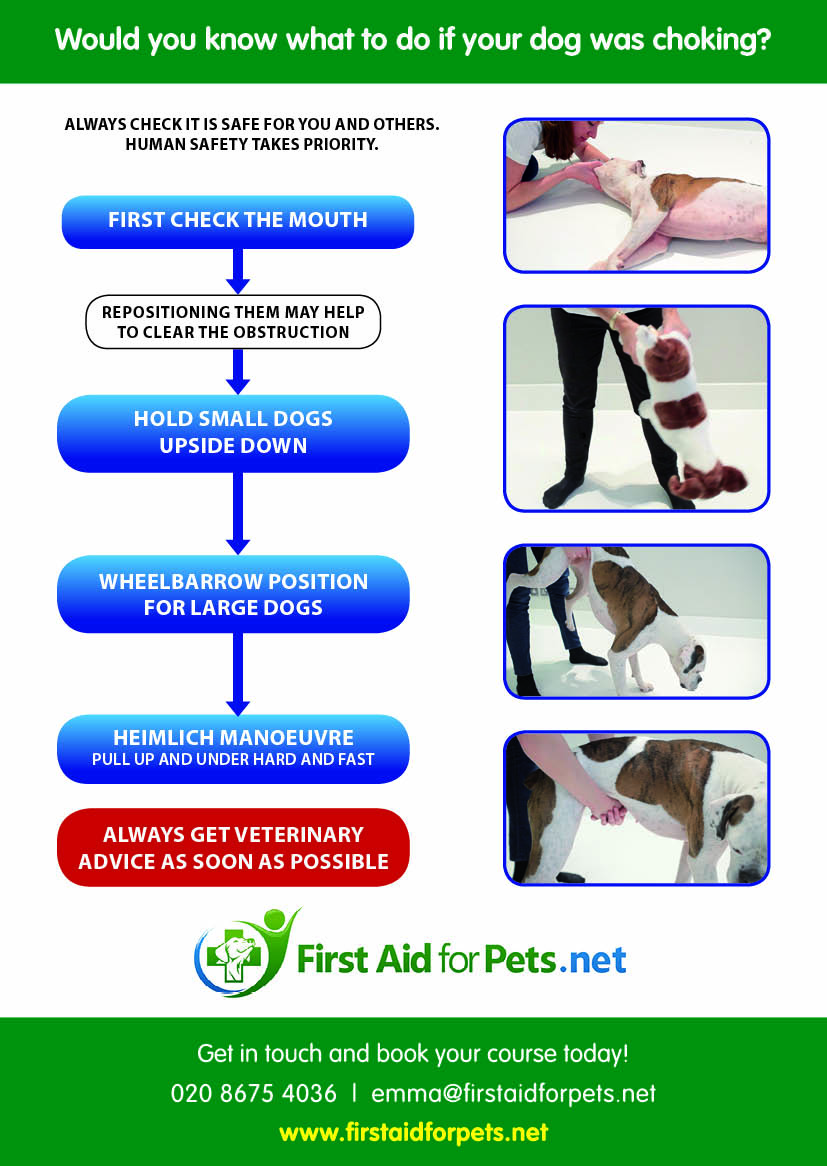
Credit: firstaidforpets.net
Using Technology For Fast Help
Some pet owners use smart collars or emergency apps. These tools can alert you to breathing problems or let you call help faster.
Smart collars can track activity and even measure breathing rates. Some apps connect you with vets for instant advice. While technology can’t replace hands-on help, it’s a useful backup.
For more guidance, visit ASPCA’s choking guide.
Frequently Asked Questions
What Objects Most Often Cause Choking In Dogs?
Dogs choke most often on bones, toys, balls, and food pieces. Small household items like coins or buttons can also be dangerous, especially for puppies.
Other common risks include hair ties, bottle caps, and pieces of plastic. Always check the floor for dropped items before letting your dog in a room.
How Can I Prevent My Dog From Choking?
Use safe toys that are too big to swallow. Cut food into small pieces. Supervise your dog during play and meals. Keep dangerous items out of reach and teach your dog the “drop it” command.
Rotate toys often and check for signs of wear. Get to know your dog’s chewing habits so you can spot problems early.
Is The Heimlich Maneuver Safe For All Dogs?
The Heimlich maneuver works for most dogs, but use gentle pressure for small breeds and puppies. For very large dogs, lay them on their side and use strong upward thrusts. Always check for injuries after and call your vet.
If your dog has health problems or is very old, be extra gentle. If in doubt, call your vet for advice.
What Should I Do If I Can’t Remove The Object?
If you can’t remove the object, or your dog stops breathing, go to the vet immediately. Call ahead so the clinic can prepare. Don’t use tools unless you’re trained, as this can cause more harm.
Enlist a friend or neighbor to drive if you need to focus on your dog during the trip.
What Are Signs That My Dog Needs Emergency Care After Choking?
If your dog has blue gums, trouble breathing, collapses, or shows lethargy after choking, seek emergency help. Even after the object is removed, a vet check is important to rule out internal injuries.
Other warning signs include ongoing coughing, choking sounds, or refusal to eat or drink.
Final Thoughts
Choking is a frightening experience for both dogs and their owners. Knowing the signs, acting quickly, and understanding proper techniques can save your dog’s life. Prevention—through safe toys, careful feeding, and training—goes a long way. Always follow up with your vet after any choking incident, even if your dog seems fine.
Preparation gives you peace of mind and keeps your best friend safe. If you’re ever unsure, call your vet or emergency clinic right away. Your dog depends on you in moments like these—and your quick action can make all the difference.
We’re the dedicated team behind MyPawSafe.com, with over a decade of combined experience in veterinary care, pet emergency response, and animal behavior. While we prefer to let our work speak for itself, our mission is clear: to provide science-backed, vet-approved advice that helps pet owners prevent accidents and save lives.