False pregnancy in dogs, also known as pseudopregnancy or phantom pregnancy, can be confusing and even alarming for dog owners. Imagine your female dog behaving as though she is expecting puppies—she gains weight, her belly swells, and she starts nesting. But in reality, there are no puppies on the way. This condition is surprisingly common, especially in unspayed females, and often leads to worry and unnecessary vet visits. Understanding the signs of a false pregnancy is essential for anyone who cares for a female dog. The more you know, the better you can respond and support your pet during this strange and sometimes stressful time.
Many owners mistake false pregnancy for a real one, or worse, for a health problem like infection or cancer. The symptoms can be dramatic and convincing. Some dogs even start producing milk! Yet, most cases of pseudopregnancy resolve on their own, with a bit of patience and the right care.
Still, there are times when you must see a vet. This article will help you spot the signs, understand what’s happening, and know when to worry. Along the way, you’ll find data, practical examples, and clear comparisons to help you feel confident about your dog’s health.
What Is False Pregnancy In Dogs?
False pregnancy is a hormonal condition where a non-pregnant female dog shows physical and behavioral signs of pregnancy or even motherhood. This usually happens about six to twelve weeks after her heat cycle. Hormonal changes—especially a drop in progesterone and a rise in prolactin—cause her body to act as if she is pregnant, even though she’s not.
This isn’t a rare problem. Studies show that up to 60% of unspayed female dogs will have at least one episode of false pregnancy in their lives. Breeds like Beagles, Dachshunds, and Boxers may be more prone, but it can happen to any breed.
The good news is that false pregnancy is almost always benign (not dangerous). However, it can be confusing and stressful for both the dog and her owner, especially if you are not aware of the signs.
Why Does False Pregnancy Happen?
The main cause is hormonal imbalance. After every heat cycle, whether the dog has mated or not, her body produces progesterone (the hormone of pregnancy). When progesterone drops, prolactin (the hormone of milk production and mothering behavior) increases. If your dog’s hormones are especially sensitive, she may show signs of pregnancy even without mating.
Some dogs are more likely to experience false pregnancy after their first heat or after being spayed during a particular phase of their cycle. Environmental factors and stress can sometimes trigger or worsen the symptoms, but hormones are the main driver.

Credit: www.akc.org
Physical Signs Of False Pregnancy
Spotting the physical signs is usually the first clue for most owners. These can range from very mild to quite dramatic. Here’s what to look for:
1. Mammary Gland Changes
- Swelling: The most common sign is swelling of the mammary glands. Your dog’s nipples may look larger or feel firmer than usual.
- Milk Production: Some dogs actually produce milk or clear fluid from their nipples. This can be a small amount or, in rare cases, quite a lot.
- Warmth or Tenderness: The glands can feel warm to the touch, and your dog may be sensitive or lick at them more than usual.
2. Abdominal Changes
- Weight Gain: Many dogs with false pregnancy will gain weight or have a slightly swollen belly, even though there are no puppies inside.
- Enlarged Abdomen: The belly may look and feel rounder, mimicking a real pregnancy. However, it usually won’t be as hard or as large as a true pregnancy in late stages.
3. Appetite Changes
- Increased Appetite: Some dogs eat more than usual, as if they are eating for puppies.
- Decreased Appetite: Others may become picky or lose interest in food, especially if they are anxious or restless.
4. Vaginal Discharge
- Mild Discharge: A small amount of clear or milky vaginal discharge can occur. Heavy or bloody discharge is not typical—if you see this, call your vet.
5. Restlessness And Pacing
- Physical Agitation: Your dog may seem unable to settle. She might walk around, change positions often, or seek out quiet corners.
6. Lethargy
- Low Energy: Some dogs go the opposite direction and seem tired, napping more and showing less interest in play.
Physical Signs Comparison Table
To help, here’s a simple comparison of false pregnancy signs vs true pregnancy:
| Sign | False Pregnancy | True Pregnancy |
|---|---|---|
| Mammary gland swelling | Common | Common |
| Milk production | Possible | Yes |
| Abdominal enlargement | Mild to moderate | Moderate to severe (late pregnancy) |
| Puppies detected by vet | No | Yes |
| Appetite changes | Variable | Often increased |
| Vaginal discharge | Mild or none | Usually none |
Behavioral Signs Of False Pregnancy
Physical signs can be confusing, but the behavioral changes often surprise owners the most. Dogs experiencing false pregnancy may act as if they are caring for imaginary puppies.
1. Nesting Behavior
- Building Nests: Your dog may gather blankets, toys, or clothes to make a comfortable spot, just like a mother preparing for puppies.
- Digging: Digging in beds, crates, or couches is common.
2. Mothering Objects
- Caring for Toys: Dogs often select one or more toys (or even shoes, socks, or other objects) and treat them as if they are real puppies. This can include carrying them gently, licking, or guarding them.
- Vocalizing: Some dogs whine or make soft noises while caring for their “puppies.”
3. Aggression Or Protectiveness
- Guarding Behavior: Your dog may become protective of her nest, toys, or certain areas. She may snap or growl if you try to move her “puppies.”
- Irritability: Some dogs become irritable or moody, especially if disturbed.
4. Anxiety Or Depression
- Restlessness: As mentioned earlier, restlessness is common, but some dogs may seem anxious, clingy, or even depressed.
- Loss of Interest: Others may lose interest in normal activities, such as walks or play.
5. Change In Social Behavior
- Seeking Comfort: Dogs may become more affectionate and seek out their owners for extra attention.
- Avoidance: Less often, they may want to be alone, hiding in their nest.
Behavioral Signs Examples Table
Here’s how false pregnancy behaviors compare with normal behavior:
| Behavior | False Pregnancy | Normal Behavior |
|---|---|---|
| Nesting | Common | Rare (outside heat or pregnancy) |
| Mothering toys | Frequent | Occasional play |
| Protectiveness | Increased | Normal or none |
| Appetite changes | Variable | Usually stable |
| Anxiety/restlessness | Possible | Less common |
How To Tell If It’s A False Pregnancy (not Real)
Many owners wonder: Is my dog really pregnant, or is this a false alarm? The truth is, the signs are so similar that even experienced breeders can be fooled. Here’s how to tell:
1. Timing
False pregnancy usually happens 6–12 weeks after a heat cycle. If your dog has not had a chance to mate, pregnancy is impossible, but false pregnancy is still likely.
2. No Mating
If there has been no contact with a male dog during her fertile period, it’s almost certainly a false pregnancy.
3. No Fetal Movement
In true pregnancy, you might feel or see movement in the last two weeks. With false pregnancy, there’s no movement—just swelling.
4. Veterinary Examination
A vet can often tell if it’s a false pregnancy by palpating the abdomen, checking for fetal heartbeats, or using ultrasound or X-rays. Blood tests for relaxin hormone can also confirm pregnancy.
5. Duration Of Symptoms
False pregnancy signs usually peak for 1–3 weeks and then fade. True pregnancy lasts about nine weeks (63 days).
6. No Puppies
Of course, if the “due date” passes and no puppies appear, it’s a false pregnancy.
Diagnosis Tools Comparison Table
Here’s a quick look at how vets confirm pregnancy vs false pregnancy:
| Test | False Pregnancy | True Pregnancy |
|---|---|---|
| Physical exam | Gland swelling, no puppies felt | Puppies may be felt after day 28 |
| Ultrasound | No puppies | Puppies visible after day 25 |
| X-ray | No puppies | Puppy skeletons after day 45 |
| Blood test (relaxin) | Negative | Positive after day 20–25 |
| Duration of signs | 1–3 weeks, then resolves | ~9 weeks, ends with birth |
Less Common But Important Signs
While the main signs are easy to spot, some less common symptoms can cause concern:
1. Skin Problems
Excessive licking of the mammary glands can cause skin irritation or even infection. Watch for redness, sores, or a bad smell.
2. Fever
A mild fever can happen, but a high fever is rare and might suggest an infection (like mastitis).
3. Aggressive Behavior
Some dogs become much more aggressive than normal, especially if guarding their “puppies.” This can be dangerous if you have other pets or children.
4. Severe Anxiety Or Depression
A few dogs experience serious emotional changes and may need extra support or even medical help.
5. Lack Of Symptom Resolution
If symptoms last more than a month or get worse, it could signal a deeper hormonal problem or even a hidden health issue.
How Vets Diagnose False Pregnancy
Veterinarians use a mix of history, physical exam, and diagnostic tests to confirm false pregnancy. Here’s what usually happens:
Your Dog’s History
The vet will ask about your dog’s heat cycle, recent behavior, and whether she had a chance to mate.
Physical Examination
They’ll check for mammary gland changes, abdominal swelling, and behavior.
Diagnostic Tests
- Ultrasound: Shows if there are puppies.
- X-ray: Detects puppies after 45 days.
- Blood Tests: Check for relaxin (only present in true pregnancy).
Often, if your dog’s signs match the classic pattern and there’s no chance of pregnancy, tests may not be needed.
What To Do If You See Signs
If you suspect false pregnancy, here’s how to help your dog:
1. Stay Calm
False pregnancy is not dangerous in most cases. The symptoms almost always resolve within 2–3 weeks.
2. Limit Stimulation
Try to prevent your dog from licking her mammary glands, as this can increase milk production. Distract her with gentle play or walks.
3. Remove “puppies”
If your dog is mothering toys or objects, take them away to help her move on. Do this gently and with kindness, as it can cause anxiety.
4. Offer Comfort
Support your dog with extra attention, but avoid encouraging the mothering behavior.
5. Monitor For Problems
Watch for signs of infection (red, hot, or painful mammary glands, fever, or lethargy) or worsening behavior.
6. Call The Vet If Needed
Contact your vet if:
- Symptoms last more than four weeks
- Your dog seems sick (not just acting “motherly”)
- You notice pus, blood, or a foul smell
- There is severe aggression or depression
Medical Treatment For False Pregnancy
Most cases need no treatment beyond support and patience. But sometimes, medical help is necessary.
1. Medications
- Hormone therapy (like cabergoline or bromocriptine) can stop milk production and ease symptoms.
- Sedatives or anti-anxiety drugs may help in severe behavioral cases.
These drugs are usually a last resort, as most dogs recover on their own.
2. Treating Complications
- Mastitis (breast infection) requires antibiotics and sometimes pain relief.
- Severe behavioral issues may need short-term medication.
3. Spaying
Spaying (ovariohysterectomy) will prevent future false pregnancies. However, it’s best done when your dog is not showing symptoms, as spaying during a false pregnancy can make things worse.
Preventing False Pregnancy
You can’t always prevent false pregnancy, but you can reduce the risk:
1. Spay Your Dog
Spaying is the only sure way to prevent false pregnancies. It stops the hormonal cycle that causes the problem.
2. Time Spaying Carefully
If you plan to spay, do it midway between heat cycles—not during or right after a false pregnancy.
3. Reduce Stress
Keep your dog’s environment calm and predictable. Stress can sometimes worsen symptoms.
4. Monitor After Heat
Watch for signs of false pregnancy 6–12 weeks after heat, so you can act early.
Real-world Example: A Common Case
Consider Bella, a 3-year-old Beagle. About two months after her heat cycle, her owner notices she’s gaining weight and her nipples are swollen. Bella starts collecting stuffed toys and makes a nest under the table. She even produces a little milk.
Bella seems tired and ignores her food, which worries her owner.
After a vet visit, it’s clear Bella was never with a male dog, and an ultrasound shows no puppies. The vet reassures the owner—it’s a false pregnancy, which will resolve in a week or two. With extra care and removing her favorite toys, Bella returns to normal in about 10 days.
Two Insights Dog Owners Often Miss
1. False pregnancy can happen after spaying, but only if the surgery is done during a sensitive hormonal period. Many owners wrongly think spaying is an instant solution, but timing matters.
2. Milk production can lead to mastitis, even without real puppies. If your dog’s mammary glands seem hot, painful, or produce strange fluid, call your vet right away. Ignoring this can lead to serious illness.
When To Worry: Complications That Need A Vet
While most false pregnancies are harmless, there are times when you must see a vet quickly:
- High fever (over 103°F)
- Red, swollen, or painful mammary glands
- Pus, blood, or foul-smelling discharge
- Severe depression or aggression
- Symptoms lasting over a month
These may signal mastitis, pyometra (uterine infection), or other serious problems that need urgent treatment.
Myths And Misunderstandings
- Myth: “Only dogs that have mated can get false pregnancy.”
Fact: Even dogs that have never met a male can have false pregnancy—it’s all about hormones.
- Myth: “My dog must be really sick.”
Fact: False pregnancy is a normal, though confusing, part of the reproductive cycle for many dogs.
- Myth: “If I spay my dog during a false pregnancy, it will stop the symptoms.”
Fact: Spaying at the wrong time can actually make symptoms worse. Always consult your vet for the best timing.
Supporting Your Dog Emotionally
Dogs going through false pregnancy can feel anxious or confused. Here’s how to help:
- Stay patient and gentle.
- Keep routines predictable—regular walks, feeding times, and play.
- Distract her with activities, but don’t force her if she seems tired.
- Reduce triggers like toys or nesting materials.
If her behavior seems extreme, don’t hesitate to ask your vet about short-term solutions.
False Pregnancy Vs Other Dog Health Problems
Sometimes, signs of false pregnancy can look like pyometra (a dangerous uterine infection), cancer, or other illnesses. Here’s how they compare:
- Pyometra: Causes serious illness, pus-filled discharge, and severe belly pain. Needs emergency vet care.
- Cancer: May cause lumps, weight loss, or bleeding, but not the classic “mothering” behavior.
- Other illnesses: Sudden severe symptoms, especially in older dogs, may not be false pregnancy.
If you’re ever unsure, a quick vet visit is safest.

Credit: www.youtube.com
The Long-term Outlook
Most dogs recover completely and never have long-term problems from false pregnancy. However, if your dog has repeated episodes, discuss spaying with your vet. Spaying is the only permanent solution.
Some breeds are more prone to repeat episodes. Dogs with strong mothering instincts or those used for breeding may have more noticeable symptoms.
Practical Tips For Owners
- Track your dog’s heat cycles and any unusual behaviors.
- Take photos of physical changes to show your vet.
- Don’t encourage mothering behavior—remove toys if needed.
- Keep your dog clean and dry, especially around the mammary glands.
- If you plan to breed your dog in the future, talk to your vet about the risks and timing.
Resources And Further Reading
For more in-depth information, you can check the Wikipedia page on pseudopregnancy.
Frequently Asked Questions
What Is The Main Cause Of False Pregnancy In Dogs?
False pregnancy is caused by hormonal changes after a dog’s heat cycle. Even if your dog hasn’t mated, her body can react as if she is pregnant because of the drop in progesterone and rise in prolactin.
How Long Does False Pregnancy Last In Dogs?
Most false pregnancies last about 2–3 weeks, with signs starting 6–12 weeks after heat. In rare cases, symptoms can last up to a month. If they last longer, see your vet.
Can A Spayed Dog Have A False Pregnancy?
Yes, but only if she is spayed at a sensitive hormonal time, like right after heat. Spaying at the wrong moment can trigger or worsen symptoms. Once fully healed, a spayed dog cannot have false pregnancy again.
Is False Pregnancy Dangerous For Dogs?
Usually, false pregnancy is harmless and goes away on its own. But if you see signs of infection, high fever, or severe behavioral changes, call your vet. Complications are rare but can be serious.
How Can I Help My Dog During False Pregnancy?
Remove toys she mothers, limit licking of mammary glands, and give extra comfort without encouraging mothering. Distract her with play and attention. If she seems very upset or sick, contact your vet.
False pregnancy in dogs can be strange and stressful, but with the right knowledge, you can support your pet and avoid unnecessary worry. Always reach out to your vet if you’re concerned—your dog’s health and happiness are worth it.
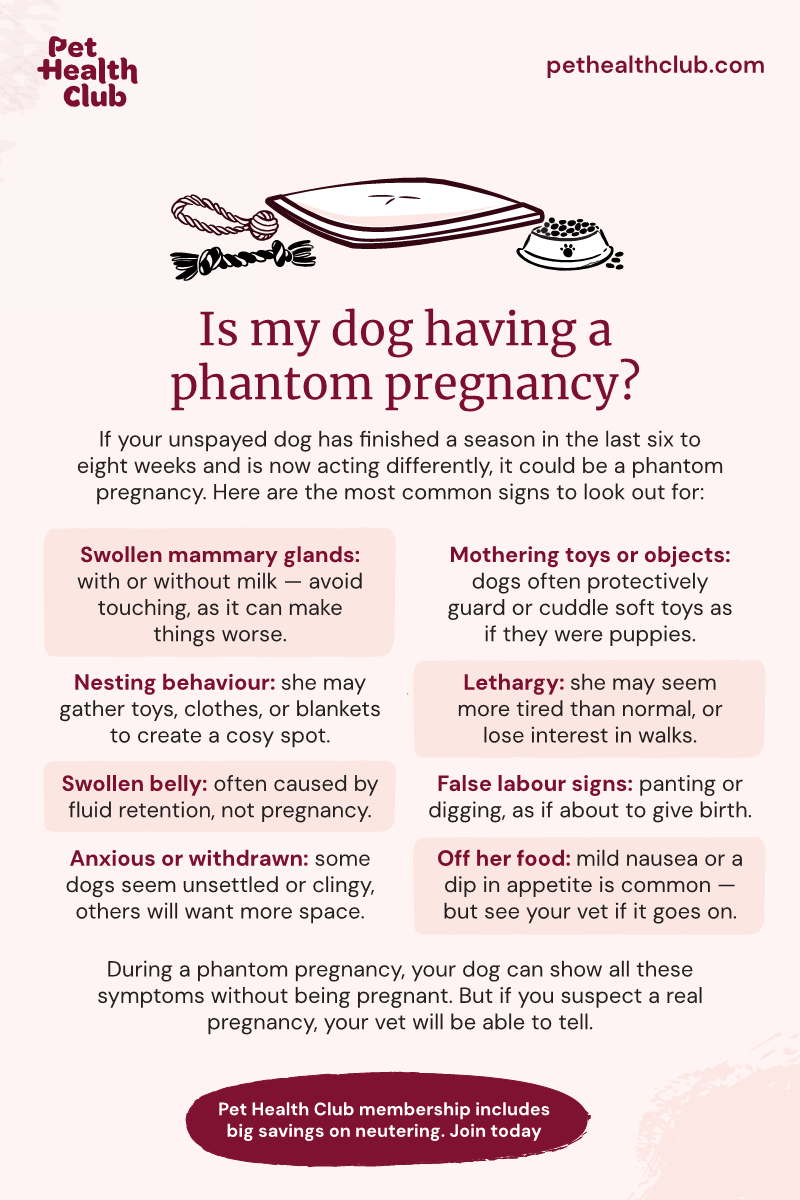
Credit: www.pethealthclub.com

We’re the dedicated team behind MyPawSafe.com, with over a decade of combined experience in veterinary care, pet emergency response, and animal behavior. While we prefer to let our work speak for itself, our mission is clear: to provide science-backed, vet-approved advice that helps pet owners prevent accidents and save lives.