Dog Pregnancy Timeline Week By Week
Dog pregnancy is a fascinating journey that lasts around 63 days—about 9 weeks. Many owners have questions about what happens during each week, how to care for their dog, and what signs to look for. Understanding the week-by-week timeline helps you provide the best support for your pregnant dog and prepare for the arrival of puppies. In this article, you’ll learn what happens during each stage, how the puppies develop, and what you should do at every step. Whether you are a first-time breeder or simply want to help your pet, this guide will give you clear, practical advice to make the experience easier and safer for both mom and pups.
Understanding Dog Pregnancy Basics
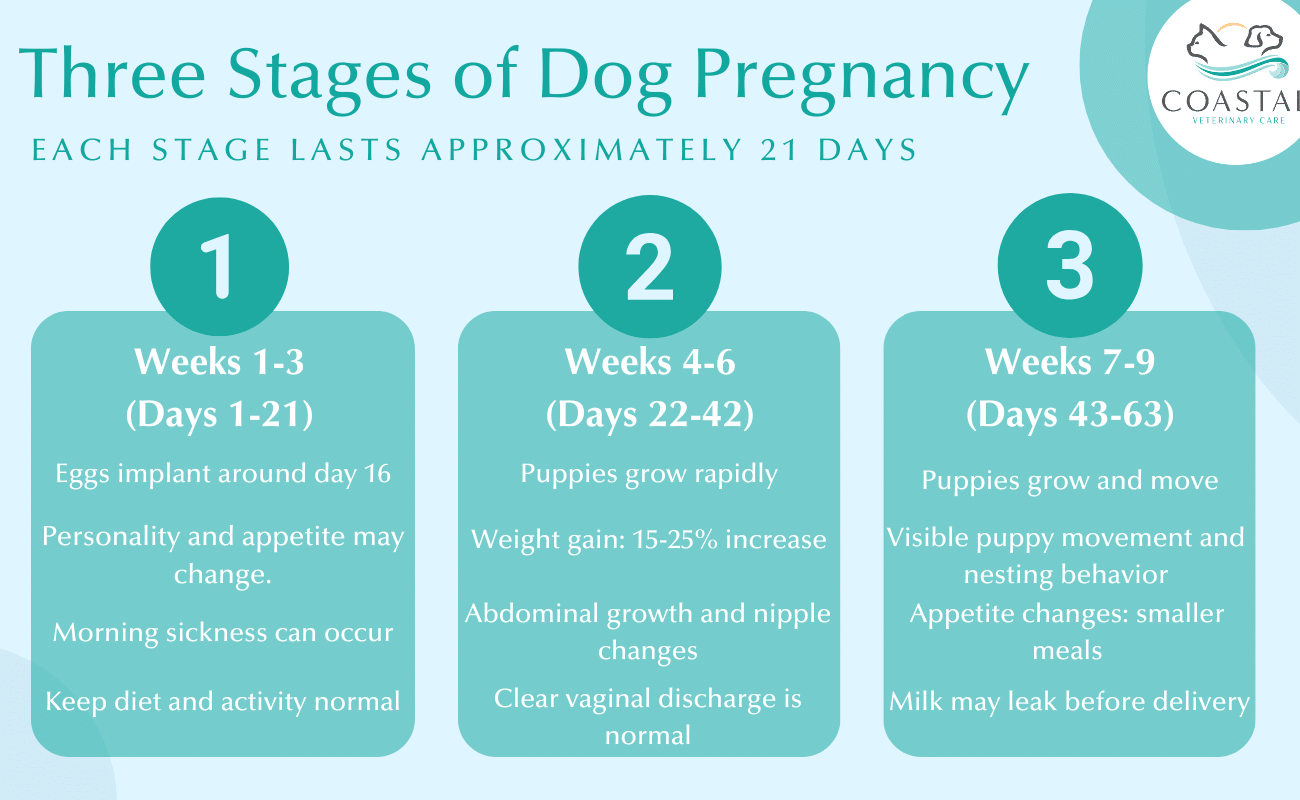
Before diving into the week-by-week timeline, it’s important to know the basics of dog pregnancy. The medical term for dog pregnancy is gestation. Most dogs are pregnant for about 58–65 days, but the average is 63 days from conception. Knowing these basics can help you recognize what’s normal and what needs attention.
How Conception Happens
Dogs become pregnant during estrus (heat), which happens twice a year for most breeds. The estrus cycle lasts around 2–3 weeks, and the most fertile days are usually between days 9 and 14. Mating is usually followed by fertilization within a few days. Not all matings lead to pregnancy, so confirmation by a vet is important. Female dogs can sometimes have what is called a “silent heat,” where signs are minimal, making it harder to predict the best time for breeding.
Some breeders use progesterone tests to pinpoint the best mating time. This increases the chances of successful fertilization, especially for valuable breeds or dogs with fertility issues.
Early Signs Of Pregnancy
Some early signs include:
- Changes in appetite
- Slight weight gain
- Lower energy levels
- Enlarged nipples
However, these signs can be subtle. Some dogs show almost no signs until several weeks into the pregnancy. For confirmation, vets may use ultrasound, blood tests, or physical exams. Ultrasound can detect puppies as early as day 25, while hormone tests can confirm pregnancy around day 30.
Non-obvious insight: False pregnancy (pseudopregnancy) can cause similar signs, such as enlarged nipples and nesting, even when there are no puppies. It’s important to confirm pregnancy with a vet to avoid mistakes.
Key Terms
- Gestation: The period from conception to birth.
- Estrus: The fertile period when the dog can become pregnant.
- Whelping: The process of giving birth.
- Pseudopregnancy: When a dog shows pregnancy signs without actually being pregnant.
Week-by-week Dog Pregnancy Timeline
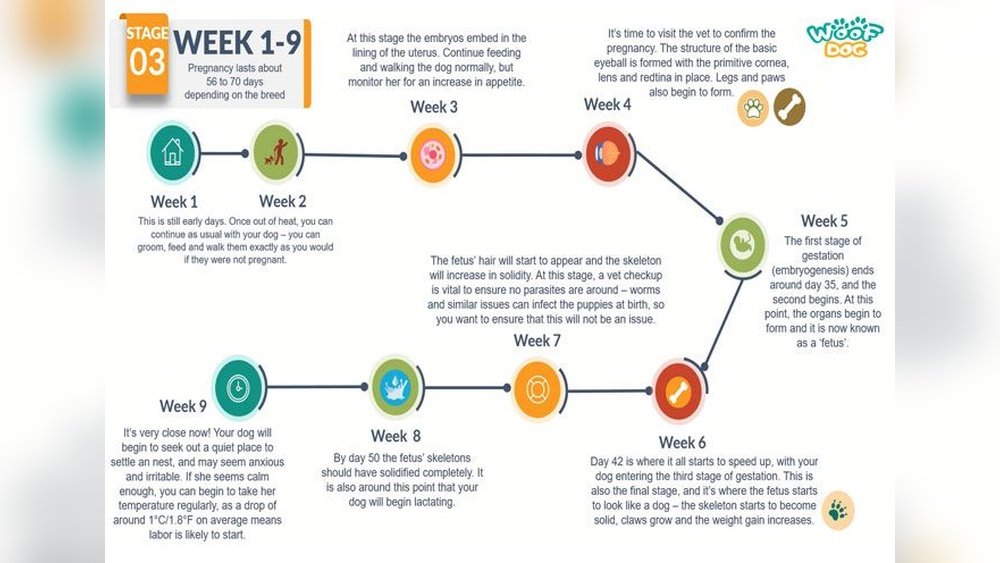
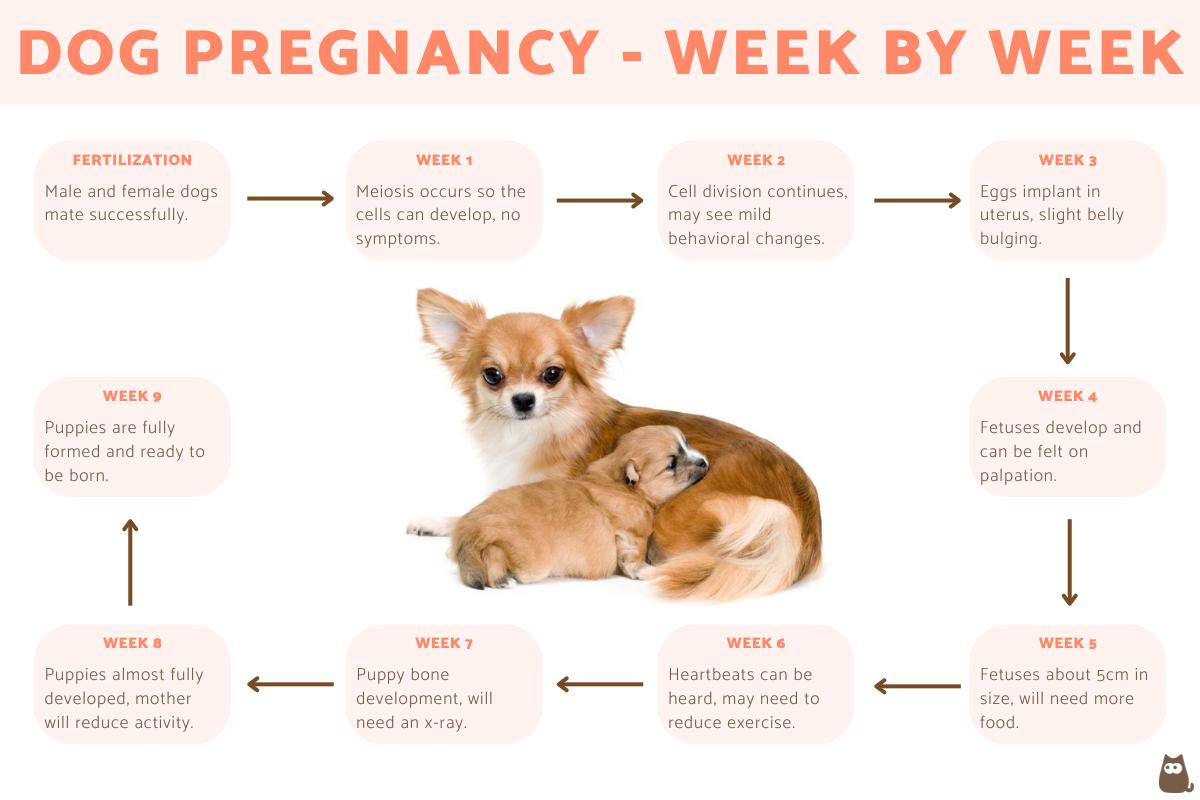
Each week of dog pregnancy brings new changes. Here’s what you should expect and do during each stage. This timeline helps you understand both visible and hidden changes happening in your dog.
Week 1: Fertilization And Early Development
After mating, sperm fertilizes the eggs inside the dog’s uterus. Fertilized eggs begin to divide and form embryos, but there are no visible signs of pregnancy yet. The dog may behave exactly as before, and her energy levels will be normal.
Tips:
- Keep the dog’s routine steady.
- Avoid stressful situations.
- Feed normal diet.
- Continue regular grooming and care.
Week 2: Embryo Migration
Embryos travel through the uterus, preparing to implant into the uterine lining. Still, there are almost no physical signs. The embryos are protected by the uterine environment, and the mother may show no behavioral changes.
Tips:
- Continue regular exercise.
- Watch for any changes in appetite.
- Be gentle during play; avoid roughhousing.
Week 3: Implantation
Embryos implant in the uterus. The body begins producing hormones to support pregnancy. Implantation is a delicate stage, so minimizing stress is important.
Possible signs:
- Slight behavioral changes
- Mild increase in hunger
- More frequent resting
Tips:
- Monitor food intake, but don’t overfeed.
- Make sure the dog has a quiet place to rest.
Week 4: Embryo Development
Puppy embryos start to grow quickly. The vet can sometimes detect pregnancy by ultrasound. Heartbeats may be visible on the ultrasound, which is an exciting milestone for owners.
Key changes:
- Uterus may enlarge slightly
- Nipples may darken and swell
- Appetite may fluctuate
Tips:
- Schedule a vet check for confirmation.
- Begin gentle walks instead of strenuous exercise.
- Consider starting a pregnancy diary to track changes and vet visits.
Week 5: Fetal Growth
The puppies’ organs, limbs, and facial features start to form. The mother’s abdomen may start to expand. Around this week, the dog’s body needs more energy and nutrients.
Changes:
- Appetite increases
- More frequent urination
- Belly becomes slightly rounder
- Coat may become shinier as hormone levels change
Tips:
- Switch to high-quality puppy food.
- Increase portion size gradually.
- Watch for signs of discomfort or bloating.
Week 6: Body Changes And Energy Needs
The puppies grow rapidly. The mother’s belly is noticeably larger. You may notice her sleeping more or seeking cooler places to rest.
Physical signs:
- Weight gain
- Nipples fully enlarged
- Hair may thin around nipples
- Some dogs have slight discharge (clear or white)
Tips:
- Increase food portions.
- Provide smaller, frequent meals.
- Limit strenuous activity.
- Watch for signs of nausea or vomiting.
- Offer comfortable bedding.
Week 7: Puppy Movement
You may feel the puppies moving inside the belly. The mother prepares for birth by nesting—digging or rearranging bedding. Some dogs become more protective of their space and may avoid strangers.
Signs:
- Visible abdominal movement
- Nesting behavior begins
- May be more tired
- Restlessness at night
Tips:
- Create a quiet, comfortable whelping area.
- Keep her away from other dogs.
- Check for any discomfort.
- Start monitoring her body temperature daily.
Week 8: Final Preparations
Puppies are almost fully developed. The mother may leak clear fluid from her nipples as she produces milk. Her appetite may decrease as the puppies press on her stomach.
Signs:
- Restlessness
- Increased nesting
- Milk production
- Occasional panting
Tips:
- Keep whelping area clean and ready.
- Stock up on supplies: Towels, gloves, puppy food.
- Check bedding daily for cleanliness.
- Limit visitors to reduce stress.
Week 9: Birth Imminent
The puppies are ready for birth. The mother will show signs of labor soon. She may become clingy or want to be alone.
Signs:
- Drop in body temperature (below 99°F)
- Refuses food
- Panting, shivering, or pacing
- May vomit before labor starts
Tips:
- Monitor temperature twice daily.
- Stay nearby but do not disturb her.
- Contact your vet if labor lasts longer than 24 hours or if there are complications.
- Prepare emergency contact information and keep your phone charged.
Puppy Development By Week
Understanding what happens inside the mother’s body helps you appreciate the miracle of birth. Each week marks important changes in the puppies’ growth.
| Week | Puppy Development |
|---|---|
| 1 | Fertilization; cells begin to divide |
| 2 | Embryos migrate to uterus |
| 3 | Implantation; start of organ development |
| 4 | Heartbeat starts; limbs begin to form |
| 5 | Facial features and organs develop |
| 6 | Puppies grow rapidly; skeletons form |
| 7 | Movement; skin and hair develop |
| 8 | Final growth; puppies ready for birth |
| 9 | Puppies born; lungs mature |
Non-obvious insight: The first four weeks are critical for organ and limb formation. Any illness or stress during this period can affect puppy development, so extra care is needed.
Physical And Behavioral Changes In Pregnant Dogs
Pregnant dogs undergo many changes. Some are easy to spot, while others are subtle. Recognizing these signs can help you respond early to any problems.
Physical Changes
- Weight gain: Most dogs gain 15–25% of their body weight.
- Enlarged abdomen: Belly expands, especially after week 5.
- Nipple changes: Nipples become larger, darker, and sometimes leak fluid.
- Hair loss: Thinning around nipples helps puppies nurse.
- Appetite changes: Early pregnancy may cause reduced appetite, followed by increased hunger.
- Mucous discharge: Some dogs have a clear or white discharge; this is normal if it’s odorless.
Behavioral Changes
- Nesting: Digging, arranging bedding, searching for safe spots.
- Tiredness: Increased sleep and lower activity.
- Affection: Some dogs become more clingy, others more distant.
- Irritability: May snap or growl at other pets.
- Protectiveness: Some dogs may guard their space or become less social.
Non-obvious insight: Some dogs become sensitive to noise and stress. Providing a quiet, calm environment can reduce problems during pregnancy. Simple changes like closing doors, lowering volume, or using calming pheromone sprays can help.
Nutritional Needs During Pregnancy
Diet is one of the most important factors for a healthy pregnancy. The mother needs more energy, protein, and calcium as the puppies grow. Good nutrition prevents birth defects and helps the mother recover after delivery.
Early Pregnancy (weeks 1–4)
Feed your dog normal adult food. Avoid overfeeding. Excess weight can make delivery harder and increase health risks.
Mid To Late Pregnancy (weeks 5–9)
Switch to high-quality puppy food. Puppy food is richer in nutrients and easier to digest. Choose a reputable brand with clear labeling and avoid foods with artificial additives.
Key nutrients:
- Protein: Supports puppy growth. Aim for 28% or higher in food.
- Calcium: Needed for bone development, but avoid supplements unless your vet approves.
- Fat: Provides energy. Look for foods with 18%–20% fat content.
Practical tips:
- Offer small, frequent meals.
- Ensure fresh water is always available.
- Avoid supplements unless recommended by a vet.
- Monitor weight weekly.
Common mistake: Overfeeding during early pregnancy can cause obesity, leading to birth complications. Another mistake is giving too much calcium, which can cause eclampsia after birth.
Example: Some owners add cottage cheese for extra calcium, but too much can disrupt the balance needed for safe whelping.
Exercise And Activity Guidelines
Exercise helps keep pregnant dogs healthy, but adjustments are needed as pregnancy progresses. Activity supports muscle tone, which helps during delivery.
Early Pregnancy
Normal walks and play are safe. Avoid rough activities. Playtime is good for mental health.
Mid Pregnancy
Reduce exercise intensity. Gentle walks are best. Avoid jumping, running, or anything that risks injury.
Late Pregnancy
Keep activity minimal. Short walks only. Focus on mental stimulation—puzzle toys, gentle petting. Some dogs enjoy sniffing games or light training to stay engaged.
Non-obvious insight: Some dogs enjoy light activity until birth, while others prefer rest. Monitor your dog’s behavior and adjust accordingly. If your dog seems uncomfortable, let her rest.
Veterinary Care And Health Monitoring
Regular vet visits are essential. Early detection of problems can save lives. A vet can spot risks and help you plan for safe delivery.
Key Tests And Exams
- Ultrasound: Detects pregnancy from day 25–28.
- X-ray: Confirms number of puppies after day 45.
- Blood test: Checks hormone levels.
Schedule:
- Initial check after mating
- Ultrasound at week 4–5
- X-ray at week 7–8
- Pre-birth check if needed
Non-obvious insight: Some vets recommend progesterone tests to predict labor, which can help if you need to schedule a cesarean section.
Signs To Watch For
- Excessive vomiting or diarrhea
- Loss of appetite for more than a day
- Severe lethargy
- Abnormal discharge
- Signs of pain or discomfort
Contact your vet immediately if any of these occur.
| Week | Recommended Vet Action |
|---|---|
| 1–2 | Monitor, no special tests needed |
| 3–4 | Ultrasound for confirmation |
| 5–6 | Assess nutrition and health |
| 7–8 | X-ray for puppy count |
| 9 | Monitor for labor signs |
Preparing For Whelping (birth)
Whelping is the process of giving birth. Preparation is key to reduce stress and prevent problems. The right setup can make the experience smoother for you and your dog.
Setting Up The Whelping Area
- Choose a quiet, clean room.
- Use a whelping box (low sides, easy to clean).
- Line with towels or blankets.
- Keep room temperature at 75–80°F.
- Make sure the area is safe from other pets and small children.
Supplies needed:
- Clean towels
- Disposable gloves
- Thermometer
- Puppy food
- Puppy scale
- Phone number for emergency vet
- Heating pad (for weak puppies)
- Sterile scissors and thread (for emergencies)
Non-obvious insight: Some dogs reject plastic whelping boxes. Try soft-sided options if your dog dislikes the setup.
Signs Of Labor
- Drop in body temperature (<99°F)
- Refusal to eat
- Panting, pacing, or shivering
- Nesting and digging
- Licking vulva excessively
What To Expect During Birth
Birth usually happens within 24 hours of labor starting. Puppies are delivered every 30–60 minutes. Sometimes, there may be a gap of up to 2 hours between puppies. The mother will bite and break the amniotic sac, then lick the puppy.
Mistakes to avoid:
- Disturbing the mother during labor
- Pulling puppies unless absolutely necessary
- Not calling the vet for problems
- Forgetting to remove soiled bedding
Caring For The Mother And Puppies After Birth
After birth, both mom and puppies need special attention. Cleanliness and warmth are vital.
Immediate Care
- Clean puppies gently if needed.
- Make sure all are breathing and moving.
- Let the mother lick and nurse her puppies.
- Help weak puppies latch if necessary.
First 24 Hours
- Monitor the mother’s temperature and appetite.
- Check puppies for signs of distress (crying, weak movement).
- Weigh puppies to ensure they are gaining weight.
- Watch for signs of infection or bleeding in the mother.
Ongoing Care
- Keep the area clean and dry.
- Feed the mother high-calorie puppy food.
- Puppies should nurse every 2–3 hours.
- Change bedding daily.
Non-obvious insight: Some mothers may ignore weak puppies. You might need to help these pups nurse or keep them warm. If the mother rejects a puppy, try rubbing the puppy with a towel that smells like the mother to encourage acceptance.
| Care Item | Mother | Puppies |
|---|---|---|
| Feeding | High-calorie puppy food | Mother’s milk, every 2–3 hours |
| Temperature | Monitor for fever | Keep at 85–90°F first week |
| Cleaning | Gently clean after birth | Mother licks, but assist if needed |
| Vet checks | Within 24–48 hours post-birth | Check for congenital issues |
How Breed And Size Affect Dog Pregnancy
Dog pregnancy varies by breed and size. Smaller dogs often have fewer puppies but higher risks during birth. Larger dogs may carry more puppies and have easier deliveries. Knowing your dog’s breed traits can help you plan better.
Breed Differences
- Small breeds: 1–4 puppies on average
- Medium breeds: 4–8 puppies
- Large breeds: 8–12 puppies
Unique Risks
- Small dogs: Higher risk of dystocia (difficult birth)
- Large dogs: Higher risk of puppy loss due to crowding
Example: A Chihuahua may need a cesarean section, while a Labrador Retriever often gives birth naturally.
Non-obvious insight: Some breeds, like Bulldogs, almost always require C-sections due to large puppy heads and narrow pelvises.
Credit: www.infinibandta.org
Common Complications And Warning Signs
Dog pregnancy can have complications. Knowing what to watch for can make a big difference. Quick action saves lives.
Complications
- Eclampsia: Low calcium, causes tremors and seizures. Emergency!
- Mastitis: Infection of nipples, causes pain and fever.
- Dystocia: Difficult labor, may require surgery.
- Stillbirth: One or more puppies die before birth.
- Retained placenta: Can cause infection and fever.
Warning Signs
- Prolonged labor (>2 hours between puppies)
- Excessive bleeding
- Green discharge before puppies are born
- Mother not caring for puppies
- Puppy born not breathing
If any of these happen, contact your vet immediately.
Practical Tips For First-time Owners
Raising puppies is rewarding but challenging. Here are some tips that can help:
- Keep a diary: Track dates, signs, and vet visits.
- Prepare supplies early: Don’t wait until the last minute.
- Have a support network: Ask experienced breeders or your vet for advice.
- Stay calm during labor: Dogs sense your emotions.
- Monitor puppies daily: Weigh them, check for nursing.
Non-obvious insight: Puppies should double their birth weight by day 10. If they don’t, consult your vet. Also, if a puppy cries constantly or fails to latch, it may need extra feeding or warmth.

Credit: www.otrosinainvest.cz
Week-by-week Owner Checklist
To make things easier, here’s a simple week-by-week checklist:
- Week 1–2: Record mating date, keep routine normal.
- Week 3–4: Watch for early signs, schedule vet ultrasound.
- Week 5–6: Switch to puppy food, monitor weight.
- Week 7: Prepare whelping area, start supplies.
- Week 8: Monitor nesting, check for milk.
- Week 9: Watch for labor signs, keep vet on call.
Dog Pregnancy Timeline Vs. Human Pregnancy
Dog pregnancy is much shorter than human pregnancy. Here’s a simple comparison:
| Species | Pregnancy Length | Average Litter Size |
|---|---|---|
| Dog | 63 days (9 weeks) | 6 puppies |
| Human | 280 days (40 weeks) | 1 baby |
Non-obvious insight: Unlike humans, dogs can give birth to puppies at slightly different stages of maturity. Some puppies are smaller or weaker, so monitoring each one is important.
When To Seek Emergency Help
Some signs mean you need help right away. These include:
- Continuous vomiting or collapse
- Pup stuck in birth canal
- Green or foul discharge before birth
- Mother not breathing or unconscious
- Puppies not breathing
Don’t wait. Call your vet or emergency animal hospital immediately. Quick response can prevent tragedy.
Resources For Dog Pregnancy
If you need more information or want to learn about dog pregnancy research, check out Cornell University College of Veterinary Medicine, a respected resource for animal health.
Credit: coastalveterinarycare.vet
Frequently Asked Questions
How Can I Confirm If My Dog Is Pregnant?
The most reliable way is through a veterinary ultrasound after 25 days. Blood tests and physical exams may also help, but ultrasound is best for early confirmation.
How Many Puppies Will My Dog Have?
The number depends on breed and size. Small breeds have 1–4 puppies, medium breeds 4–8, and large breeds 8–12. An X-ray at week 7–8 gives an exact count.
What Should I Feed My Pregnant Dog?
Feed normal adult food in early pregnancy. After week 5, switch to high-quality puppy food. Avoid supplements unless your vet recommends them.
How Do I Know When My Dog Is Going Into Labor?
Signs include restlessness, nesting, refusal to eat, and a drop in body temperature below 99°F. Monitor her closely and prepare the whelping area.
What Should I Do If My Dog Has Trouble Giving Birth?
If labor stalls or you see excessive bleeding, green discharge, or a puppy stuck, contact your vet immediately. Quick action can save lives.
Dog pregnancy is a journey full of excitement and responsibility. With careful attention and preparation, you can help your dog and her puppies stay healthy and safe. Understanding each week of the pregnancy lets you respond to changes and prevent problems.
Remember, your vet is your best partner throughout this process. Take notes, stay calm, and cherish the experience—soon, you’ll welcome new puppies into your home.

We’re the dedicated team behind MyPawSafe.com, with over a decade of combined experience in veterinary care, pet emergency response, and animal behavior. While we prefer to let our work speak for itself, our mission is clear: to provide science-backed, vet-approved advice that helps pet owners prevent accidents and save lives.