Weaning is a big step in a puppy’s life. It is when puppies move from mother’s milk to solid food. This change affects their health, growth, and behavior. If you are a breeder, pet owner, or shelter worker, understanding how to introduce solid food to weaning puppies is essential. Mistakes during this stage can lead to poor nutrition, digestive problems, and even stress in puppies.
Let’s explore the process, learn about the best practices, and avoid common errors. You will find practical advice, helpful tips, and real examples. By the end, you will feel confident guiding puppies through their first meals.
Understanding Weaning In Puppies
Weaning means shifting puppies from their mother’s milk to other food. This usually happens between 3 to 8 weeks of age. The exact timing depends on the breed, litter size, and the mother’s health.
Why is weaning important? Mother’s milk gives puppies antibodies and easy-to-digest nutrients. As puppies grow, their energy needs increase. They also start developing teeth and become curious about their surroundings, including food. Weaning prepares puppies for a life without their mother.
Signs Puppies Are Ready For Weaning
Look for these signs:
- Puppies show interest in their mother’s food.
- Teeth begin to emerge.
- Puppies can crawl or walk easily.
- The mother starts to push puppies away or spend less time feeding.
Each puppy is unique. Some may start earlier, while others need more time. Watch closely and adjust as needed.
Choosing The Right Solid Food
Picking the best food for weaning puppies is critical. It impacts their growth, immunity, and digestion.
Types Of Puppy Food
- Commercial puppy food – Specially made for puppies, balanced, and easy to find.
- Homemade diets – Custom meals with fresh ingredients. Needs careful planning.
- Raw diets – Popular in some circles, but riskier for young puppies.
Most experts recommend commercial puppy food for weaning. It is made for their needs and is safer for beginners.
What To Look For In Puppy Food
- Protein content: Puppies need more protein than adult dogs. Look for food with 22–32% protein.
- Fat content: Fat gives energy. Aim for 8–20%.
- Calcium and phosphorus: Important for bone growth.
- Digestibility: Puppies have sensitive stomachs.
- Small kibble size: Easier for puppies to chew.
Check the label. Choose food made for puppies, not adult dogs. Avoid food with artificial colors, high salt, or sugar.
Wet Vs. Dry Food
Wet food (canned) is soft and easy to eat. Dry food (kibble) is harder but can be soaked in water. Both are good, but dry food is more popular for weaning because you can control its texture.
Here’s a comparison:
| Feature | Wet Food | Dry Food |
|---|---|---|
| Texture | Soft | Hard/Crunchy |
| Water Content | High (70–80%) | Low (10–12%) |
| Convenience | Messy | Easy to store |
| Price | Usually expensive | Usually cheaper |
| Dental Health | Less cleaning effect | Helps clean teeth |
Common Mistakes In Food Choice
- Using adult dog food for puppies.
- Picking food with too much filler (corn, soy).
- Ignoring protein and fat percentages.
- Not checking for recalls or quality issues.
Always check reviews and buy from trusted brands.
Preparing Solid Food For Weaning Puppies
Once you have chosen the right food, it’s time to prepare it for your puppies.
How To Make Puppy Gruel
In the early stage, puppies need food that is easy to eat and digest. Puppy gruel is a soft mixture made by blending dry puppy food with water or puppy formula.
How to prepare:
- Take dry puppy kibble.
- Add warm water or puppy milk replacer (not cow’s milk).
- Let it soak for 10–20 minutes.
- Mash it with a spoon until smooth.
- The gruel should be about the consistency of oatmeal.
As puppies get older, use less water and make the food thicker.
Practical Tips
- Always use clean bowls and utensils.
- Prepare small portions; puppies have tiny stomachs.
- Discard uneaten food after 30 minutes to avoid bacteria.
- Use shallow dishes so puppies can reach the food easily.
Data: Water-to-kibble Ratio
| Puppy Age (weeks) | Water-to-Kibble Ratio | Texture |
|---|---|---|
| 3–4 | 3:1 | Very soft, almost liquid |
| 5–6 | 2:1 | Soft, but thicker |
| 7–8 | 1:1 | Soft, slightly chunky |
Adjust based on your puppy’s progress.
Introducing Solid Food Step-by-step
Moving from milk to solid food is gradual. Here’s how to guide puppies through this change.
Step 1: Start With Gruel
Begin when puppies are 3–4 weeks old. Offer the gruel in a shallow dish once or twice a day. Let puppies explore and taste it. They may step in it, lick, or play. This is normal.
Step 2: Reduce Milk And Increase Food
Over the next week, offer gruel more often. The mother will start feeding less. Slowly reduce the amount of milk replacer in the gruel and add more kibble.
Step 3: Thicken The Food
By 5–6 weeks, puppies should eat thicker food. Make the gruel less watery. Watch for signs they are chewing more.
Step 4: Offer Dry Kibble
At 7–8 weeks, most puppies can eat dry kibble. Offer some soaked kibble and some dry. This helps them adjust.
Step 5: Monitor Each Puppy
Some puppies will switch quickly. Others need more time. Watch for signs of tummy upset, diarrhea, or refusal to eat. Adjust the pace as needed.
Example: Real-life Weaning Schedule
Let’s look at a typical schedule for a litter of Labrador puppies:
- Week 3: Puppies start gruel (soaked kibble with milk replacer)
- Week 4: Two gruel meals daily, mother still feeds
- Week 5: Three gruel meals daily, mother feeds less
- Week 6: Four meals daily, gruel is thicker, mother stops feeding
- Week 7: Offer both soaked and dry kibble
- Week 8: Puppies fully weaned, eating dry puppy food
Not all breeds follow the same timeline. Smaller breeds may need longer; larger breeds may transition faster.
Handling Common Weaning Challenges
Weaning is not always smooth. Puppies can face problems like diarrhea, refusal to eat, or slow growth.
Diarrhea In Weaning Puppies
This is common but can be dangerous. Causes include:
- Sudden change in diet
- Too much food
- Bacteria from dirty bowls
To prevent:
- Change food gradually.
- Keep feeding areas clean.
- Offer small portions.
If diarrhea lasts more than 24 hours or puppies seem weak, see a vet.
Refusal To Eat
Some puppies are picky. Try these ideas:
- Make gruel warmer (not hot).
- Use puppy milk replacer for flavor.
- Feed in a calm, quiet place.
- Feed with siblings—puppies copy each other.
Slow Growth
If puppies are not gaining weight:
- Check food quality and quantity.
- Weigh puppies daily.
- Watch for signs of illness.
- Ask your vet for advice.
Practical Insight: The “puppy Competition” Effect
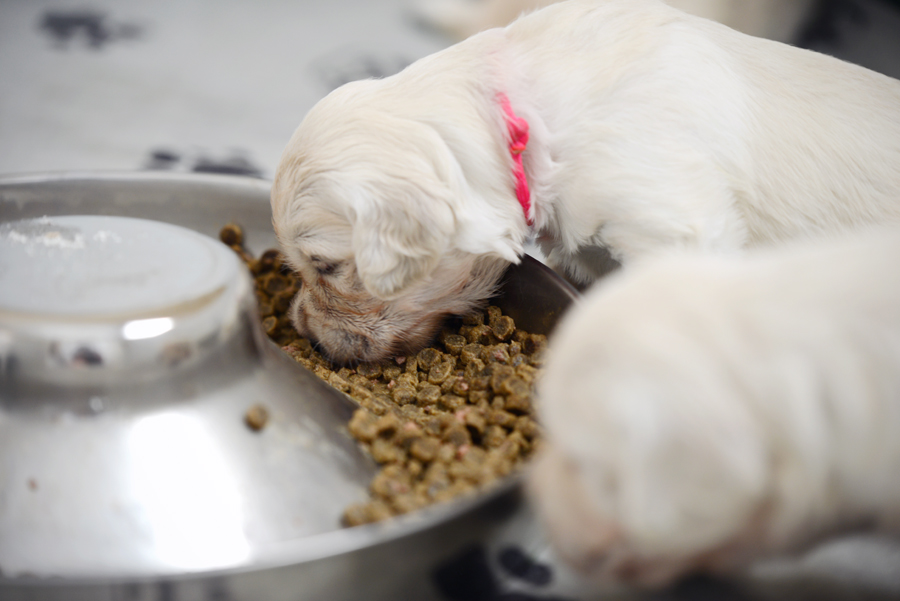
When puppies eat together, stronger ones may eat more. Weaker puppies can miss out. To avoid this, supervise mealtimes or use separate bowls for each puppy.
Monitoring Puppy Health During Weaning
Weaning is more than just food. It’s about health, growth, and well-being.
Weighing Puppies
Track weight daily or every other day. Healthy puppies gain 5–10% of their body weight each week. Use a small digital scale.
Signs Of Healthy Weaning
- Steady weight gain
- Bright eyes and clean fur
- Playful behavior
- Firm, brown stools
Warning Signs
- Weight loss or lack of gain
- Diarrhea or vomiting
- Lethargy (tiredness)
- Swollen belly
If you see any warning signs, consult your vet.
Data Table: Puppy Weight Gain
| Breed Size | Birth Weight (oz) | Expected Weight at 8 Weeks (lbs) |
|---|---|---|
| Toy | 2–5 | 2–4 |
| Small | 5–8 | 4–8 |
| Medium | 8–16 | 8–15 |
| Large | 16–24 | 15–30 |
Use this table as a guideline. Each puppy is different.
How Often And How Much To Feed Weaning Puppies
Feeding frequency and portion size are key factors.
Feeding Schedule
Most puppies need 3–4 meals per day during weaning. This keeps their energy steady and avoids tummy upset.
Example schedule:
- 7 am: First meal
- 11 am: Second meal
- 3 pm: Third meal
- 7 pm: Fourth meal
Adjust based on your routine and puppy appetite.
Portion Sizes
Start with 1/4 cup of gruel per meal for small puppies. Larger breeds may need 1/2 cup. Watch how much puppies eat and adjust. Don’t force-feed.
Practical Insight: The “growth Spurt” Trap
Puppies may have periods of rapid growth. Owners sometimes give too much food, thinking more is better. Overfeeding can cause diarrhea and bad habits. Stick to gradual increases.
Transitioning From Gruel To Dry Food
The final step is moving puppies to regular dry food.
Gradual Transition
Over one week:
- Reduce soaking time for kibble.
- Mix dry and soaked food.
- Watch puppies for chewing and swallowing.
By 8 weeks, most puppies should eat dry kibble easily.
Example: Transition Plan
Day 1–2: 100% Soaked Kibble
Day 3–4: 75% Soaked, 25% Dry
Day 5–6: 50% Soaked, 50% Dry
Day 7–8: 25% Soaked, 75% Dry
Day 9+: 100% Dry Kibble
This helps puppies adjust and avoids tummy upset.
Hygiene And Safety During Weaning
Cleanliness is critical for puppies. Dirty bowls or food can cause illness.
Tips For Hygiene
- Wash bowls after every meal.
- Use clean water for soaking food.
- Store food in airtight containers.
- Discard uneaten food after 30 minutes.
- Keep feeding areas dry and clean.
Example: Disease Risk
Puppies are at risk for parvovirus, which spreads through dirty environments. Always wash your hands and keep play areas separate from feeding areas.
Socialization And Feeding Habits
Weaning is also about teaching puppies to eat with others and develop good habits.
Group Feeding
Let puppies eat together, but watch for fights or bullying. Separate weak puppies if needed.
Handling Puppies During Feeding
Touch puppies gently while they eat. This helps them get used to humans and reduces food aggression.
Practical Insight: The “food Guarding” Behavior
If a puppy growls or guards food, don’t punish. Instead, hand-feed and reward calm behavior. This prevents problems later.

Credit: www.infinibandta.org
Special Cases: Orphaned And Sick Puppies
Not all puppies have a mother. Orphaned or sick puppies need extra care.
Feeding Orphaned Puppies
Use puppy milk replacer, not cow’s milk. Start solid food at 3–4 weeks as usual, but watch for slower progress.
Sick Puppies
If a puppy is sick, consult your vet before changing food. Sometimes, bland diets (boiled chicken and rice) are needed.
Example: Orphaned Puppy Progress
An orphaned Yorkshire Terrier puppy starts gruel at 4 weeks, with extra warmth and hand-feeding. By 8 weeks, it eats dry kibble like other puppies.
Breeds And Weaning Differences
Different breeds wean at different rates. Small breeds (like Chihuahuas) may need more time. Large breeds (like German Shepherds) often wean faster.
Breed Example
- Toy breeds: May need softer food longer, up to 10 weeks.
- Large breeds: Can switch to dry food by 7–8 weeks.
Adjust your plan based on your breed.

Credit: www.infinibandta.org
Expert Tips For Successful Weaning
Based on experience, here are some advanced tips:
- Use puppy formula for flavor if puppies resist gruel.
- Keep feeding sessions calm—loud noises scare puppies.
- Rotate feeding spots to prevent dominance.
- Handle puppies gently—stress can affect digestion.
- Involve the mother—let her eat near puppies, but watch for aggression.
- Track each puppy—weaker ones need extra help.
- Consult your vet for advice on food brands and health issues.
When To Seek Veterinary Help
Not every problem can be fixed at home. Call your vet if:
- Puppies show signs of dehydration (dry mouth, sunken eyes)
- Diarrhea lasts more than 24 hours
- Puppies refuse food for more than one meal
- Vomiting or blood in stool
- Poor weight gain
Early action prevents bigger problems.
Comparing Puppy Food Brands
Choosing a brand can be hard. Here’s a quick comparison:
| Brand | Protein (%) | Fat (%) | Calcium (%) | Price (per lb) |
|---|---|---|---|---|
| Royal Canin Puppy | 29 | 18 | 1.2 | $3.50 |
| Hill’s Science Diet Puppy | 25 | 14 | 1.1 | $3.20 |
| Purina Pro Plan Puppy | 28 | 17 | 1.3 | $2.80 |
| Blue Buffalo Puppy | 27 | 15 | 1.2 | $3.00 |
Check reviews and ask your vet before choosing.
Non-obvious Insights For Weaning Success
Many guides miss these points:
- Puppies develop food preferences early. Introducing different textures and flavors helps prevent picky eating later.
- Puppies copy their littermates. If one puppy eats, others are more likely to try new food. Encourage group meals, but supervise closely.
Trusted Resources For Puppy Weaning
For more details, see this guide from the American Kennel Club. It covers nutrition, health, and practical advice for puppy owners.
Frequently Asked Questions
What Age Should Puppies Start Eating Solid Food?
Most puppies start solid food at 3–4 weeks old. Watch for signs like teeth emerging and interest in food. Small breeds may need to start later.
How Do I Know If My Puppy Is Ready For Weaning?
If your puppy crawls or walks well, shows interest in food, and has teeth, it’s ready. Also, the mother will feed less and spend less time with puppies.
Can I Use Cow’s Milk For Puppy Gruel?
No. Cow’s milk can cause diarrhea. Use puppy milk replacer or warm water to soak kibble. This is safer and easier for puppies to digest.
How Often Should I Feed Weaning Puppies?
Feed puppies 3–4 times per day. Small meals help their digestion and energy. Adjust based on appetite and breed size.
What If My Puppy Refuses Solid Food?
Try making the food warmer, using puppy milk replacer, or feeding in a calm place. If refusal lasts more than one meal, consult your vet.
Puppy weaning is a journey. With careful planning, patience, and gentle handling, you can help puppies grow strong and healthy. Remember, every puppy is unique. Watch closely, adjust as needed, and enjoy this special time in their lives.
Credit: www.infinibandta.org

We’re the dedicated team behind MyPawSafe.com, with over a decade of combined experience in veterinary care, pet emergency response, and animal behavior. While we prefer to let our work speak for itself, our mission is clear: to provide science-backed, vet-approved advice that helps pet owners prevent accidents and save lives.