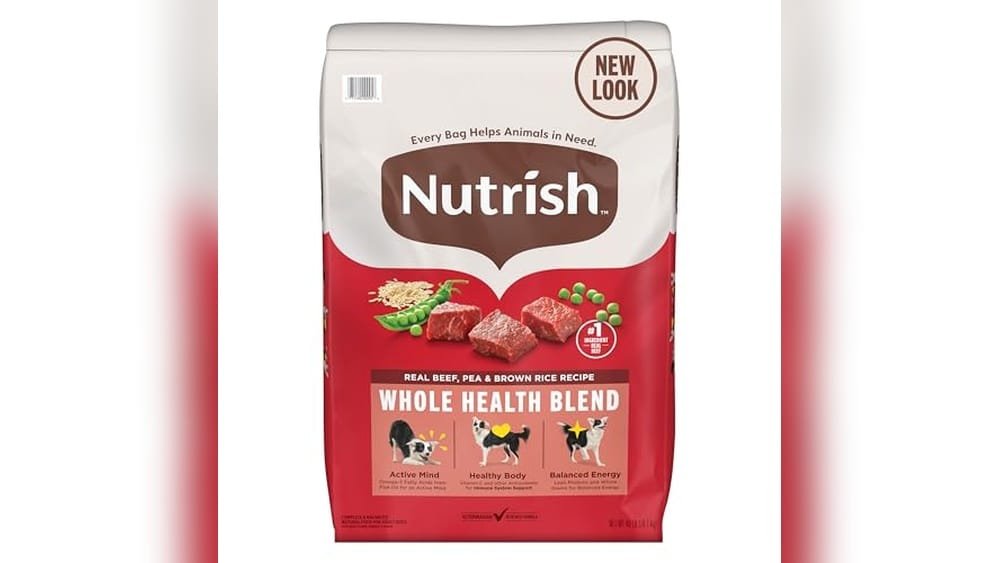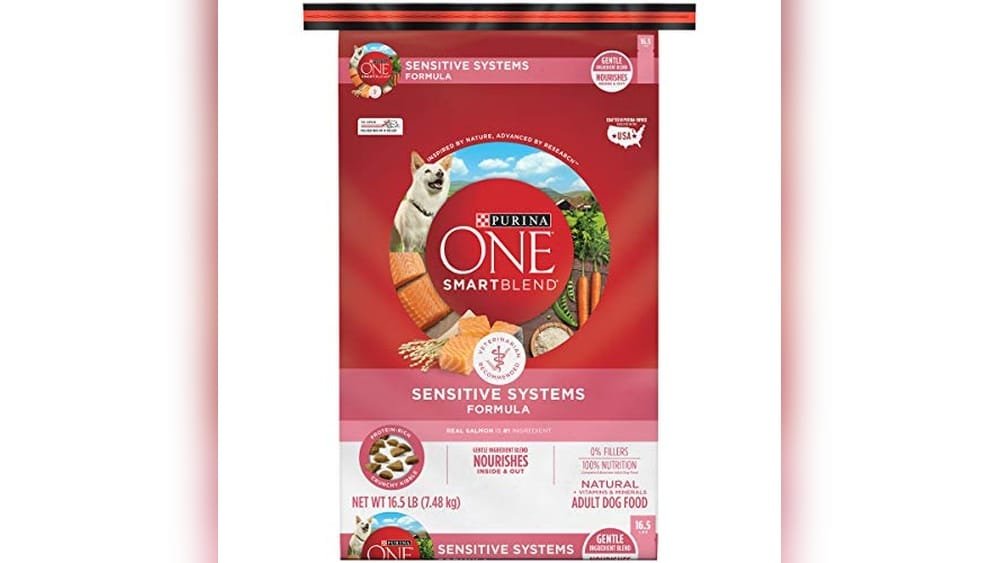
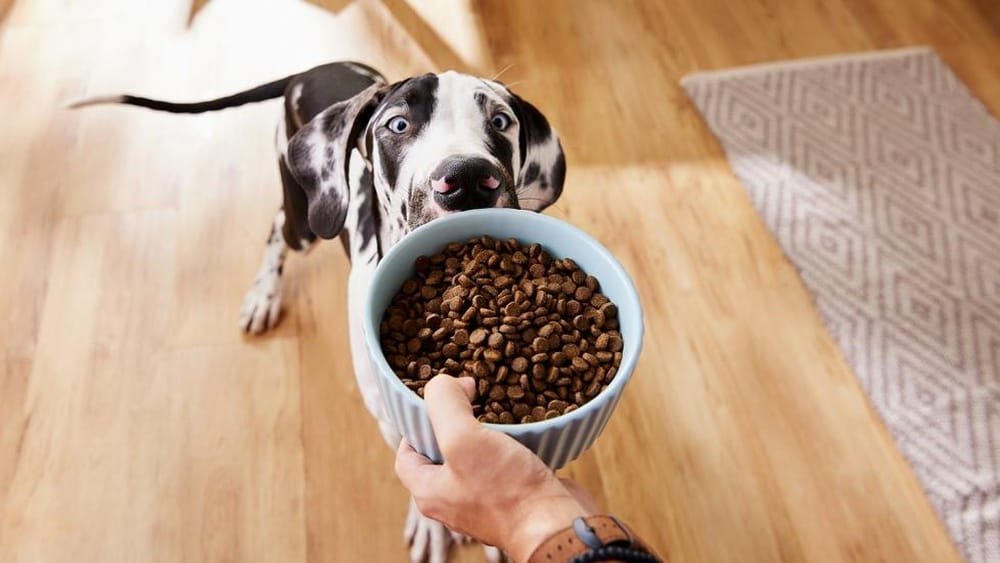
Every dog owner wants the best for their furry friend, and choosing the right food is one of the most important decisions you can make. But when you walk down the pet food aisle, you’re greeted by a wall of bags with colorful labels, nutrition claims, and confusing ingredient lists.
If you feel lost reading a dry dog food label, you’re not alone. Understanding what’s inside the bag is not just about price or brand—it’s about your dog’s health and happiness. With a little knowledge, you can confidently pick a dry dog food that fits your pet’s needs, avoid misleading marketing, and steer clear of hidden ingredients that might not be as healthy as they sound.
Let’s break down the label together, step by step. You’ll learn how to spot the most important information, what those technical terms actually mean, and how to compare different brands with real examples. This guide is designed for dog lovers who want simple, practical advice—whether you’re buying for a playful puppy, an energetic adult, or a gentle senior.
By the end, you’ll be able to read any dry dog food label like a pro and make choices your dog will thank you for.
Why Reading A Dry Dog Food Label Matters
Dog food is more than just fuel. The nutrition your dog receives affects their coat, energy, digestion, and even their mood. Many owners trust the marketing on the front of the bag—words like “premium,” “natural,” or “real chicken”—without checking the full label.
But not all dog foods are equal, and some can even contain low-quality fillers or unnecessary additives.
Reading a dry dog food label gives you the power to:
- Avoid harmful ingredients that may cause allergies or digestive problems.
- Choose the right nutrients for your dog’s age, size, and health needs.
- Compare brands based on facts, not just advertising.
- Spot hidden sugars, salts, and artificial additives.
- Save money by picking food that offers real value, not just a fancy package.
Many people miss that labels are regulated, but not always in the way you expect. For example, the ingredient list might show “chicken” first, but the way ingredients are measured can be misleading. You’ll learn how to see through these tricks in the next sections.
Key Parts Of A Dry Dog Food Label
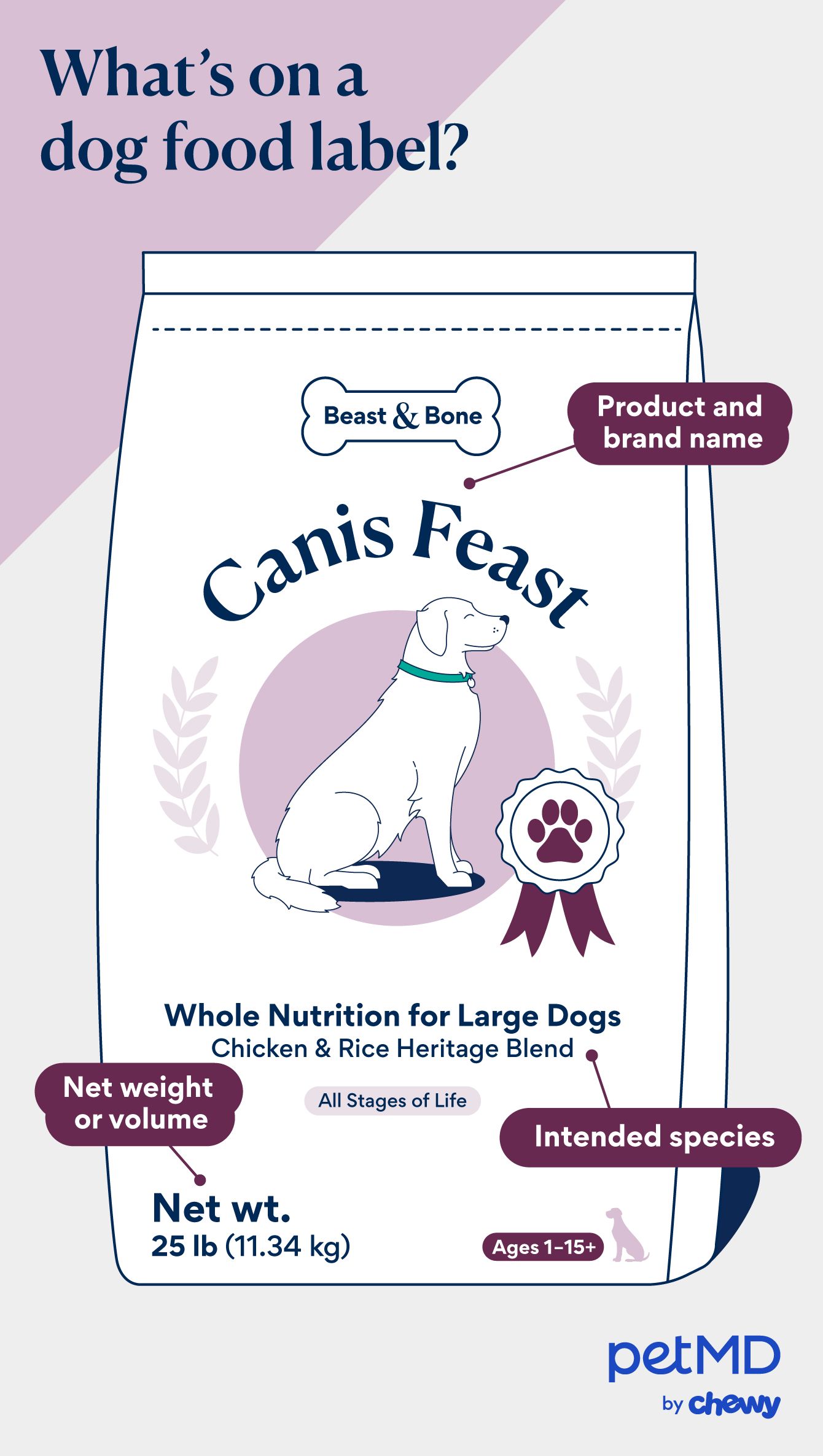
A dry dog food label has several parts. Some are easy to spot, while others are hidden in the fine print. Here are the main elements you need to understand:
- Product Name
- Brand Name
- Net Weight
- Guaranteed Analysis
- Ingredient List
- Nutritional Adequacy Statement
- Feeding Guidelines
- Manufacturer Information
- Expiration or “Best By” Date
- Batch/Lot Number
- Special Claims and Certifications
Let’s look at each part in detail, with real-world examples and tips.
Product Name And What It Really Means
The product name is often the first thing you notice. Words like “Chicken Formula” or “Beef Dinner” sound simple, but there are rules behind them—especially in the United States and European Union.
- “Chicken Dog Food”: Must contain at least 95% chicken (excluding water).
- “Chicken Dinner,” “Chicken Formula,” or “With Chicken”: These mean much less chicken—sometimes as little as 3%.
- “Chicken Flavor”: Only needs to taste like chicken, not contain much of it.
This can be confusing. For example, “Beef Formula” and “Beef Dog Food” are not the same. The first might have more grains or fillers, even if beef is in the name.
Example Comparison
| Product Name | What It Means | Minimum Meat Content |
|---|---|---|
| Chicken Dog Food | Mainly chicken | 95% |
| Chicken Dinner | Some chicken, mostly other ingredients | 25% |
| Dog Food with Chicken | Small amount of chicken | 3% |
| Chicken Flavor Dog Food | Chicken taste, little or no actual chicken | No minimum |
Tip: Don’t be fooled by big words on the front. Always check the full ingredient list.
Brand Name And Reputation
While the brand name can signal quality, it’s not a guarantee. Some famous brands use strong marketing but add lots of fillers. Lesser-known brands may actually use better ingredients.
- Research the brand: Do they have recalls? What is their history?
- Look for transparency: Some brands share where they source meat or how they test for quality.
- Don’t pay only for the name: Sometimes store brands are as good as big names.
Non-obvious insight: Some pet food brands make both their premium and budget lines in the same factory, using similar ingredients. Always check the label, not just the reputation.
Net Weight And Package Size
Net weight tells you how much food is in the bag, usually in pounds or kilograms. This helps you compare the value between brands and sizes.
- Price per kilogram or pound: Divide price by weight to find real value.
- Feeding amount: A cheap large bag might not be a good deal if you need to feed more per day because of low nutrient density.
Example: A 10 kg bag costing $30 is $3 per kg. But if you need to feed twice as much as a $4 per kg bag, you’re not saving money.
Guaranteed Analysis: Understanding The Numbers
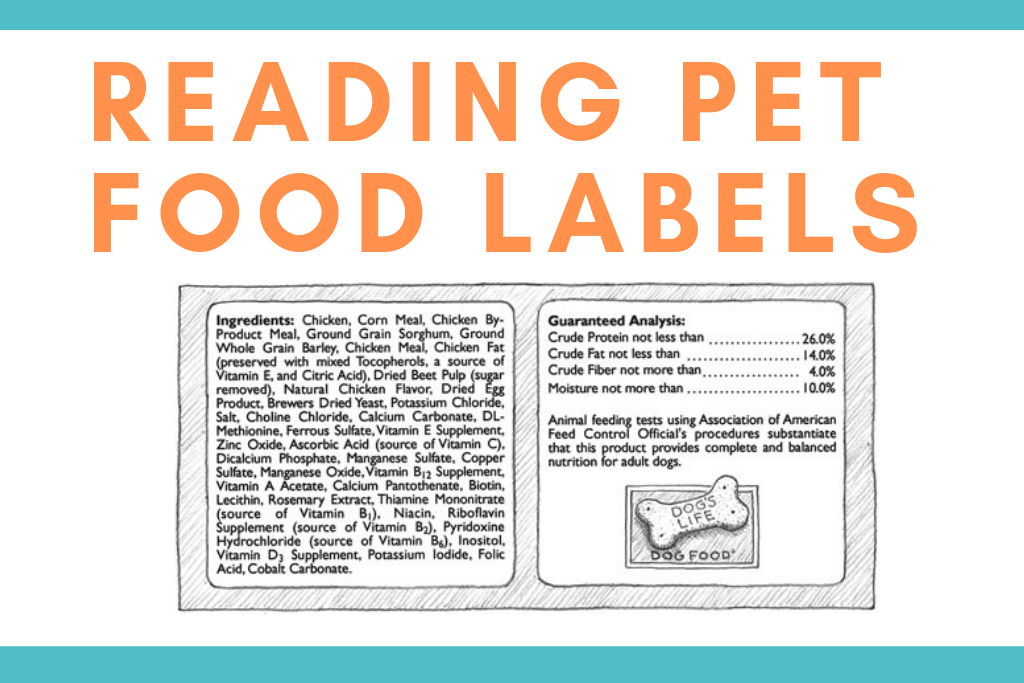
The guaranteed analysis is a small panel showing the minimum or maximum amounts of key nutrients:
- Crude Protein
- Crude Fat
- Crude Fiber
- Moisture
Some labels include extras like calcium, omega-3, or vitamins.
What These Numbers Mean
- Crude protein: Total protein, including both digestible and indigestible.
- Crude fat: Essential for skin, coat, and energy.
- Crude fiber: Helps with digestion but too much can lower digestibility.
- Moisture: Usually low in dry food (8-12%).
Comparing Two Foods
| Nutrient | Food A | Food B |
|---|---|---|
| Crude Protein | 24% | 28% |
| Crude Fat | 12% | 15% |
| Crude Fiber | 4% | 3.5% |
| Moisture | 10% | 9% |
How to use this: Higher protein and fat might be better for active or young dogs; lower fat could help overweight dogs. Always match the numbers to your dog’s age, breed, and lifestyle.
Non-obvious insight: Some brands “boost” protein by adding plant proteins (like peas or potatoes), which are less digestible than animal proteins. Check the ingredient list to see the protein sources.
Credit: gooddogpeople.com
Ingredient List: What’s Really Inside
The ingredient list is the most important part of the label. It shows every ingredient in order from most to least by weight.
- First ingredient: Usually the main protein, like chicken or beef.
- Next ingredients: Grains, vegetables, fats, vitamins, and minerals.
- Watch for “splitting”: Brands sometimes break up similar ingredients (like “pea protein,” “pea flour,” “pea fiber”) so they appear lower on the list.
Common Ingredients And What They Mean
- Meat (chicken, beef, lamb, fish, etc. ): Good source of protein.
- Meat meal: Concentrated protein powder; quality varies.
- By-products: Can include organs or other animal parts; not always bad, but quality is uncertain.
- Grains (corn, wheat, rice): Energy source; some dogs have sensitivities.
- Vegetables (peas, carrots, sweet potatoes): Fiber and vitamins.
- Fats (chicken fat, fish oil): Needed for energy and coat.
- Artificial colors or flavors: Unnecessary, may cause allergies.
- Preservatives (BHA, BHT, ethoxyquin): Some are controversial, look for natural preservatives.
Ingredient Order Example
A label showing: “Chicken, chicken meal, brown rice, barley, pea protein, chicken fat, flaxseed, dried beet pulp, natural flavor, vitamins, minerals.”
- Chicken: Fresh, but includes water (so weight drops after cooking).
- Chicken meal: Dried, concentrated protein—often higher in actual meat than fresh chicken.
- Brown rice, barley: Carbohydrates and fiber.
- Pea protein: Plant protein, increases crude protein number but not as digestible.
Practical tip: If two or more animal proteins are among the first three ingredients, it’s usually a good sign.
Nutritional Adequacy Statement
This small text is often overlooked but is one of the most important clues to quality. It tells you if the food is “complete and balanced” for a specific life stage, according to standards set by groups like AAFCO (Association of American Feed Control Officials) or FEDIAF in Europe.
- “For all life stages”: Suitable for puppies, adults, and seniors (but may be too rich for some).
- “For adult maintenance”: Good for adult dogs, not for puppies or pregnant dogs.
- “For supplemental or intermittent feeding only”: Not balanced—should not be your dog’s main food.
Non-obvious insight: Foods labeled “all life stages” must meet the needs of puppies (high calories, calcium, protein), which can be too much for less active or older dogs. Pick a food that matches your dog’s life stage.
Feeding Guidelines: How Much To Feed
Every dry dog food label includes a feeding chart. These are based on average weights and energy needs.
- Find your dog’s weight on the chart.
- Check the recommended daily amount (usually in grams or cups).
- Adjust for activity level: Very active dogs may need more; less active or older dogs may need less.
Example feeding chart:
| Dog Weight | Daily Amount (grams) |
|---|---|
| 5 kg | 100 g |
| 10 kg | 170 g |
| 20 kg | 280 g |
| 30 kg | 380 g |
Practical tip: Start with the recommended amount but watch your dog’s weight and energy. Adjust as needed. Every dog is unique.
Manufacturer Information And Contact Details
Reliable brands provide a physical address, website, phone number, or even an email. This allows you to:
- Contact them with questions
- Check for recalls or updates
- See where the food is made
Red flag: If you can’t find clear contact information, be cautious. Trustworthy brands want to hear from customers.
Expiration Date And Batch Number
Every bag of dry dog food should have a “Best By” date and a batch or lot number.
- Best By date: Choose bags with the longest date for freshness.
- Batch/lot number: Useful if there’s a recall or quality issue.
Practical tip: Store dry food in a cool, dry place. Seal the bag tightly. Don’t buy if the bag is torn or the date is missing.
Special Claims And Certifications
Many labels display extra badges or claims:
- Grain-free: No corn, wheat, or rice. Good for some allergies but not all dogs.
- Organic: At least 95% organic ingredients. Check for certification.
- Human-grade: Means the food is made in a facility meeting human food standards.
- No artificial colors or flavors: Less likely to cause allergies.
- Non-GMO: No genetically modified ingredients.
- Veterinarian recommended: Not always based on independent studies.
Non-obvious insight: “Grain-free” doesn’t mean “better.” Some grain-free foods use potatoes or peas as fillers, which can be less digestible for some dogs.
Decoding Common Dog Food Terms
Dog food labels use many confusing terms. Here’s what some of the most common mean:
- Meal: A dry, ground form of meat or fish; more protein-dense than fresh meat.
- By-products: Parts other than muscle meat; can include organs (which are nutritious) but also less desirable parts.
- Natural: Must be free from artificial chemicals, but processing is allowed.
- Holistic: No official definition—just marketing.
- Super-premium/premium: Marketing only, no legal definition.
- Limited ingredient: Fewer total ingredients, often for allergies.
- Single protein: Only one animal protein source.
Practical tip: Look for clear, honest labels. If you see too many buzzwords and not enough details, be cautious.
How To Compare Different Dog Foods
Reading the label is only part of the process. Comparing foods helps you find the best option for your dog.
Step-by-step Comparison
- Read the ingredient list: Look for quality animal proteins in the first three ingredients.
- Check guaranteed analysis: Match protein and fat to your dog’s age, size, and activity.
- Evaluate the nutritional adequacy statement: Make sure it’s “complete and balanced” for your dog’s life stage.
- Consider special needs: Allergies, sensitivities, or medical issues may require special formulas.
- Check price per meal: Not just price per bag—consider how much you need to feed.
Example: Comparing Two Foods
- Food A: Chicken, chicken meal, brown rice, barley, chicken fat, flaxseed, vitamins, minerals.
- Protein: 25%, Fat: 14%, “Adult maintenance,” $40 for 10 kg.
- Food B: Corn, chicken by-product meal, wheat, animal fat, artificial color, vitamins, minerals.
- Protein: 20%, Fat: 10%, “All life stages,” $30 for 10 kg.
Analysis: Food A has better ingredients, higher protein, and no artificial colors. Food B is cheaper, but has more fillers and less animal protein.
Credit: www.petmd.com
Common Mistakes When Reading Dog Food Labels
Many owners make the same mistakes. Avoid these to keep your dog healthy:
- Trusting the front of the bag: Marketing claims are often misleading.
- Not reading the full ingredient list: This is where you find hidden fillers or allergens.
- Ignoring the guaranteed analysis: Your dog’s life stage and activity should guide protein and fat levels.
- Overlooking the nutritional adequacy statement: Only buy food labeled “complete and balanced.”
- Believing “premium” means better: Always check the actual ingredients.
- Not adjusting feeding amounts: Every dog is different—monitor weight and energy.
- Assuming grain-free is best: Only some dogs need grain-free diets.
- Missing the expiration date: Expired food loses nutrients and can spoil.
- Ignoring special needs: Puppies, seniors, and dogs with health issues need special formulas.
- Confusing “meal” with “by-product”: Meals are not always bad; by-products can be nutritious if they include organs.
How Regulations Affect Dog Food Labels
Dog food labels are regulated in most countries, but rules vary.
- United States: AAFCO sets standards for names, ingredients, and nutritional statements.
- European Union: Follows FEDIAF guidelines.
- Other countries: May have looser rules.
Non-obvious insight: Labels can sometimes be less strict than human food. For example, “natural” has a legal definition for pet food, but “holistic” does not.
If you want to learn more about pet food regulations, you can visit the Wikipedia Pet Food page.

Credit: www.youtube.com
Tips For Choosing The Best Dry Dog Food
Now that you know how to read the label, here are final tips:
- Choose food that fits your dog’s life stage (puppy, adult, senior).
- Pick food with clear animal proteins in the top ingredients.
- Avoid artificial colors, flavors, and preservatives.
- Look for “complete and balanced” on the label.
- Check for certifications and transparent manufacturing details.
- Match protein and fat levels to your dog’s needs (activity, age, breed).
- Consult your veterinarian for special health issues.
- Try small bags first to see if your dog likes and tolerates the food.
Frequently Asked Questions
What Does “complete And Balanced” Mean On A Dog Food Label?
Complete and balanced means the food contains all nutrients your dog needs in the right amounts for a specific life stage (like puppy, adult, or senior). This is based on standards from groups like AAFCO or FEDIAF. Only foods with this statement should be your dog’s main diet.
Are By-products Bad For My Dog?
Not always. By-products can include healthy organs (like liver and heart) that provide important vitamins and minerals. The problem is quality control—sometimes by-products are low quality. Look for reputable brands that explain what by-products they use.
Should I Choose Grain-free Dog Food?
Not unless your dog has a diagnosed grain allergy. Most dogs digest grains well, and grain-free foods sometimes use other fillers like potatoes or peas. These can cause issues for some dogs. Talk to your vet before switching.
How Do I Know If My Dog Is Allergic To An Ingredient In Their Food?
Common signs include itchy skin, ear infections, vomiting, or diarrhea. If you suspect an allergy, try a limited ingredient diet and introduce new foods slowly. Your veterinarian can help with allergy testing or elimination diets.
How Often Should I Change My Dog’s Dry Food?
If your dog is healthy and happy, stick with a quality food that works. You can rotate proteins (like chicken to lamb) every few months for variety, but make changes slowly over 7–10 days to avoid stomach upset. Always check with your vet before switching foods, especially if your dog has medical conditions.
Choosing the right dry dog food takes time, but your dog’s health is worth the effort. With practice, you’ll be able to read any label, avoid common mistakes, and pick the best food for your loyal companion. Remember, every dog is unique—so use what you’ve learned and trust your observations.
Your dog will thank you with a wagging tail and a happy, healthy life.
We’re the dedicated team behind MyPawSafe.com, with over a decade of combined experience in veterinary care, pet emergency response, and animal behavior. While we prefer to let our work speak for itself, our mission is clear: to provide science-backed, vet-approved advice that helps pet owners prevent accidents and save lives.