Welcoming new puppies into the world is an exciting experience, but it can also feel stressful for dog owners, especially if it’s your first time. Understanding how to tell if a dog is in labor is crucial. It helps you prepare for the birth, ensure your dog’s safety, and avoid emergency situations.
Many signs are subtle, and labor does not always begin as movies show—there’s no dramatic rush. Instead, it’s about noticing small changes in behavior, body, and routine. This guide offers a clear, step-by-step explanation of labor signs in dogs, practical tips, and how to respond confidently.
By the end, you will know exactly what to look for and how to support your dog through this important time.
What Is Canine Labor?
Canine labor is the process where a pregnant dog delivers her puppies. The labor period is also known as whelping. For most dogs, pregnancy lasts about 63 days (range: 58–68 days) from conception. Labor is divided into three stages:
- Stage One: Preparation. The dog’s body gets ready for delivery.
- Stage Two: Active labor. Puppies are delivered.
- Stage Three: Afterbirth. The placenta is expelled.
Each stage has unique signs and timing. Recognizing these helps you stay prepared and calm.
Not every dog will show every sign, and some may progress quickly from one stage to the next. Some first-time mothers may act more anxious or confused, while experienced mothers might stay calm and settle into the process. Understanding what is normal for your dog’s breed and personality can make it easier to spot problems early.
Pre-labor Signs: Early Indicators Before Labor Starts
Before labor begins, your dog will show some subtle changes. These signs start hours or days before actual delivery.
Physical Changes
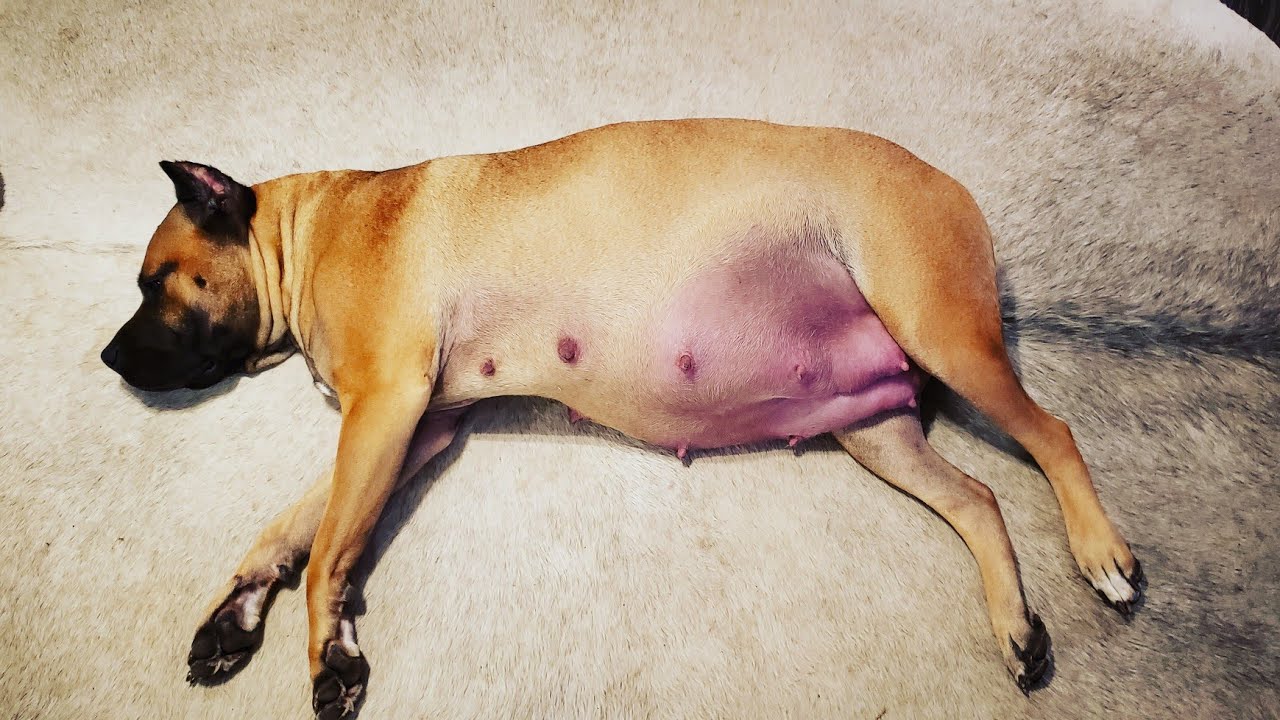
- Enlarged abdomen: The belly is rounder and firmer. If you gently place your hand on the belly, you may feel the puppies move, especially in the last week before birth. Sometimes, the dog’s shape changes and her sides look wider.
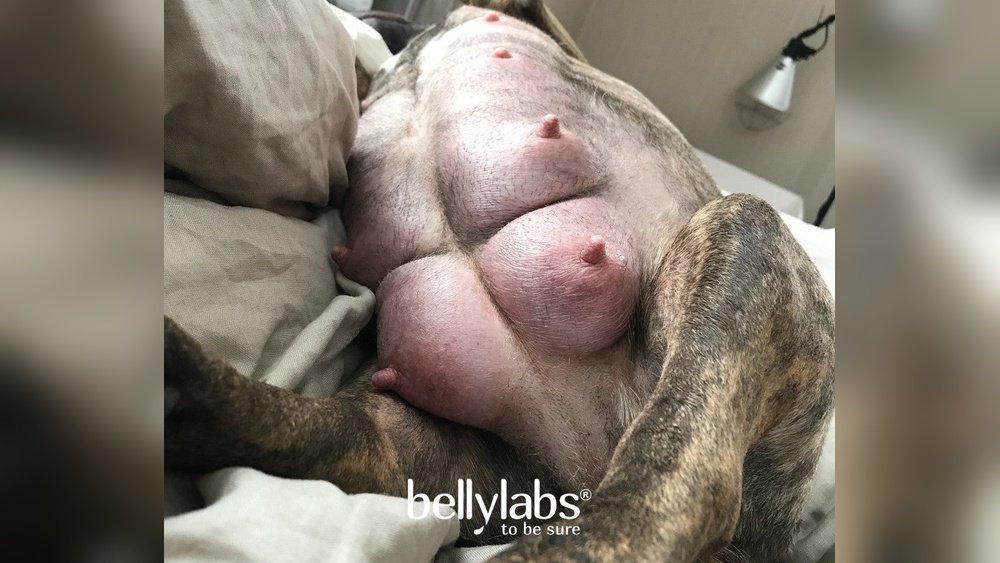
- Swollen mammary glands: The nipples and glands become larger and may leak milk. Some dogs start producing milk a few days before labor, while others only produce it right before or after birth.
- Visible movement: You may see puppies moving inside the belly. This is more obvious when the mother is lying down and relaxed.
Behavioral Changes
- Nesting: Dogs look for quiet, safe places to give birth. They may dig, shred blankets, or move around furniture. You might notice her carrying soft items to her favorite spot or scratching at the floor.
- Restlessness: Pacing, panting, and changing position often. Some dogs walk in circles or shift between rooms, unable to get comfortable.
- Decreased appetite: Many dogs eat less or refuse food 24–48 hours before labor. However, a few dogs may continue to eat normally, so don’t rely on this sign alone.
Temperature Drop
A dog’s normal temperature is 101–102.5°F. About 12–24 hours before labor, it drops to 98–99°F.
How to check: Use a digital rectal thermometer. Take the temperature at the same time each day. This is one of the most reliable pre-labor signs.
If you see a drop in temperature, prepare your whelping area and supplies. If the temperature returns to normal and there are no other signs of labor, contact your vet for advice.
Some owners are nervous about taking a dog’s temperature, but with gentle handling and tasty treats, most dogs accept it well. Always use a lubricant and clean the thermometer before and after use.

Credit: www.infinibandta.org
Stage One Of Labor: Subtle Signs And What They Mean
Stage One lasts 6–12 hours (sometimes longer). It’s easy to miss because the signs are mild. Your dog is preparing for delivery—her cervix dilates, and uterine contractions begin.
Key Signs
- Shivering or trembling: Not due to cold, but from hormonal changes. Your dog may seem nervous or shake her legs.
- Panting: Faster breathing as the body works harder. Panting can come and go, often in waves.
- Vomiting: Some dogs vomit from stress or physical changes. It’s usually mild and stops once Stage Two begins.
- Licking: Excessive licking of the vulva area. This helps keep the area clean and may signal contractions are starting.
- Hiding: Wanting to be alone, avoiding people or other pets. She may crawl under beds or behind furniture.
What Owners Should Do
- Keep the area quiet and comfortable. Dim lights and soft bedding help the dog feel safe.
- Make sure fresh water and food are available, but don’t force her to eat. Let her set her pace.
- Monitor her temperature and behavior every few hours. Write down any changes or new signs.
Some owners find it helpful to play soft music or sit nearby for reassurance. If children are in the home, explain the need for quiet and gentle behavior during this time.
Stage Two Of Labor: Active Birth Signs
Stage Two is when the puppies are actually born. It usually lasts 1–24 hours depending on litter size and breed.
Clear Signs Of Active Labor
- Strong contractions: You may see the abdomen tighten and relax. Some dogs grunt or push as contractions get stronger.
- Visible straining: The dog pushes and may whine or groan. It can look like she is trying to pass stool, but no stool comes out.
- Water sac breaks: Fluid may leak from the vulva. The fluid is usually clear or slightly yellow. This means a puppy is on the way.
- Puppy delivery: Each puppy is delivered every 30–60 minutes. Puppies may be born head-first or tail-first; both are normal in dogs.
Sometimes, a puppy is delivered still inside the amniotic sac. Most mothers break the sac and clean the puppy’s mouth and nose. If she does not, you may need to help gently break the sac and clear the airway.
Comparing Normal Vs. Problem Labor
Here’s a quick comparison:
| Normal Labor | Problem Labor (Dystocia) |
|---|---|
| Contractions last 10–30 minutes per puppy | Straining for over 2 hours with no puppy delivered |
| Puppies delivered 30–60 minutes apart | More than 4 hours between puppies |
| Mother cleans puppies and rests between deliveries | Mother seems exhausted, confused, or in distress |
Actions For Owners
- Do not disturb the dog unless necessary. Watch quietly from a short distance.
- Watch for signs of distress or trouble. If your dog is crying out, seems weak, or cannot deliver a puppy, contact your vet.
- Contact your vet if labor seems stalled or the dog is in pain. If you see a puppy stuck in the birth canal or green discharge before any puppy, call your vet right away.
Some breeds have longer breaks between puppies, especially with large litters. Short naps between births are normal, but watch for continued strong straining with no results.
Credit: www.youtube.com
Stage Three Of Labor: Afterbirth Signs
After each puppy, the placenta (afterbirth) should come out. Sometimes, it comes with the puppy; other times, a few minutes later.
What To Expect
- Green or brown discharge: This is normal. The discharge may be thick and sticky at first, then become lighter.
- Mother eats the placenta: Most dogs do this for nutrition and to clean the area. It’s instinctive and usually safe, but prevent her from eating too many placentas, as this can cause vomiting or diarrhea.
- Resting between puppies: The dog may nap or care for newborns. She might lick the puppies, nudge them to nurse, or rearrange them for comfort.
It is common for dogs to continue mild contractions as each placenta is delivered. Some owners worry if a placenta is not seen, but sometimes the mother eats it quickly. If you are unsure all placentas have been delivered, consult your vet.
When To Worry
- If placenta does not come out within 15–30 minutes after a puppy. Retained placenta can lead to infection.
- Excessive bleeding or foul smell. These are not normal and need veterinary care.
Keep a count of puppies and placentas. There should be one placenta per puppy. Write down each birth time and any concerns.
How To Prepare For Your Dog’s Labor
Preparation is key. Here’s what you can do:
- Create a whelping area: Use a clean, quiet space with soft bedding. A cardboard box or plastic pool lined with towels works well for most breeds. Make sure it is easy for the mother to get in and out, but high enough to keep puppies safe.
- Gather supplies:
- Clean towels
- Disposable gloves
- Digital thermometer
- Bulb syringe (for clearing puppy airways)
- Heating pad (low setting)
- Emergency vet contact information
- Monitor temperature daily: Start checking 1 week before expected due date.
- Record behavior changes: Keep a log of appetite, nesting, and restlessness.
Example Checklist
| Item | Purpose | Notes |
|---|---|---|
| Clean towels | Dry puppies, clean up fluids | Have at least 5 |
| Digital thermometer | Check temperature drops | Rectal type is most accurate |
| Heating pad | Keep puppies warm | Use low setting, cover with towel |
| Vet phone number | Emergency help | Keep nearby |
You may also want to prepare a scale for weighing puppies, as low birth weight can signal health problems. Write down each puppy’s weight and color at birth to track their progress.
Breed Differences: How Signs Vary By Dog Type
Labor signs can be different depending on your dog’s breed, size, and age. Some breeds are more prone to complications.
Small Breeds Vs. Large Breeds
- Small breeds (like Chihuahuas, Dachshunds): May show stronger nesting, but labor can be faster. Their small size means puppies may be more at risk if labor is prolonged.
- Large breeds (like Labradors, German Shepherds): Labor may last longer, and puppies are delivered more slowly. With big litters, breaks between puppies can be longer, so patience is important.
Brachycephalic Breeds
Dogs with short noses (like Bulldogs and Pugs) often have more trouble during labor. Their puppies may be larger, and delivery can be difficult.
Example Data
A survey by the American Kennel Club found:
- Bulldogs: 80% need veterinary help for delivery.
- Labradors: Only 10% need assistance.
- Chihuahuas: Around 20% need help due to small pelvis size.
Older dogs and first-time mothers are also more likely to have slow or difficult labor. If your dog is from a breed with a history of dystocia (difficult birth), discuss options like planned C-section with your vet before the due date.
Common Mistakes When Identifying Labor In Dogs
Many owners misinterpret signs or wait too long. Here are the most frequent mistakes:
- Assuming panting means labor: Dogs pant for many reasons (heat, stress, pain). Always look for other signs like nesting or temperature drop.
- Ignoring temperature drop: Some owners skip temperature checks, missing the best indicator. Taking a daily temperature is simple and provides early warning.
- Overcrowding the whelping area: Too many people or pets cause stress. Dogs may even delay labor if they feel watched or unsafe.
- Not calling the vet soon enough: Waiting for hours during problem labor can risk puppies and mother. Don’t hesitate to call if you see warning signs.
- Misreading nesting behavior: Not all digging means labor; some dogs nest weeks before. Combine this sign with others like loss of appetite or temperature drop.
Another common mistake is over-handling newborn puppies. Avoid touching them unless needed, as the mother may become anxious or move her puppies.
When To Call The Veterinarian
Labor in dogs can be smooth, but sometimes emergency help is needed. Here’s when to call your vet:
- Straining for more than 2 hours with no puppy delivered.
- More than 4 hours between puppies.
- Excessive bleeding or green discharge before any puppy is born.
- Mother seems weak or collapses.
- Visible puppy stuck in birth canal.
If you are not sure, it is always better to call your vet and explain the situation. They may offer advice, suggest a clinic visit, or provide reassurance.
Emergency Vs. Non-emergency Situations
| Emergency | Non-Emergency |
|---|---|
| Puppy stuck, visible but not delivered | Resting between puppies |
| Mother panting, pale gums, weak | Normal panting, alert |
| Heavy bleeding or foul smell | Small amount of discharge |
If you need to transport your dog, keep her warm, carry her gently, and bring any delivered puppies in a warm box.
Practical Tips For Supporting Your Dog During Labor
Helping your dog through labor is about staying calm, prepared, and attentive.
Before Labor Starts
- Set up the whelping box early. Let your dog get used to it weeks before the due date.
- Keep the environment warm (about 75°F). Puppies cannot regulate body temperature for the first week.
- Limit visitors and noise. Stress can delay or stop labor.
During Labor
- Watch, but don’t interfere unless necessary. Your presence is usually enough.
- Use gloves if you need to help. Always wash your hands before and after touching puppies.
- If a puppy is not breathing, clear airway gently with a bulb syringe. Quick action can save a life.
After Each Puppy
- Make sure the mother cleans the puppy. If not, gently rub the puppy with a towel.
- Place puppies near the mother’s nipples for feeding. Early feeding helps puppies stay strong and warm.
- Replace dirty bedding. Clean bedding reduces infection risk.
Two Insights Beginners Often Miss
- Labor can pause: Sometimes, dogs stop labor for hours and resume later. This is normal if the mother is calm and there are no signs of distress. This break can last up to 4 hours, especially in large litters.
- Green discharge before puppy delivery is a warning: If seen, contact your vet immediately. It can mean a puppy is stuck or there is placenta separation.
Another tip: Puppies should nurse within the first hour if possible. The first milk (colostrum) is rich in antibodies to protect against disease.
How To Spot False Labor (pseudopregnancy)
Some dogs show signs of labor but are not pregnant, or labor does not progress. This is called false labor or pseudopregnancy.
Signs
- Nesting, restlessness, enlarged nipples
- Milk production
- No temperature drop
- No delivery after several days
If you suspect false labor, consult your vet. It can be caused by hormonal changes, not true pregnancy.
Some dogs show false labor after a heat cycle, even if they were never bred. They may collect toys and treat them like puppies. This usually resolves on its own, but a vet visit can rule out health problems.
How Long Does Dog Labor Last?
The total labor process can vary:
- Stage One: 6–12 hours (sometimes up to 24 hours)
- Stage Two: 1–24 hours (depends on litter size)
- Stage Three: Each placenta delivered within 15–30 minutes after puppy
For a litter of 6 puppies, labor may take 12–18 hours from first sign to last puppy.
If your dog takes longer but is calm and caring for puppies, this may be normal. If you see distress, contact your vet.
Small litters are often born faster, while large litters may take longer and have more breaks between puppies.

Credit: www.infinibandta.org
What If Your Dog Needs Help During Labor?
Sometimes, you may need to step in:
- If a puppy is stuck, try gently pulling in line with the mother’s contractions. Do not force.
- If a puppy is not breathing, rub gently with a towel, clear airway, or perform mouth-to-nose resuscitation.
- If you notice bleeding, foul odor, or extreme distress, call your vet.
Example: Helping A Puppy Breathe
If a puppy is born and not breathing:
- Clear mouth and nose with a bulb syringe.
- Rub the puppy gently with a towel to stimulate breathing.
- Hold upside down for a few seconds to drain fluid.
- If no breathing, perform gentle mouth-to-nose breaths (small puffs).
Puppies may be weak or cold at birth. Quick drying, warming, and gentle stimulation can help many survive.
How To Tell If Labor Has Finished
Labor ends when all puppies and placentas are delivered, and the mother is calm.
Signs Labor Is Over
- Mother stops straining and panting.
- All puppies are nursing.
- No more contractions.
- Discharge slows and becomes lighter.
Monitor your dog for 24–48 hours after labor. Watch for fever, lack of appetite, or abnormal discharge.
Count the puppies and placentas. If you expect more puppies but none come after 4 hours, or if your dog seems ill, contact your vet.
Monitoring Mother And Puppies After Labor
Once labor ends, your job continues. Newborn puppies and the mother need careful monitoring.
Key Points
- Check puppies every 2 hours for the first 24 hours. Weak or cold puppies need extra care.
- Make sure all puppies are nursing and warm. Use a heating pad or warm water bottle if needed.
- The mother should eat, drink, and care for puppies. A loss of interest may signal health problems.
- Watch for signs of infection (fever, foul discharge, swelling).
Early problems are easier to treat, so check often and call your vet if you see changes.
Data: Puppy Survival Rate
According to a study by the University of Georgia, 80–85% of puppies survive if owners monitor closely and intervene early in problem cases.
Keeping a daily log of puppy weights and behavior helps spot trouble early.
The Role Of Veterinary Care In Dog Labor
Veterinary care is important for safe delivery. Most vets recommend a pre-labor checkup for pregnant dogs, especially if:
- It’s the dog’s first litter.
- The dog is over 6 years old.
- The breed is prone to complications.
Vets can provide:
- X-rays to count puppies
- Advice on emergency signs
- Support during difficult labor
They can also give advice on nutrition and supplements for pregnant and nursing dogs. Regular checkups help spot problems before labor begins.
For more details, visit American Kennel Club.
Frequently Asked Questions
How Do I Know My Dog Is In Labor?
Watch for temperature drop, nesting, restlessness, panting, and loss of appetite. The most reliable sign is a rectal temperature below 99°F. Stage One labor signs—shivering, panting, and licking—mean labor has started.
How Long Does Dog Labor Last?
Labor lasts 6–24 hours for most dogs. Stage One is usually 6–12 hours, and Stage Two (delivery) can be 1–24 hours, depending on the number of puppies.
Should I Help My Dog During Labor?
Usually, dogs handle labor on their own. Only help if a puppy is stuck, not breathing, or if the mother is in distress. Use gloves and gentle movements. Always call your vet if unsure.
What Are Signs Of Trouble During Labor?
Signs of trouble include straining for over 2 hours, excessive bleeding, green discharge before a puppy, visible puppy stuck, or mother becoming weak or unresponsive. Call your vet immediately.
Is A Temperature Drop Always A Sign Of Labor?
A temperature drop to 98–99°F almost always means labor will start within 24 hours. However, some dogs may not show this sign, so watch for behavior changes too.
Final Thoughts
Knowing how to tell if a dog is in labor is essential for every dog owner. It’s not just about recognizing obvious signs—subtle changes matter. Preparation, close observation, and quick response can make the difference between a smooth delivery and an emergency.
Remember, most dogs deliver safely with little help, but knowing when to act is critical. Use daily temperature checks, watch for nesting and restlessness, and trust your instincts. If anything feels wrong, call your vet. With care and confidence, you can support your dog through labor and welcome healthy puppies into your home.

We’re the dedicated team behind MyPawSafe.com, with over a decade of combined experience in veterinary care, pet emergency response, and animal behavior. While we prefer to let our work speak for itself, our mission is clear: to provide science-backed, vet-approved advice that helps pet owners prevent accidents and save lives.