The Anatolian Shepherd is a dog like no other. With a history stretching back thousands of years, this breed has guarded livestock and homes across the Anatolian plains of Turkey. Today, the Anatolian Shepherd is still prized for its loyalty, intelligence, and strength. But is this the right dog for you? Understanding its temperament, size, and care needs is crucial before bringing one home. This guide gives you everything you need to know—whether you’re a farmer, a family, or someone fascinated by ancient breeds. Let’s explore what makes the Anatolian Shepherd unique, and how you can provide the best life for this remarkable dog.
The Origins And History Of The Anatolian Shepherd
The Anatolian Shepherd’s story begins in the rugged landscapes of central Turkey. For more than 6,000 years, nomadic shepherds bred these dogs to protect sheep and goats from wolves, bears, and thieves. Their ancestors likely include ancient mastiffs and sighthounds, shaped by the harsh climate and challenging work.
Unlike many modern breeds, Anatolian Shepherds were never bred for appearance. Instead, shepherds selected dogs for their endurance, strength, and independent thinking. Only the toughest, smartest, and most loyal dogs survived and worked alongside people. This working heritage is still present in every Anatolian Shepherd today.
The breed first arrived in the United States in the 1950s and 1970s. American ranchers saw their potential as livestock guardians. In 1996, the American Kennel Club (AKC) officially recognized the breed. However, in Turkey, the Anatolian is often called Kangal or Cobán Köpeği—terms that sometimes refer to specific regional types.
Physical Characteristics And Size
The Anatolian Shepherd is an impressive, powerful dog. Its size and appearance are shaped by centuries of guarding livestock in extreme conditions.
General Appearance
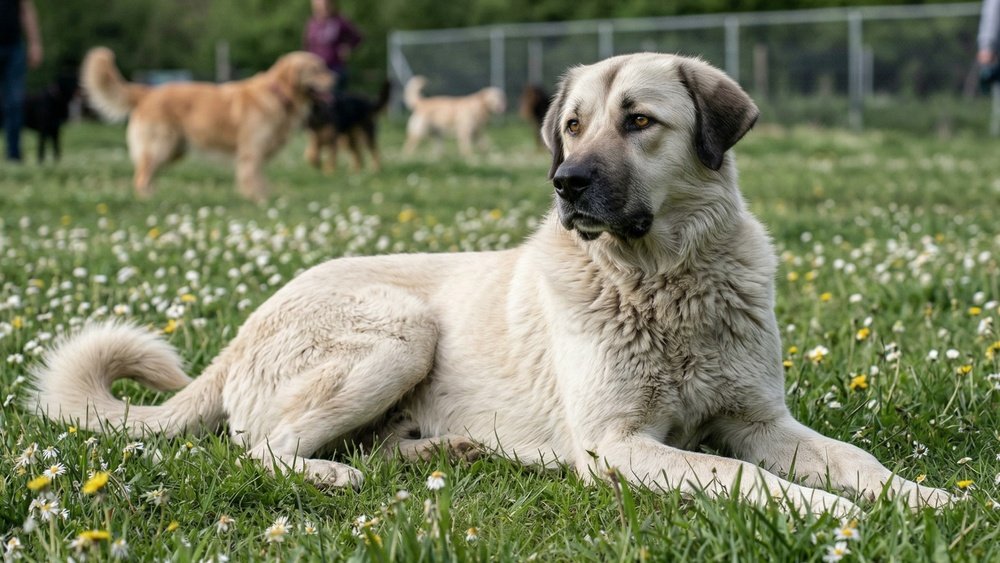
Anatolian Shepherds have a large, muscular body with a broad head and strong jaws. Their expression is alert and intelligent. The ears are medium-sized and often drop down, while the tail curls up over the back, especially when the dog is excited.
Size And Weight
Adult Anatolian Shepherds are among the largest dog breeds. Here’s a quick comparison of typical height and weight by sex:
| Sex | Height (at shoulder) | Weight |
|---|---|---|
| Male | 29–32 inches (74–81 cm) | 110–150 lbs (50–68 kg) |
| Female | 27–31 inches (69–79 cm) | 80–120 lbs (36–54 kg) |
Males are typically larger and heavier, but both sexes are strong and athletic. They need space to move and are not suited to apartment living.
Coat And Colors
The coat is dense and double-layered, helping the dog tolerate hot summers and cold winters. The outer coat is short to medium (about 1-4 inches), and there’s a thick undercoat.
Common colors include:
- Fawn (with a black mask)
- White or cream
- Piebald (large patches)
- Brindle
- Gray
The black mask is a classic look, but not all Anatolian Shepherds have it. Coat color does not affect temperament or health.

Credit: www.infinibandta.org
Understanding Anatolian Shepherd Temperament
The Anatolian Shepherd’s personality is shaped by thousands of years as a working guardian. This is not a typical family pet or a couch potato. Their temperament is both their greatest strength and their biggest challenge for inexperienced owners.
Key Temperament Traits
1. Protective Instincts
Anatolian Shepherds are natural guardians. They are highly protective of their family, property, and especially children or other animals they see as part of their “flock. ” They will bravely face danger, even against larger animals or intruders.
2. Independence
Centuries of working alone in the field have made this breed very independent. Anatolian Shepherds make decisions on their own and do not always obey commands immediately. They are smart but want to understand “why” before acting.
3. Calm and Reserved
With their family, Anatolians are usually calm, gentle, and affectionate. They are not overly playful or needy. With strangers, they are reserved and may be suspicious until they trust someone.
4. Low Aggression but High Assertiveness
These dogs are not aggressive without reason. However, they will defend their territory with force if they sense a real threat. Proper socialization is crucial to prevent territorial behavior from becoming a problem.
5. Barking and Alertness
Anatolian Shepherds are alert and vocal. They will bark to warn of strangers, strange noises, or animals near their territory. This is useful on a farm, but can be challenging in suburbia.
Socialization And Family Life
Early socialization—exposing puppies to many people, animals, and situations—is essential. Without it, Anatolian Shepherds can become overly shy, suspicious, or even aggressive toward visitors.
With children, they are usually gentle and protective. However, because of their size, rough play can be risky for small kids. Always supervise playtime. The breed generally gets along with other dogs if raised together, but may not tolerate unfamiliar dogs on their property.
Non-obvious insight: Many first-time owners underestimate how much these dogs “think for themselves.” Anatolians sometimes ignore commands if they believe their way is safer. This is not stubbornness—it’s their guardian instinct.
Another insight: Anatolian Shepherds are more sensitive to tone and body language than many breeds. Firm, calm communication works better than loud or harsh corrections.
Exercise Needs And Activity Level
Anatolian Shepherds are not hyperactive, but they are working dogs with substantial energy and strength. Keeping them healthy and happy means meeting their physical and mental needs.
Daily Exercise
- At least 1–2 hours of walking or free running in a safe, enclosed area every day
- Mental stimulation: Hide-and-seek games, scent work, or supervised livestock work
- Secure fencing is essential—they may roam if bored or curious
While they don’t require as much exercise as a Border Collie or Belgian Malinois, Anatolian Shepherds do best with regular, purposeful activity. A bored Anatolian may dig, bark, or try to escape.
Not Just Physical Exercise
Mental challenges are just as important. Puzzle toys, obedience training, or even helping with household tasks can keep an Anatolian engaged.
Some owners think these dogs will be happy just lying in the yard. In reality, without a “job,” Anatolians may develop destructive habits.
Training And Obedience
Training an Anatolian Shepherd is not the same as training a Golden Retriever. They respond best to positive reinforcement and respect. Forceful methods often backfire.
Training Tips
- Start Early: Begin socialization and basic training at 8–10 weeks old. Early experiences shape adult behavior.
- Be Consistent: Use the same commands and rules every day. Inconsistency confuses this intelligent breed.
- Keep Sessions Short: 10–15 minute sessions, repeated daily, work better than long drills.
- Reward Good Behavior: Praise, treats, or play motivate Anatolians. Harsh punishment causes them to ignore or distrust you.
- Teach Impulse Control: Commands like “leave it,” “wait,” and “come” are more important than tricks.
- Control the Environment: Manage introductions to new people, animals, and experiences gradually.
Common Training Challenges
- Recall (coming when called): These dogs may ignore you if they’re focused on “guarding.” Work on recall in a safe, fenced area.
- Leash Walking: Anatolians are strong. Early leash training prevents pulling.
- Territorial Behavior: They may try to guard your house, yard, or even your car. Teach them what is and isn’t a threat.
Non-obvious insight: Many Anatolian Shepherds respond better to “jobs” that make sense to them, like watching a gate or protecting chickens, rather than performing tricks.
Living Environment: Space, Fencing, And Adaptability
Anatolian Shepherds are most at home in the country or on a large property. Their size, energy, and protective instincts make them a poor fit for small homes or apartments.
Space Requirements
- Large, securely fenced yard (at least 6 feet tall fencing)
- Room to patrol and watch for “threats”
- Not suitable for urban life or off-leash parks
These dogs are happiest when they have a purpose—such as guarding livestock or property.
Fencing And Containment
Anatolian Shepherds are known for their escape skills. They can dig, jump, or climb if they want to investigate something or “patrol” a larger area.
- Use secure, tall fencing—preferably with a barrier underground to prevent digging
- Regularly check for weak spots or holes
- Gates should be locked and sturdy
Indoor Life
Anatolians can live inside with their family, but need access to a yard. They are generally clean indoors, but may shed heavily. Provide a comfortable place for them to rest where they can keep an eye on the household.
Grooming And Shedding
Caring for an Anatolian Shepherd’s coat is straightforward, but their size means you’ll be handling a lot of hair.
Coat Maintenance
- Brushing: 1–2 times per week, more often during seasonal shedding
- Bathing: Only when dirty; their coat naturally repels dirt and water
- Nail Trimming: Every 2–4 weeks
- Ear Cleaning: Check weekly for dirt or signs of infection
During the spring and fall, Anatolian Shepherds shed their undercoat heavily—a process called “blowing coat. ” This can mean mountains of hair around the house, so daily brushing helps keep things under control.
Shedding Level
Compared to other large breeds, Anatolians shed moderately most of the year and heavily for a few weeks during coat changes.
Diet And Nutrition
A healthy diet is essential for a giant breed like the Anatolian Shepherd. Their food needs change from puppyhood to adulthood.
Feeding Guidelines
- Puppies: 3–4 meals per day. Use a high-quality large breed puppy formula to prevent too-fast growth, which can damage joints.
- Adults: 2 meals per day. Adult Anatolians eat 4–6 cups of high-quality dry food daily, depending on age, weight, and activity.
- Seniors: Lower-calorie food may be needed if activity decreases.
Always provide fresh water. Some Anatolians can be picky eaters, but most are food-motivated.
Sample Feeding Comparison
| Life Stage | Meals per Day | Food Type |
|---|---|---|
| Puppy (2–12 months) | 3–4 | Large breed puppy kibble |
| Adult (1–6 years) | 2 | High-protein adult kibble |
| Senior (7+ years) | 2 | Senior/weight control kibble |
Treats And Supplements
Treats should make up less than 10% of daily calories. Overfeeding can quickly lead to obesity in this breed. Some owners add glucosamine or fish oil for joint health, but talk to your vet before adding supplements.
Non-obvious insight: Anatolian Shepherds are prone to bloat (gastric torsion), a dangerous condition. Feed two smaller meals instead of one large meal, and avoid vigorous exercise right after eating.

Credit: www.infinibandta.org
Health And Lifespan
Anatolian Shepherds are generally healthy and robust. Their working background means they have fewer inherited diseases than many purebred dogs, but there are still health risks to consider.
Common Health Issues
- Hip Dysplasia: Affects up to 10% of the breed. Screening and responsible breeding help reduce risk.
- Elbow Dysplasia: Less common, but possible.
- Entropion/Ectropion: Eyelid disorders requiring surgery in severe cases.
- Hypothyroidism: An underactive thyroid gland, treatable with medication.
- Cancer: As with most large breeds, risk increases with age.
- Bloat (Gastric Torsion): Life-threatening; requires immediate emergency care.
Health Screening And Vet Care
Responsible breeders test for hip/elbow dysplasia and eye problems. Regular vet visits, vaccinations, and parasite prevention are vital.
Lifespan
The average lifespan of an Anatolian Shepherd is 11–13 years—longer than many giant breeds.
Health Comparison Table
| Condition | How Common? | Management |
|---|---|---|
| Hip Dysplasia | Moderate | Screening, weight control, surgery if severe |
| Bloat | Occasional | Preventive feeding, surgery (gastropexy) in high-risk cases |
| Hypothyroidism | Rare | Medication |
Another insight: Anatolian Shepherds are sensitive to anesthesia and some medications. Always tell your vet you have an Anatolian; they may need lower doses.
Anatolian Shepherds As Livestock Guardians
This breed shines in its original role—protecting sheep, goats, and other animals from predators. Their instincts, intelligence, and loyalty are unmatched.
How They Work
Anatolian Shepherds bond with their “flock” from a young age. They patrol the area, warning off predators with their bark, and will confront threats if needed. They work independently, often with little direct instruction from humans.
Not Just A Pet
If you need a true livestock guardian, Anatolians are one of the best choices. However, don’t expect them to be playful, cuddly companions. Their main focus is always protection.
Non-obvious insight: Unlike herding breeds, Anatolians do not chase or move livestock. They stay with the animals and act as a living shield.
Challenges For Non-farm Owners
Without livestock to guard, Anatolian Shepherds may redirect their instincts to protecting your yard, home, or children. This can lead to problems if not managed correctly. They may bark at neighbors, delivery people, or guests. Training and clear boundaries are essential.
Who Should (and Shouldn’t) Own An Anatolian Shepherd?
Anatolian Shepherds are not for everyone. Their size, independence, and protective instincts require an experienced and committed owner.
Best Fit
- Owners with large, securely fenced property
- People with experience handling large, independent breeds
- Farmers or ranchers needing a livestock guardian
- Families who understand the breed’s protective nature
Poor Fit
- Apartment dwellers
- First-time dog owners
- Families wanting a playful, social pet
- Owners who can’t commit to daily exercise and training
Non-obvious insight: Even experienced dog owners may find Anatolians more challenging than expected. They need a “job,” clear leadership, and plenty of early socialization.
Alternatives
If you love the look and loyalty of the Anatolian Shepherd, but want a more social or trainable dog, consider breeds like the Great Pyrenees or Bernese Mountain Dog. These breeds share some traits but are generally easier for inexperienced owners.
Finding A Responsible Breeder Or Rescue
The right source makes all the difference when adding an Anatolian Shepherd to your family.
Choosing A Breeder
Look for breeders who:
- Perform health screening (hips, elbows, eyes, thyroid)
- Allow you to meet the parents
- Provide socialization for puppies
- Offer support after purchase
Avoid breeders who:
- Sell puppies without contracts or health guarantees
- Focus only on looks, not working ability
- Have multiple breeds or “rare colors”
Adoption And Rescue
Many Anatolian Shepherds end up in rescue because they were too much for their first owners. Consider adopting from a breed-specific rescue group or shelter. These dogs often make wonderful companions for the right home.
You can find more about responsible breeding and adoption at the American Kennel Club.

Credit: www.infinibandta.org
Anatolian Shepherds And The Law
In some areas, Anatolian Shepherds may be subject to restrictions due to their size and guarding instincts.
- Check local laws regarding fencing, leash requirements, and breed bans
- Some cities require insurance for large or “guardian” breeds
- Always have your dog microchipped and registered
Anatolian Shepherds In Popular Culture
While not as famous as some breeds, Anatolian Shepherds have appeared in documentaries, working dog competitions, and even movies. They are valued worldwide for their unique abilities.
In Turkey, the breed is considered a national treasure, and some dogs are even given medals for bravery.
Frequently Asked Questions
What Is The Difference Between An Anatolian Shepherd And A Kangal?
The Kangal is a specific type of livestock guardian dog from the Sivas region of Turkey. In the US, the terms are often used interchangeably, but in Turkey, Kangal is seen as a separate breed with a more uniform appearance and temperament. Both are excellent guardians, but the Kangal is usually heavier and more powerful.
How Much Does It Cost To Own An Anatolian Shepherd?
Initial costs for a puppy from a responsible breeder range from $1,000 to $2,500. Annual expenses (food, vet care, grooming) can be $1,000–$2,000 or more. Medical emergencies or fencing upgrades add to the cost. Rescue adoption is less expensive but still requires ongoing care.
Can Anatolian Shepherds Live With Other Pets?
If raised together, Anatolian Shepherds usually accept other dogs and even cats as part of their “flock. ” Introducing new animals later in life can be difficult. They may not tolerate strange dogs, especially on their property. Careful introductions and supervision are vital.
Are Anatolian Shepherds Good With Children?
Yes, with early socialization and supervision, Anatolian Shepherds are gentle and protective with children. However, their large size means they can accidentally knock over small kids. Always supervise interactions and teach children to respect the dog’s space.
How Long Can Anatolian Shepherds Be Left Alone?
These dogs are independent and can tolerate being alone for several hours, especially if they have a job (like watching livestock). However, without enough stimulation, they may develop bad habits. Puppies and young dogs need more attention and socialization.
Bringing an Anatolian Shepherd into your life is a big decision. They are loyal, courageous, and intelligent—but also challenging and independent. If you can provide the right environment, training, and purpose, you will have a devoted companion and guardian for many years.
For those who meet their needs, the Anatolian Shepherd is truly a dog like no other.
We’re the dedicated team behind MyPawSafe.com, with over a decade of combined experience in veterinary care, pet emergency response, and animal behavior. While we prefer to let our work speak for itself, our mission is clear: to provide science-backed, vet-approved advice that helps pet owners prevent accidents and save lives.