
French Bulldog Body Structure: What Owners Should Know
French Bulldogs are one of the most popular dog breeds in the world. Their unique body structure, charming personality, and compact size make them favorites for city dwellers and families alike. But their looks are more than just cute—they have a special physical makeup that affects their health, care, and daily life.
If you’re thinking about owning a French Bulldog or already have one, understanding their body structure is key to giving them the best care possible.
Let’s explore what makes the French Bulldog’s body so distinctive, how it impacts their health, and what owners need to watch for. We’ll cover their physical features, genetic traits, common health problems, and practical tips for keeping your Frenchie happy and healthy.
The Unique Shape Of French Bulldogs
French Bulldogs have a body that stands out from other breeds. Their look is both adorable and practical, but it comes with some challenges. Here are the main features that define the French Bulldog’s body structure:
Compact And Muscular Build
French Bulldogs are small but solid. Adult Frenchies usually weigh between 16–28 pounds and stand 11–12 inches tall at the shoulder. Their body is short, broad, and packed with muscle. This gives them a sturdy and “square” appearance.
Their muscles are especially noticeable in their shoulders and chest. Unlike some small breeds, Frenchies are not fragile—they’re built like little tanks. This muscular build helps them play and move with surprising strength, but it also means their joints carry a lot of weight.
Even though they look strong, it’s important to remember their bodies are not made for intense exercise. Overexertion, especially with their heavy build, can lead to muscle strains or stress on their spine. Owners should focus on gentle activities instead of rough play.
Frenchies tend to develop strong necks, which help support their large heads. This feature makes them look confident and proud. However, their neck muscles can also become stiff if they do not get proper stretching or movement. Watch for signs of discomfort when your Frenchie turns its head.
Distinctive Head And Face
The French Bulldog’s head is a major part of their unique look. They have a large, square-shaped head with a flat forehead, prominent cheeks, and a short, brachycephalic (flat-faced) muzzle. Their eyes are round, dark, and full of expression. The ears are “bat-like”—large, upright, and set high on the head.
This head shape is charming but also causes breathing issues. The short nose and tight nostrils can make it hard for Frenchies to get enough air, especially during exercise or in hot weather.
Frenchies also have a unique jaw structure. The lower jaw is often undershot, meaning it sticks out a little further than the upper jaw. This adds to their adorable expression, but it can cause dental problems. Food may get stuck easily, and teeth may not align properly.
Owners should check their Frenchie’s mouth regularly and offer dental chews to help keep their teeth clean.
Another detail is the wrinkle patterns on their face. Each French Bulldog has slightly different folds, which can make their face look more expressive. These folds need daily cleaning, as trapped dirt can quickly lead to infections.
Short, Smooth Coat
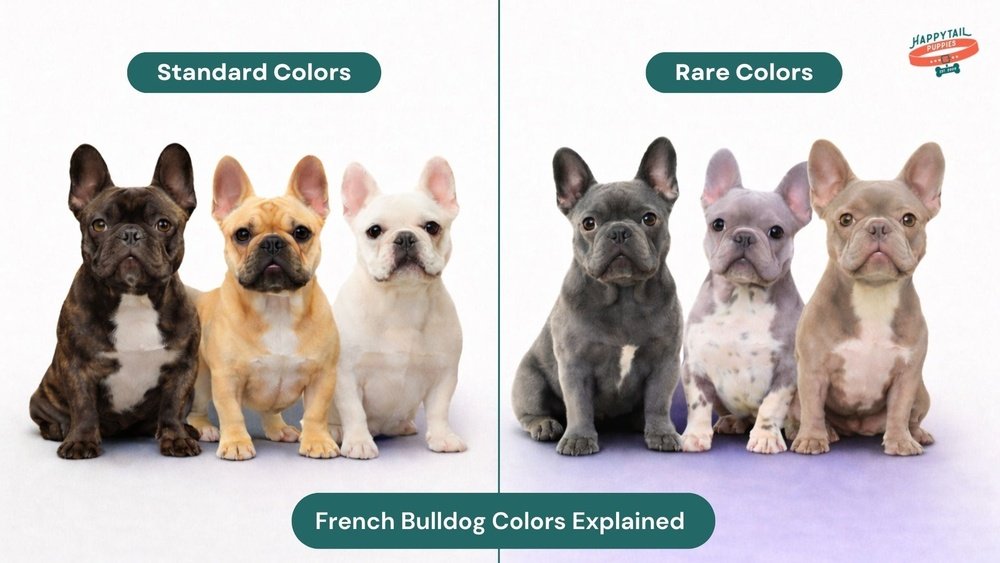
French Bulldogs have a short, smooth coat that feels soft to the touch. Their skin is loose, forming adorable folds, especially around their face and neck. Coat colors vary widely: fawn, brindle, white, cream, and combinations. The coat’s simplicity makes grooming easy, but the skin folds need special care to prevent infection.
The coat also protects the Frenchie from minor bumps, but it does not offer much insulation. This means French Bulldogs are sensitive to cold weather. Owners should consider dog sweaters or jackets for outdoor walks in winter.
Some French Bulldogs have a slightly thicker undercoat, especially in colder climates. This variation is not common, but it can help them tolerate cool temperatures a little better. However, most Frenchies do not do well in extreme weather, hot or cold.
Tail And Limbs
Frenchies have a very short, often “screw-shaped” tail. It’s either straight or tightly curled, and rarely moves much. Their legs are short and sturdy, with the hind legs slightly longer than the front. This gives them a playful, bouncy walk.
Their tail is not just a cute detail—it is also a sign of their breeding history. The short, screw tail comes from selective breeding and is not flexible like other breeds. Owners should check the base of the tail regularly for signs of irritation or infection, as the skin folds here can trap moisture.
French Bulldogs’ legs are strong but not meant for jumping or running long distances. Short walks, gentle play, and careful supervision are important. Their paws are compact and well-padded, making them comfortable for walking on hard surfaces.
Body Proportions
A French Bulldog’s body is wider at the shoulders and tapers towards the rear. The back is short, and the belly is tucked up. The overall shape is compact, making them well-suited for small homes.
Their unique proportions also affect their posture. Some Frenchies sit with their hind legs stretched out in front, a pose called the “frog sit. ” This is normal for them, but it can be a sign of hip discomfort if they do it too often.
Comparison Table: French Bulldog Vs Other Small Breeds
Here’s a quick comparison of French Bulldogs with other popular small dog breeds:
| Breed | Height (inches) | Weight (pounds) | Body Type | Head Shape | Tail |
|---|---|---|---|---|---|
| French Bulldog | 11-12 | 16-28 | Compact, muscular | Brachycephalic | Short, screw |
| Pug | 10-13 | 14-18 | Compact, muscular | Brachycephalic | Curled |
| Boston Terrier | 15-17 | 12-25 | Lean, muscular | Brachycephalic | Short, straight |
| Cavalier King Charles Spaniel | 12-13 | 13-18 | Slender, elegant | Moderate | Feathered |
Genetics Behind The French Bulldog Body
French Bulldogs are a result of selective breeding. Their body structure is not accidental—it’s shaped by genetics and centuries of careful breeding choices.
Brachycephalic Traits
The brachycephalic (short-nosed) face comes from genes that compress the skull bones. This trait is shared with breeds like Pugs and Boston Terriers. While it gives Frenchies their cute look, it leads to Brachycephalic Obstructive Airway Syndrome (BOAS), which affects breathing.
BOAS is not just a breathing problem. It can also make Frenchies more likely to develop sleep apnea. Owners may notice their French Bulldog waking up suddenly or seeming tired during the day, which can be a sign of poor sleep quality.
Dwarfism Genes
French Bulldogs carry genes for chondrodysplasia, a form of dwarfism. This causes their short legs and compact body. It’s not harmful by itself, but it increases the risk of joint and spine problems.
Chondrodysplasia also affects the shape of the Frenchie’s feet and toes. Their paws tend to be round and flat, which can cause them to walk differently from other breeds. This unique gait is adorable, but it also puts extra stress on their joints.
Coat And Color Genetics
Frenchies have genes that create their wide range of coat colors. Some colors, like blue or chocolate, are rare and linked to specific genetic markers. Owners should know that rare colors can sometimes bring health risks, such as skin allergies.
Certain color genes can also affect eye color. For example, some French Bulldogs with lighter coats may have lighter eyes. This can make their eyes more sensitive to sunlight, so owners should watch for squinting or discomfort outdoors.
Breeding Challenges
Because of their unique body, French Bulldogs often need help to reproduce. Most cannot mate or give birth naturally due to their narrow hips and large heads. Breeders usually use artificial insemination and cesarean sections.
These breeding challenges also mean that reputable breeders invest more in health screening and veterinary care. If you notice a breeder selling French Bulldogs cheaply or without health checks, it’s a warning sign. Ethical breeding is essential for this breed’s long-term health.
Genetic Disorders Table
Here are some common genetic disorders found in French Bulldogs:
| Disorder | Body Area Affected | Symptoms | Prevalence (%) |
|---|---|---|---|
| BOAS | Airway | Snoring, noisy breathing | ~50 |
| Hip Dysplasia | Hips | Limping, pain | ~20 |
| Patellar Luxation | Knees | Skipping, lameness | ~10 |
| Skin Fold Dermatitis | Skin | Redness, odor | ~35 |
Credit: tomkingskennel.com
Key Health Issues Linked To Body Structure
The French Bulldog’s body structure creates both charm and challenges. Owners must be aware of several health issues that come from their unique build.
Breathing Problems
The flat face and short nostrils make it hard for Frenchies to breathe. Many snore loudly, grunt, or struggle during exercise. Hot weather can be dangerous, as their bodies cannot cool down easily.
Non-obvious insight: French Bulldogs cannot pant effectively to cool themselves, unlike longer-nosed breeds. This means heatstroke can happen quickly.
Some French Bulldogs develop narrow windpipes, which can make even daily activities like eating or playing difficult. If your Frenchie coughs or gags often, it’s important to see a vet.
Joint And Spine Issues
Their short legs and compact spine put stress on joints. Hip dysplasia and intervertebral disc disease are common. Owners often notice their dogs limping or avoiding stairs.
Non-obvious insight: Frenchies may show pain by refusing to jump or by dragging their rear legs, not just limping. Watch for subtle changes.
Intervertebral disc disease (IVDD) can appear suddenly, causing weakness or paralysis in the hind legs. Quick action and veterinary care are needed if you see your Frenchie struggling to stand or walk.
Skin Fold Problems
The deep skin folds, especially around the face, trap moisture and bacteria. This can cause skin fold dermatitis—red, itchy, sometimes smelly patches.
Skin fold problems can also appear around the tail, underarms, and between the toes. Regular cleaning is essential in all these areas. If your Frenchie scratches a lot or seems uncomfortable, check these spots for irritation.
Eye Conditions
French Bulldogs have prominent eyes, making them prone to corneal ulcers and dry eye. Their eyes are exposed and can easily get scratched or infected.
Some Frenchies develop tear stains, which appear as dark streaks below the eyes. These stains are not harmful but can signal underlying irritation or infection. Use a damp cloth and consult your vet for proper care.
Digestive Issues
Their compact body can lead to flatulence, sensitivity to food, and trouble swallowing. Owners must choose diets carefully.
Digestive issues may also cause loud stomach noises or frequent burping. Switching to a diet with fewer fillers and more protein can help reduce these symptoms. Watch for changes in appetite or stool quality.
Reproductive Challenges
Due to their narrow hips and big heads, most French Bulldogs need cesarean sections to give birth. Natural breeding is almost impossible.
Owners should plan for higher veterinary costs if breeding French Bulldogs. Female Frenchies need careful monitoring during pregnancy to avoid complications.
Data Table: Health Problems Frequency
| Health Issue | Estimated Frequency (%) | Body Structure Cause |
|---|---|---|
| Breathing Issues | 50-60 | Brachycephalic skull |
| Joint Problems | 20-30 | Short legs, heavy chest |
| Skin Infections | 30-40 | Loose skin folds |
| Eye Issues | 15-20 | Prominent eyes |
| Digestive Problems | 25-35 | Compact body |
Caring For Your French Bulldog’s Body
Knowing the French Bulldog’s body structure helps owners prevent problems and keep their dogs comfortable. Here are practical steps to care for your Frenchie:
Breathing Care
- Avoid strenuous exercise, especially in hot weather.
- Use a harness instead of a collar to prevent pressure on the neck.
- Keep your home cool and well-ventilated.
- Watch for signs of overheating: Heavy panting, drooling, collapse.
It’s also helpful to keep your Frenchie calm during stressful situations. Excitement can make breathing harder, so use gentle voices and slow movements.
Joint And Muscle Support
- Limit jumping and climbing stairs.
- Provide soft bedding to reduce stress on joints.
- Use ramps for furniture access.
- Keep your Frenchie at a healthy weight—extra pounds strain their joints.
Stretch your Frenchie’s legs gently after walks to help prevent stiffness. If they show signs of pain, talk to your vet about joint supplements or physical therapy.
Skin And Coat Care
- Clean skin folds daily with a soft, damp cloth.
- Dry folds thoroughly to prevent infections.
- Use gentle, hypoallergenic shampoos.
- Check for redness, odor, or sores.
Rotate grooming products if your Frenchie shows allergies. Some dogs react to certain shampoos, so try different brands as needed. Always rinse thoroughly after baths.
Eye Protection
- Wipe eyes gently with a damp cloth to remove debris.
- Protect from harsh sunlight and wind.
- Visit the vet if you notice redness, discharge, or squinting.
For outdoor play, consider dog goggles or a shaded area to prevent eye strain. If your Frenchie squints often, it could mean their eyes are dry or irritated.
Diet And Digestion
- Choose high-quality, grain-free food if your Frenchie is sensitive.
- Feed smaller, more frequent meals to avoid bloating.
- Monitor for signs of gas, vomiting, or diarrhea.
Add probiotics to your Frenchie’s diet if their digestion is poor. Yogurt or special dog supplements can help balance gut bacteria and reduce gas.
Exercise And Activity
French Bulldogs need regular but gentle exercise. Short walks and indoor play are best. Avoid long runs or strenuous activity.
Play games that stimulate their mind, like puzzle toys or hide-and-seek, instead of chasing or running. Mental stimulation is as important as physical activity for Frenchies.
Grooming Routine
Frenchies are easy to groom, but their skin and folds need special attention. A weekly bath and daily fold cleaning will prevent most problems.
Check nails regularly; French Bulldogs’ nails grow fast and can cause discomfort if left too long. Trim nails every 2–3 weeks.
Body Structure And Behavior
The French Bulldog’s body affects more than their health—it shapes their behavior and lifestyle.
Personality And Energy
French Bulldogs are playful, friendly, and curious. Their compact build makes them great lap dogs and indoor pets. They love short games and gentle walks.
Their body makes them less likely to be aggressive. Most Frenchies prefer cuddling or sitting close to their owner. If your Frenchie seems restless, try changing their environment or offering new toys.
Activity Limits
Due to their breathing and joint issues, Frenchies are not suited for high-energy sports. They prefer calm play and cozy naps.
French Bulldogs often sleep more than other breeds. This is normal and helps their bodies recover from daily activity. Don’t worry if your Frenchie takes frequent naps—just provide a comfortable spot.
Social Traits
French Bulldogs thrive in close company. Their body structure makes them less independent—they rely on owners for comfort and help.
Some Frenchies develop separation anxiety if left alone too long. Try to keep their routine consistent and offer comfort items like blankets or favorite toys.
Common Mistakes Owners Make
Many owners love their Frenchie’s looks but forget about their special needs. Here are mistakes to avoid:
- Ignoring breathing issues: Don’t assume snoring is normal. It can signal serious airway problems.
- Overfeeding: Frenchies gain weight easily. Too much food leads to joint pain and breathing trouble.
- Skipping skin fold cleaning: Infections start quickly in dirty folds.
- Letting them jump or climb: Short legs and heavy bodies make injuries more likely.
- Missing subtle pain signs: French Bulldogs hide pain. Look for changes in activity or posture.
Some owners forget to check their Frenchie’s ears. The large, upright ears can trap dust, so regular cleaning is important to prevent infections.
Choosing A Healthy French Bulldog
If you’re looking for a French Bulldog, pick a breeder who understands genetics and health. Here’s what to check:
- Health screening: Ask for tests for BOAS, hip dysplasia, and eye issues.
- Breeder reputation: Choose breeders who avoid extreme features and focus on health.
- Puppy parents: Meet the parents if possible. Check their breathing, movement, and skin.
- Avoid rare colors: Some rare coat colors have higher health risks.
Ask breeders how they care for their adult dogs. Good breeders will show you their feeding, grooming, and exercise routines. This gives you a better idea of how your puppy will be raised.
French Bulldog Body Structure By Age
French Bulldogs change as they grow. Here’s what owners should expect at each stage:
Puppies
French Bulldog puppies are round, soft, and playful. Their heads and bodies grow quickly. Early signs of breathing or joint issues may appear.
Young Frenchies often stumble or trip as they learn to walk. This is normal, but watch for signs of pain or difficulty moving. Early vet visits are important to catch any problems.
Adults
Adult Frenchies settle into their compact, muscular shape. Most health issues become clear by age 2–3. Regular vet checks are important.
Adult French Bulldogs often develop their full personality by age three. If you notice behavior changes, such as less playfulness or more sleep, check for underlying health problems.
Seniors
Older French Bulldogs slow down. Joint pain, breathing problems, and skin issues become more common. Gentle care and regular vet visits help them stay comfortable.
Senior Frenchies benefit from shorter walks and more frequent rest breaks. Adjust their routines as needed to keep them happy and safe.

Credit: www.livermorefamilypet.com
Comparing French Bulldogs To Similar Breeds
Owners often compare French Bulldogs to other compact, flat-faced breeds. Here’s how they stack up:
French Bulldog Vs Boston Terrier
- French Bulldogs have a broader chest and shorter body.
- Boston Terriers are more energetic and have longer legs.
- Frenchies are more prone to breathing issues.
Boston Terriers can tolerate heat better and tend to have fewer skin fold problems.
French Bulldog Vs Pug
- Pugs are smaller, with more curled tails.
- Both breeds have similar breathing risks.
- Frenchies are more muscular and less playful than Pugs.
Pugs usually have deeper facial wrinkles, which need even more cleaning than Frenchies.
French Bulldog Vs English Bulldog
- English Bulldogs are larger, heavier, and slower.
- Frenchies are more compact and agile.
- Both share skin fold and joint problems.
English Bulldogs require more intensive care, especially for their skin and joints.
Non-obvious Insights For Owners
- Heat risk is higher than you think: French Bulldogs can overheat even in mild temperatures. Always watch for signs of distress and provide cool water and shade.
- Pain is often silent: Frenchies rarely cry out when hurt. Subtle signs like avoiding stairs or not jumping onto furniture can mean joint pain.
A third insight: French Bulldogs use their body language more than barking to communicate. Learn to read their posture and facial expressions to understand their needs better.
Practical Tips For Everyday Care
- Keep walks short and avoid midday heat.
- Clean skin folds after meals and walks.
- Use soft bedding and ramps for furniture access.
- Monitor weight and adjust food as needed.
- Schedule regular vet visits for early health checks.
Consider creating a daily checklist for your Frenchie’s care. This helps you remember important tasks like cleaning folds, checking ears, and offering fresh water.
Frequently Asked Questions
What Makes The French Bulldog’s Body Different From Other Breeds?
French Bulldogs have a compact, muscular body, flat face, and short legs. Their head is large and square, with “bat ears.” This unique structure is due to selective breeding for appearance and temperament.
How Does The French Bulldog’s Body Structure Affect Their Health?
Their body shape causes breathing problems, joint issues, skin infections, and eye conditions. Owners must watch for signs of discomfort and provide special care for their folds, joints, and breathing.
Are French Bulldogs Good For Apartments?
Yes. Their compact size and low activity needs make them great for apartment living. They need short walks and gentle play but are happy indoors.
What Should I Look For When Buying A French Bulldog Puppy?
Choose puppies from reputable breeders who screen for health issues like BOAS, hip dysplasia, and eye problems. Avoid breeders who focus only on rare colors or appearance. Meet the puppy’s parents if possible.
How Can I Help My French Bulldog With Joint Pain?
Keep your Frenchie at a healthy weight, provide soft bedding, use ramps, and limit jumping. Gentle exercise and regular vet checks will help manage pain and prevent further injury.
French Bulldogs are charming companions with bodies built for cuddles and play. Their unique structure gives them personality but also brings health challenges. With careful attention to their needs, owners can enjoy many happy years with their Frenchie. For more detailed information about French Bulldog health, visit Wikipedia. Understanding your French Bulldog’s body is the first step in being a great owner—so keep learning, observing, and caring for your special friend.

Credit: orangecountyemergencyvet.com

We’re the dedicated team behind MyPawSafe.com, with over a decade of combined experience in veterinary care, pet emergency response, and animal behavior. While we prefer to let our work speak for itself, our mission is clear: to provide science-backed, vet-approved advice that helps pet owners prevent accidents and save lives.