Every dog owner wants their pet to be happy, comfortable, and healthy. But often, we overlook an area that’s easy to miss until it’s a problem—our dogs’ eyes. Dogs rely on their vision for play, learning, and exploring the world.
Yet, eye problems are surprisingly common in dogs, affecting all breeds, ages, and sizes. Some eye issues are minor and can be treated quickly, while others may lead to pain or even blindness if not addressed early. Understanding these common eye problems in dogs, knowing what signs to look for, and how to respond, is essential for every responsible dog owner.
In this guide, you’ll learn about the most frequent eye problems in dogs, including what causes them, how to spot early warning signs, and what steps you can take to protect your dog’s vision. We’ll also cover when it’s time to see a vet, highlight breed-related risks, and share some non-obvious tips most owners miss.
By the end, you’ll feel confident recognizing and responding to eye problems—helping your dog see a brighter, healthier world.
Why Eye Health Matters For Dogs
A dog’s eyesight does more than just help them fetch a ball or navigate the park. It’s a window to their overall health. Many eye problems can signal larger health issues, such as infections or immune system disorders. Regular eye checks are as important as vaccinations and dental care. Ignoring changes in your dog’s eyes can lead to discomfort, stress, or even loss of sight—which can drastically affect their quality of life.
Signs Your Dog May Have An Eye Problem
Dogs can’t tell us when their eyes hurt. Instead, they show subtle signs. Knowing these signals can help you act quickly:
- Redness or bloodshot eyes
- Squinting or keeping one eye closed
- Excessive tearing or watery eyes
- Discharge (clear, yellow, green, or pus-like)
- Cloudiness or change in eye color
- Visible third eyelid (“haw” showing)
- Rubbing or pawing at the eyes
- Swelling around the eye
- Bumping into things or acting disoriented
If you notice any of these, don’t wait. Eye problems can progress quickly in dogs.

Credit: tcah.info
Most Common Eye Problems In Dogs
Eye issues in dogs come in many forms. Some are minor irritations, while others can threaten sight. Here are the most frequently seen eye problems in dogs, with practical advice for each.
1. Conjunctivitis (pink Eye)
Conjunctivitis is an inflammation of the thin tissue covering the white part of the eye and the inside of the eyelids. It’s one of the most common eye problems in dogs.
Causes:
- Bacterial or viral infections
- Allergies (pollen, dust, smoke)
- Irritants (shampoo, dirt, wind)
- Underlying health problems
Signs:
- Red or swollen eyes
- Watery or pus-like discharge
- Squinting or blinking more than usual
Treatment:
- Varies by cause. Bacterial infections need antibiotic drops, while allergies may need antihistamines.
- Clean eyes gently with a damp cotton ball.
- Prevent your dog from scratching.
Non-obvious tip: Many owners assume all red eyes are “just allergies.” But untreated conjunctivitis can cause ulcers or spread infection. Always get red eyes checked by a vet.
2. Dry Eye (keratoconjunctivitis Sicca)
Dry eye happens when your dog’s tear glands don’t produce enough tears. This leads to dry, inflamed, and often painful eyes.
Causes:
- Immune system problems attacking tear glands
- Some medications
- Certain breeds are at higher risk (e.g., Cocker Spaniels, Bulldogs, Westies)
Signs:
- Sticky, thick discharge
- Dull or cloudy appearance
- Frequent blinking
- Eye rubbing
Treatment:
- Tear-stimulating eye drops or ointments
- Artificial tears
- Sometimes surgery for severe cases
Non-obvious tip: Chronic dry eye can cause permanent damage or blindness. Early treatment can restore comfort and protect vision.
3. Cataracts
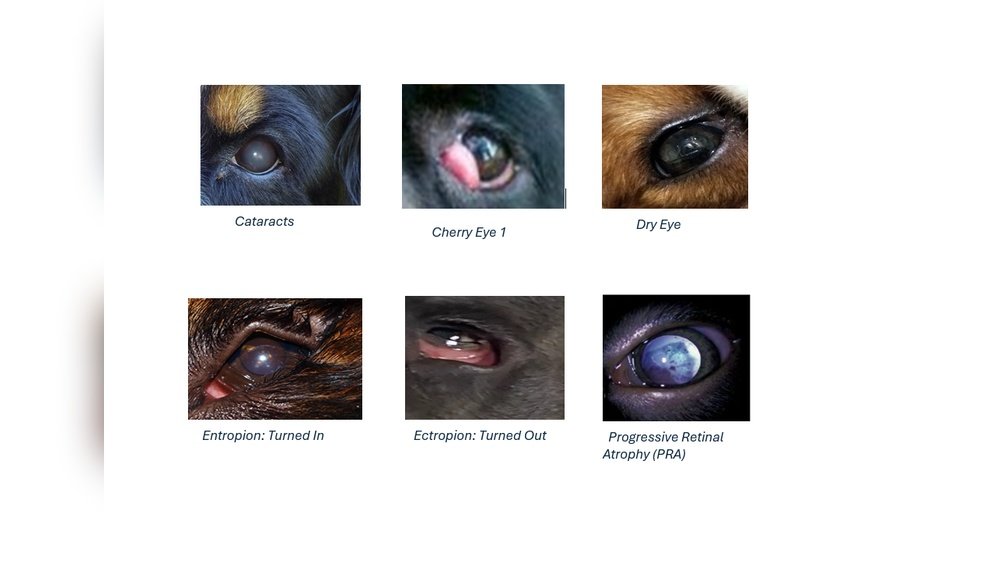
A cataract is a clouding of the lens inside the eye, which blocks light and can cause partial or complete blindness.
Causes:
- Aging (most common)
- Diabetes (a major risk for sudden cataracts)
- Eye injuries
- Genetics (some breeds inherit this risk)
Signs:
- White or bluish cloudiness in the pupil
- Clumsiness or bumping into objects
- Reluctance to jump or go outside at night
Treatment:
- Surgery is the only way to remove cataracts
- Special care for diabetic dogs
Comparison of Cataracts vs. Normal Aging Changes:
| Feature | Cataracts | Normal Aging (Nuclear Sclerosis) |
|---|---|---|
| Appearance | Cloudy, white, or bluish pupil | Blue-gray haze, not opaque |
| Vision Loss | Can be severe or total | Mild, usually doesn’t cause blindness |
| Progression | Often rapid, especially with diabetes | Slow, gradual with age |
Non-obvious tip: Many owners confuse normal aging haze (nuclear sclerosis) with cataracts. Only a vet can tell the difference.
4. Glaucoma
Glaucoma is a dangerous increase in pressure inside the eye. It’s painful and can lead to blindness if not treated fast.
Causes:
- Poor drainage of fluid in the eye
- Inherited (some breeds are prone, such as Cocker Spaniels, Basset Hounds)
- Injury, inflammation, or tumors
Signs:
- Red, swollen eye
- Cloudy cornea
- Dilated or non-reactive pupil
- Sudden vision loss
- Obvious pain (crying, hiding, not eating)
Treatment:
- Emergency! Vets lower the pressure with medication or surgery.
- Lifelong management is often needed.
Non-obvious tip: Glaucoma can strike suddenly. If your dog’s eye looks larger, painful, or cloudy, go to the vet immediately—hours can make the difference between vision and blindness.
5. Corneal Ulcers
The cornea is the clear surface covering the front of the eye. Scratches, injuries, or infections can cause ulcers—painful open sores on the cornea.
Causes:
- Trauma (scratches, foreign bodies, chemical burns)
- Chronic dry eye
- Eyelid or eyelash problems
Signs:
- Squinting
- Tearing
- Rubbing the face
- Cloudy or bluish spot on the eye
Treatment:
- Antibiotic eye drops
- Pain relief
- Sometimes surgery if the ulcer is deep
Non-obvious tip: Never use human eye drops on dogs unless a vet says it’s safe. Some can make ulcers worse.
6. Cherry Eye
Cherry eye is a prolapse (slipping out) of the gland in a dog’s third eyelid. This causes a red, swollen mass in the inner corner of the eye.
Causes:
- Weak tissue holding the gland in place
- Genetic predisposition (common in Bulldogs, Beagles, Cocker Spaniels)
Signs:
- Red or pink bulge in the corner of the eye
- Watery eyes
- Occasional squinting
Treatment:
- Surgery to reposition the gland (removal is not recommended due to risk of dry eye)
Non-obvious tip: Cherry eye often happens in young dogs, sometimes under one year old. Early repair gives the best chance to restore normal tear function.
7. Entropion And Ectropion
These are eyelid shape problems. Entropion means the eyelid rolls inward, making eyelashes rub on the eye. Ectropion means the eyelid rolls outward, exposing the sensitive inner tissue.
Causes:
- Genetics (common in breeds like Shar Peis, Chows, Saint Bernards)
- Aging changes
Signs:
- Red, irritated eyes
- Tearing or discharge
- Eye rubbing
- Visible eyelid rolling in or out
Treatment:
- Minor cases may be managed with eye ointments
- Surgery often needed for severe cases
Non-obvious tip: These eyelid problems can cause lifelong trouble if not corrected. Dogs with entropion often develop ulcers.
8. Eye Injuries
Dogs are curious and playful—sometimes too much. Eye injuries can happen due to fights, running through bushes, or car accidents.
Types Of Injuries:
- Scratches
- Foreign bodies (grass seeds, dust, small sticks)
- Blunt trauma
- Punctures
Signs:
- Sudden squinting or crying
- Blood in or around the eye
- Visible object in the eye
- Rapid swelling
What To Do:
- Keep your dog calm and prevent rubbing
- Do NOT try to remove anything stuck in the eye yourself
- See a vet immediately
Non-obvious tip: Some injuries look minor but can become infected or cause serious damage. Always let a professional check eye injuries.
9. Progressive Retinal Atrophy (pra)
PRA is a group of genetic diseases that cause the cells of the retina (the “film” in the back of the eye) to die slowly. There is no cure, and it leads to blindness.
Causes:
- Inherited gene defect
- Most common in purebred dogs (e.g., Poodles, Collies, Labrador Retrievers)
Signs:
- Night blindness (reluctant to go out in the dark)
- Bumping into things
- Dilated pupils
- Eyes look reflective at night
Treatment:
- No cure, but management can help the dog adjust to vision loss
- Avoid rearranging furniture
- Use scent and sound cues
Non-obvious tip: DNA tests can identify PRA in breeding dogs. Responsible breeders should screen for this.
10. Tumors And Growths
Dogs can develop tumors in or around the eye. These can be benign (not cancer) or malignant (cancer).
Types:
- Eyelid tumors
- Conjunctival masses
- Intraocular tumors (inside the eye)
Signs:
- Lumps, bumps, or swelling
- Bleeding from the eye
- Visible mass on or near eyelid
- Vision changes
Treatment:
- Surgery is often needed
- Some require chemotherapy or radiation
Non-obvious tip: Most eyelid tumors in dogs are benign, but early removal often means a better outcome.
Breeds Prone To Eye Problems
Some breeds are much more likely to develop eye problems due to genetics, head shape, or skin folds. Here’s a comparison of risk by breed:
| Breed | Common Eye Issues | Why at Risk? |
|---|---|---|
| Bulldogs, Pugs | Cherry eye, dry eye, corneal ulcers | Bulging eyes, shallow sockets |
| Cocker Spaniels | Glaucoma, cataracts, cherry eye | Genetic predisposition |
| Poodles | PRA, cataracts | Inherited retinal diseases |
| Shar Pei, Chow Chow | Entropion, corneal ulcers | Heavy skin folds, eyelid shape |
| Labrador Retrievers | PRA, cataracts | Genetic factors |
Tip: If you own a breed at higher risk, schedule regular eye checks with your vet—sometimes as often as every 6 months.

Credit: www.hopecentervet.com
When To See A Veterinarian
Not all eye problems need emergency care, but many do. Here’s a quick guide:
- See a vet immediately if:
- Your dog is in pain (crying, pawing, hiding)
- The eye is red, swollen, or cloudy
- There’s blood or a visible wound
- Sudden vision loss or bumping into objects
- Make a routine appointment if:
- Mild discharge or redness that doesn’t improve in 24 hours
- Watery eyes or squinting that comes and goes
- Lumps or bumps that are not painful
Non-obvious tip: Many eye problems can get much worse in hours, not days. When in doubt, it’s safer to call your vet.
Preventing Eye Problems In Dogs
You can’t prevent every issue, but these steps lower your dog’s risk:
- Regular eye checks: Look at your dog’s eyes daily. Notice changes early.
- Keep hair trimmed: Long hair can irritate eyes. Trim around the face (carefully).
- Protect from irritants: Avoid letting your dog stick its head out the car window. Dust, sand, and bugs can injure eyes.
- Use dog-safe shampoos: Rinse thoroughly to keep soap out of eyes.
- Good breeding: Choose breeders who screen for inherited eye problems.
- Healthy diet: Some nutrients (like omega-3s and vitamin A) support eye health.
Non-obvious tip: Even indoor dogs can get eye infections from dirty bedding or toys. Wash these often.
Home Care For Minor Eye Issues
For minor irritations or after-care (as directed by your vet), you can:
- Gently wipe discharge with a clean, damp cotton ball
- Use only medications prescribed for your dog
- Prevent your dog from scratching or rubbing its eyes
Never use human eye drops or medications unless your vet tells you it’s safe. Many products for people are dangerous for dogs.
Important: If things don’t improve in 24 hours, or symptoms get worse, call your vet.
Eye Care After Surgery Or Injury
If your dog has had eye surgery or a serious injury, follow your vet’s instructions exactly. Some common advice includes:
- Using an Elizabethan collar (cone) to prevent scratching
- Giving all medications as directed, even if your dog looks better
- Keeping the eye clean and dry
- Limiting rough play until fully healed
Complications can develop quickly after eye surgery. Always go back to the vet if you see new redness, swelling, discharge, or if your dog seems uncomfortable.
Living With A Visually Impaired Or Blind Dog
If your dog loses some or all of its vision, life can still be rich and happy. Dogs adapt better than most people expect. Here’s how you can help:
- Keep furniture and layout the same to prevent confusion
- Use scent cues (essential oils, treats) to mark key areas
- Talk to your dog before touching to avoid startling
- Use gentle touch and sound games for stimulation
Many dogs with limited sight still enjoy walks, play, and affection. You can find more on helping blind dogs from expert resources like the VCA Animal Hospitals.
Costs Of Treating Eye Problems
Eye care for dogs can be expensive, especially if surgery or ongoing medication is needed. Here’s a rough comparison of common treatments:
| Condition | Estimated Cost (US) | Ongoing Care? |
|---|---|---|
| Simple conjunctivitis | $50-$150 | No |
| Corneal ulcer | $100-$400 | Maybe |
| Cherry eye surgery | $500-$1,000 | Sometimes |
| Cataract surgery | $2,500-$4,000 per eye | Follow-up needed |
| Glaucoma (medical management) | $50-$150/month | Yes, lifelong |
Non-obvious tip: Some pet insurance plans cover eye problems, but many don’t. Check your policy before there’s a problem.
.jpg)
Credit: www.orchardroadanimalhospital.com
Frequently Asked Questions
What Should I Do If My Dog’s Eye Suddenly Becomes Red And Swollen?
A sudden red, swollen eye can be a sign of serious conditions like glaucoma, injury, or infection. Keep your dog calm, prevent rubbing, and see a vet immediately. Delays can lead to permanent vision loss.
Can My Dog Get Eye Infections From Other Dogs?
Yes, some eye infections (like bacterial conjunctivitis) can spread between dogs, especially in kennels or shelters. Keep your dog’s eyes clean and avoid sharing bedding or towels.
Are Human Eye Drops Safe For Dogs?
Most human eye drops are not safe for dogs. Some can make problems worse or even cause blindness. Only use medications prescribed by your vet for your dog’s specific condition.
How Can I Tell If My Dog Is Losing Vision?
Signs of vision loss include bumping into objects, hesitation in new places, reluctance to go out at night, or changes in eye appearance. If you notice these, schedule a veterinary exam.
Should I Clean My Dog’s Eyes Every Day?
You don’t need to clean your dog’s eyes daily unless your vet recommends it. For breeds with lots of tears or discharge, gentle cleaning with a damp cotton ball can help prevent irritation. Never use harsh chemicals or wipes.
—
Caring for your dog’s eyes is a key part of their overall health and happiness. By learning to spot early signs, understanding common eye problems, and knowing when to seek help, you give your pet the best chance at a lifetime of clear, comfortable vision.
Remember, quick action can make all the difference—so trust your instincts and work closely with your veterinarian. Your dog’s eyes are worth it.
We’re the dedicated team behind MyPawSafe.com, with over a decade of combined experience in veterinary care, pet emergency response, and animal behavior. While we prefer to let our work speak for itself, our mission is clear: to provide science-backed, vet-approved advice that helps pet owners prevent accidents and save lives.