Many dog owners see their pets as family. So, when a dog acts differently or looks unhealthy, it’s a cause for concern. One health issue that’s often missed until it becomes serious is diabetes in dogs. Diabetes is not just a human problem. Dogs can develop this condition, too, and it’s becoming more common as pets live longer and eat richer foods. Early detection of diabetes can make a huge difference for your dog’s life and comfort. But what are the signs? How do you know if your dog is showing symptoms of diabetes? This article gives you clear, detailed information about the signs of diabetes in dogs, how to recognize them, and what steps to take if you notice something is wrong. Let’s explore this important topic, so you can help your dog stay healthy and happy.
What Is Diabetes In Dogs?
Diabetes mellitus is a condition where the body cannot control blood sugar well. In dogs, this usually happens because the pancreas does not make enough insulin. Insulin is needed for cells to use sugar (glucose) for energy. Without enough insulin, glucose stays in the blood and builds up, causing health problems.
There are two main types:
- Type 1 diabetes: The body doesn’t make enough insulin. This is most common in dogs.
- Type 2 diabetes: The body makes insulin but doesn’t use it well. This is rare in dogs.
Dogs with diabetes need lifelong care. The disease can affect dogs of any age, but it’s most common in middle-aged to older dogs, and in females. Some breeds are more likely to develop diabetes, such as Miniature Schnauzers, Poodles, and Dachshunds.
Why Early Detection Matters
Diabetes can cause serious complications in dogs. If left untreated, it can lead to:
- Cataracts (vision loss)
- Kidney disease
- Nerve damage
- Infections
- Death
Early detection allows you to manage diabetes before these problems start. Treatment can include insulin shots, diet changes, and regular checkups. Dogs with well-managed diabetes can live normal, happy lives.
Many signs of diabetes are subtle at first. Owners often mistake them for normal aging or minor issues. Understanding the signs helps you take action before the disease gets worse.

Credit: www.northpointeanimalhospital.com
Most Common Signs Of Diabetes In Dogs
The signs of diabetes can appear slowly. Some are easy to spot, others are not. Here are the most common symptoms:
Increased Thirst
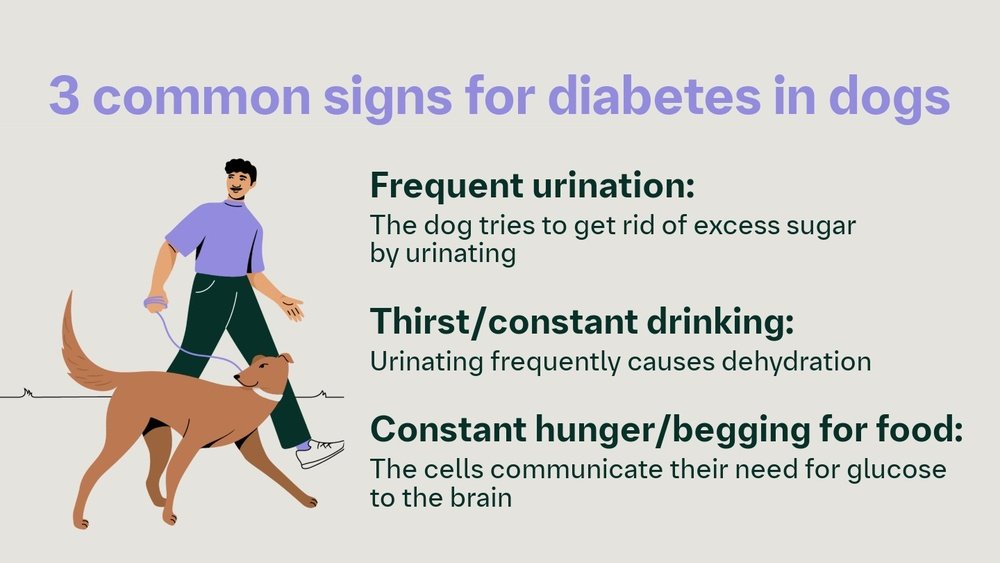
Dogs with diabetes drink much more water than usual. This is called polydipsia. It happens because their body tries to flush out extra sugar through urine, making them thirsty.
You might notice:
- Your dog’s water bowl empties faster
- The dog asks for water more often
- Drinking from unusual places (toilet, puddles)
Frequent Urination
This is known as polyuria. The body removes excess sugar through urine, so the dog needs to pee more often.
Signs include:
- Going outside more frequently
- Accidents in the house
- Larger volumes of urine
Some owners think this is just aging or a bladder infection. But with diabetes, frequent urination and increased thirst usually go together.
Increased Appetite
Dogs with diabetes often feel hungry all the time. This is called polyphagia. Even though they eat more, they may still lose weight.
Why does this happen? Their bodies can’t use sugar for energy, so they feel hungry.
Weight Loss
Despite eating more, dogs lose weight. This is a key sign. The body breaks down fat and muscle for energy because glucose can’t enter cells.
If your dog is eating more but losing weight, diabetes could be the cause.
Lethargy And Weakness
Dogs with diabetes may seem tired or less active. They might:
- Sleep more than usual
- Avoid playing or walking
- Seem weak or slow
This happens because their body is not getting enough energy.
Cloudy Eyes
A serious sign is cataracts. Up to 80% of diabetic dogs develop cataracts within a year. You may notice:
- Cloudy or white appearance in the eye
- Bumping into objects
- Difficulty seeing
Cloudy eyes should always be checked by a vet.
Poor Coat Condition
Diabetic dogs may have dull, dry fur or skin problems. Their bodies are stressed and may not absorb nutrients well.
You might see:
- Hair loss
- Dry, flaky skin
- Slow healing wounds
Vomiting And Diarrhea
If diabetes is not managed, dogs can develop ketoacidosis, a dangerous condition. Signs include:
- Vomiting
- Diarrhea
- Deep breathing
- Sweet-smelling breath
This is an emergency. If you see these signs, get your dog to a vet immediately.
Other Subtle Signs
Some dogs show less obvious signs:
- Increased infections (especially urinary tract)
- Loss of muscle tone
- Changes in behavior (irritability, confusion)
- Weak back legs (especially in cats, but possible in dogs)
How Diabetes In Dogs Develops
Understanding why diabetes starts helps you spot signs early. Diabetes can be caused by:
- Genetics: Some breeds are more at risk.
- Obesity: Overweight dogs have higher risk.
- Hormonal changes: Older, unspayed females are more likely to develop diabetes.
- Pancreatitis: Inflammation of the pancreas can damage insulin-producing cells.
Dogs usually show signs slowly. Owners may not notice until symptoms are strong. Regular vet checks are important, especially for older dogs and at-risk breeds.

Credit: www.dogsnaturallymagazine.com
Data On Diabetes In Dogs
Diabetes is not rare in dogs. According to the American Veterinary Medical Association:
- About 1 in 300 dogs develop diabetes.
- Middle-aged and older dogs (7+ years) are at higher risk.
- Females are twice as likely as males.
- Miniature Schnauzers, Dachshunds, and Poodles have higher rates.
Here is a comparison of diabetes rates in common breeds:
| Breed | Estimated Diabetes Rate | Notes |
|---|---|---|
| Miniature Schnauzer | 1 in 100 | High risk, genetic factors |
| Poodle | 1 in 120 | Moderate risk, often older dogs |
| Dachshund | 1 in 125 | High risk, especially females |
| Labrador Retriever | 1 in 250 | Lower risk, but obesity increases chance |
| Mixed Breed | 1 in 300 | Average risk |
Differences Between Diabetes And Other Conditions
Some signs of diabetes can look like other diseases. For example, increased thirst and urination also happen with:
- Kidney disease
- Cushing’s disease
- Urinary tract infection
It’s important to know how diabetes differs. Here’s a comparison:
| Symptom | Diabetes | Kidney Disease | Cushing’s Disease |
|---|---|---|---|
| Increased Thirst | Yes | Yes | Yes |
| Increased Urination | Yes | Yes | Yes |
| Increased Appetite | Yes | No | Yes |
| Weight Loss | Yes | Yes | No (usually weight gain) |
| Muscle Weakness | Sometimes | Yes | Yes |
| Cataracts | Common | Rare | Rare |
Non-obvious insight: Weight loss with increased appetite is a strong clue for diabetes, while Cushing’s disease usually causes weight gain.
How Vets Diagnose Diabetes
If you suspect diabetes, your vet will run tests. Diagnosis includes:
- Physical exam: The vet checks for signs like weight loss, coat changes, and cataracts.
- Blood tests: High blood sugar confirms diabetes.
- Urine tests: Sugar in urine is another key sign.
Sometimes, vets check for ketones in urine, which show if diabetes is severe.
What Blood Sugar Levels Mean
Normal Fasting Blood Glucose For Dogs: 75–120 Mg/dl
Diabetic dogs often have blood sugar over 200 mg/dL.
Here’s a quick comparison:
| Blood Glucose Level | Health Status |
|---|---|
| 75–120 mg/dL | Normal |
| 121–199 mg/dL | Possible early diabetes, stress, or other issue |
| 200+ mg/dL | Likely diabetes |
What To Do If You Notice Signs
If you see symptoms like increased thirst, frequent urination, or unexplained weight loss, act quickly:
- Record symptoms: Write down what you notice, how long it’s been happening, and any changes.
- Visit your vet: Bring your notes. Early tests can help.
- Ask about blood and urine tests: These confirm diabetes.
- Follow your vet’s advice: Treatment might start right away.
Don’t wait for more signs. Diabetes is easier to manage early.
Managing Diabetes In Dogs
After diagnosis, dogs need lifelong care. Treatment involves:
- Insulin injections: Most diabetic dogs need daily shots.
- Diet changes: High-fiber, low-fat diets help control blood sugar.
- Regular exercise: Helps balance glucose.
- Monitoring: Owners check for signs of high or low blood sugar.
Your vet will give a plan. Follow it closely. Dogs with managed diabetes can live for years with good quality.
Practical Tips For Owners
- Give insulin at the same time every day.
- Use a consistent diet. Avoid treats with sugar.
- Watch for signs of low blood sugar: Shaking, confusion, weakness.
- Keep emergency glucose (like honey) for sudden low blood sugar.
- Visit your vet regularly for checkups.
Non-obvious insight: Even small changes in routine can affect blood sugar. Always talk to your vet before changing food or activity.
Common Mistakes Owners Make
Many owners miss early signs or misunderstand diabetes. Here are mistakes to avoid:
- Thinking symptoms are normal aging: Increased thirst or weight loss are not just age-related.
- Ignoring cloudy eyes: Cataracts develop quickly in diabetic dogs.
- Skipping vet visits: Regular checks are key.
- Changing diet without advice: Some foods may harm diabetic dogs.
- Not monitoring insulin: Missing doses can cause health crises.
If you’re unsure, ask your vet. Don’t rely on internet forums or guesswork.
Diabetes Prevention In Dogs
While not all cases can be prevented, some actions lower risk:
- Keep your dog at a healthy weight.
- Feed a balanced diet.
- Exercise daily.
- Spay female dogs (reduces hormone risk).
Some breeds are at higher risk no matter what. But healthy habits reduce chances of diabetes and other diseases.
Real-life Example: Spotting Diabetes Early
Let’s look at a real story. Max, a 9-year-old Miniature Schnauzer, started drinking more water and peeing frequently. His owner thought it was just old age. But Max began losing weight even though he ate more. After a vet visit and tests, Max was diagnosed with diabetes.
With insulin shots and diet changes, Max’s symptoms improved. He regained energy and lived for three more years, enjoying walks and playing. Early action made all the difference.
Non-obvious insight: Owners often miss the link between increased thirst and weight loss. It’s important to notice the pattern of multiple symptoms.

Credit: www.northpointeanimalhospital.com
How Diabetes Affects Quality Of Life
Diabetes does change a dog’s life, but it doesn’t have to mean suffering. With good care:
- Dogs can play, walk, and enjoy family time.
- Most diabetic dogs live as long as non-diabetic dogs if managed well.
- Owners must commit to daily routines and vet visits.
What matters most is consistency. Dogs adjust quickly to new routines and can be happy and comfortable.
Signs Of Diabetes By Stage
Symptoms can change as diabetes progresses. Here’s how signs develop:
Early Stage
- Increased thirst and urination
- Slight increase in appetite
- Some weight loss
Moderate Stage
- Obvious weight loss
- Lethargy
- Cloudy eyes
- Poor coat condition
Advanced Stage
- Vomiting
- Diarrhea
- Deep breathing
- Severe weakness
- Possible coma (rare)
Acting in the early stage gives the best chance for a healthy life.
When To Seek Emergency Help
If your dog has:
- Vomiting and diarrhea
- Sweet-smelling breath
- Deep, rapid breathing
- Severe weakness or collapse
Go to the vet immediately. These are signs of diabetic ketoacidosis, a life-threatening crisis.
Understanding Insulin And Treatment
Dogs with diabetes almost always need insulin. Unlike humans with Type 2 diabetes, diet alone cannot control the disease.
Insulin is given as a shot under the skin. Most owners learn to do this at home. Your vet will show you how.
Important facts:
- Insulin must be stored in the fridge.
- Dosage is based on your dog’s weight and blood sugar.
- Never skip doses.
Some owners worry about giving shots, but most dogs handle it well and don’t mind.
Monitoring Your Dog At Home
Good management means watching for changes. Here’s what to monitor:
- Water intake
- Urine volume and frequency
- Appetite
- Weight
- Activity level
You can use a notebook or phone app to track these. If you notice changes, tell your vet.
Special Considerations For Older Dogs
Older dogs are more likely to develop diabetes. They may also have other health issues. Watch for:
- Slower healing
- Joint pain
- Vision changes
Managing diabetes in older dogs needs special care. Your vet may adjust insulin or diet based on other conditions.
Impact On Family And Lifestyle
Caring for a diabetic dog affects your routine:
- You’ll need to give insulin daily.
- Diet must be consistent; no table scraps or sudden changes.
- Travel requires planning (bring insulin and supplies).
Most families adjust easily. Dogs thrive on routine and adapt well.
How Diet Helps Manage Diabetes
Diet is key. High-fiber, low-fat diets help control blood sugar. Avoid foods with simple sugars.
Some good foods:
- Prescription diabetic dog foods
- Lean meats (chicken, turkey)
- Vegetables (green beans, carrots)
- Whole grains (brown rice, oats)
Limit treats. If you use treats, choose ones made for diabetic dogs.
Exercise And Diabetes
Regular exercise helps control blood sugar. Dogs should walk daily, but avoid extreme activity. Too much exercise can cause low blood sugar.
Tips:
- Walk at the same time each day.
- Avoid long runs or intense play.
- Watch for weakness or confusion during exercise.
If your dog is not used to exercise, start slowly and build up.
The Role Of Routine Vet Visits
Diabetic dogs need regular vet checks. This helps:
- Monitor blood sugar levels
- Adjust insulin dose as needed
- Check for complications (cataracts, infections)
Most vets recommend visits every 3–6 months. If you notice changes, schedule a visit sooner.
Long-term Outlook For Diabetic Dogs
With good care, dogs with diabetes can live normal lives. Complications are less likely when you:
- Follow treatment plans
- Keep weight healthy
- Monitor symptoms
A study found that diabetic dogs with consistent care lived 2–4 years after diagnosis, often as long as non-diabetic dogs. Quality of life depends on early detection and owner commitment.
Frequently Asked Questions
What Are The First Signs Of Diabetes In Dogs?
The earliest signs are increased thirst, frequent urination, and weight loss even with more eating. These can appear slowly, so watch for changes in your dog’s daily habits.
Can Diabetes In Dogs Be Cured?
No, diabetes in dogs cannot be cured. It can be managed with insulin, diet, and regular care. Dogs can live happy lives with good management.
How Often Should Diabetic Dogs See The Vet?
Most diabetic dogs should visit the vet every 3–6 months for checkups and blood tests. If you notice new symptoms, schedule a visit sooner.
Is Diabetes More Common In Certain Breeds?
Yes, breeds like Miniature Schnauzers, Poodles, and Dachshunds are at higher risk. Middle-aged and older female dogs are also more likely to develop diabetes.
Where Can I Learn More About Diabetes In Dogs?
For more information, visit the American Veterinary Medical Association at AVMA Pet Diabetes Resource.
Final Thoughts
Diabetes in dogs is a serious condition, but with careful attention, it’s manageable. The most important thing is to notice signs early—especially changes in thirst, urination, appetite, and weight. Don’t assume these symptoms are just aging. The earlier you act, the easier it is to help your dog live a full, healthy life.
Work closely with your vet, learn about your dog’s needs, and commit to a routine. Your dog depends on you to spot changes and provide care. With the right steps, diabetic dogs can enjoy many happy years with their families.
Stay alert, stay informed, and your pet will thank you for it.

We’re the dedicated team behind MyPawSafe.com, with over a decade of combined experience in veterinary care, pet emergency response, and animal behavior. While we prefer to let our work speak for itself, our mission is clear: to provide science-backed, vet-approved advice that helps pet owners prevent accidents and save lives.