If you own a French Bulldog, you know how much love these little dogs give. But if your French Bulldog starts throwing up, worry quickly sets in. Vomiting can seem scary, especially in a breed known for sensitive stomachs and unique health problems. You want answers fast: Why is my French Bulldog throwing up? Is it serious? Should I call the vet now?
This article explores the real reasons behind French Bulldogs vomiting, how to spot the difference between mild and serious cases, and when you need professional help. It’s written for dog lovers who want clear, practical advice, not confusing medical terms.
By the end, you’ll understand what’s normal, what’s not, and how to help your Frenchie feel better.
Understanding Vomiting In French Bulldogs
French Bulldogs are prone to many health issues because of their flat faces (brachycephalic), compact bodies, and sensitive digestive systems. Throwing up can be a sign of something simple, or it can mean a bigger problem.
What Is Vomiting?
Vomiting is the forceful expulsion of stomach contents. It’s different from regurgitation, which happens when food comes up easily, usually from the esophagus, not the stomach. Vomiting usually comes with abdominal contractions, drooling, and sometimes nausea signs.
Why French Bulldogs Are Vulnerable
French Bulldogs have unique anatomy:
- Their short noses and narrow airways can affect swallowing and digestion.
- Many have food allergies or intolerances.
- They tend to eat fast, swallowing air and food together.
- Their digestive tracts are sensitive, reacting strongly to changes or irritants.
Some French Bulldogs may throw up occasionally without a serious cause. But frequent or severe vomiting always needs attention.
Common Causes Of Vomiting In French Bulldogs
There are many possible reasons your French Bulldog might throw up. Some are minor, while others are serious. Understanding these causes helps you decide what to do next.
1. Eating Too Fast
French Bulldogs often gulp their food. This causes air and food to mix, stretching the stomach. The body reacts by expelling the contents. If your Frenchie throws up right after eating, especially undigested food, it may just be eating too fast.
Tip: Use a slow-feed bowl or divide meals into smaller portions.
2. Food Allergies And Sensitivities
Many French Bulldogs have food allergies or intolerances. Common triggers include:
- Chicken
- Beef
- Dairy
- Wheat
- Artificial additives
If your dog vomits regularly, especially after certain foods, allergy or intolerance may be the cause.
3. Dietary Changes
Switching foods too quickly can upset your Frenchie’s stomach. Dogs need gradual transitions between diets. Sudden changes often lead to vomiting, diarrhea, or stomach pain.
Tip: Transition new food over 7–10 days, mixing old and new.
4. Eating Something Inappropriate
French Bulldogs are curious. They may eat trash, toys, plants, or human food. Many household items are toxic or can cause blockages. Vomiting is often the first sign.
Dangerous items include:
- Chocolate
- Grapes
- Onions
- Xylitol (in sugar-free gum)
- Bones
- Plastic
5. Gastrointestinal Infections
Viruses, bacteria, and parasites can infect your dog’s stomach or intestines. Common symptoms are vomiting, diarrhea, lethargy, and sometimes fever. Puppies and older dogs are especially vulnerable.
6. Stress Or Anxiety
French Bulldogs are sensitive. Changes in routine, loud noises, or new environments can cause stress-induced vomiting. This usually happens during or after a stressful event.
7. Motion Sickness
Some dogs get sick during car rides. French Bulldogs, with their sensitive systems, are prone to motion sickness. Vomiting may be the only sign.
8. Heat Stroke
French Bulldogs overheat easily due to their short noses. Heat stroke can cause vomiting, along with heavy panting, drooling, collapse, and even death. Never leave your Frenchie in a hot car or outside without shade.
9. Chronic Diseases
Vomiting can be a sign of underlying problems such as:
- Kidney disease
- Liver disease
- Pancreatitis
- Diabetes
These conditions are more common in older dogs. Vomiting often comes with other signs—weight loss, increased thirst, or changes in appetite.
10. Intestinal Blockage
A blockage happens when your Frenchie swallows something that gets stuck in the digestive tract. Vomiting, especially persistent or projectile, is an early sign. Blockages are emergencies—call your vet right away.
11. Medication Side Effects
Some medicines, including antibiotics, painkillers, or heartworm pills, can cause vomiting. If your dog starts vomiting after a new medication, contact your vet.
12. Gastric Dilatation-volvulus (bloat)
Bloat is rare but deadly. The stomach fills with gas and twists, cutting off blood supply. Signs include:
- Vomiting with little or no food
- Swollen belly
- Restlessness
- Drooling
This is an emergency. Seek immediate vet care.
13. Cancer
While less common, vomiting can signal tumors in the digestive tract. Cancer usually affects older French Bulldogs and comes with weight loss, loss of appetite, and sometimes visible lumps.

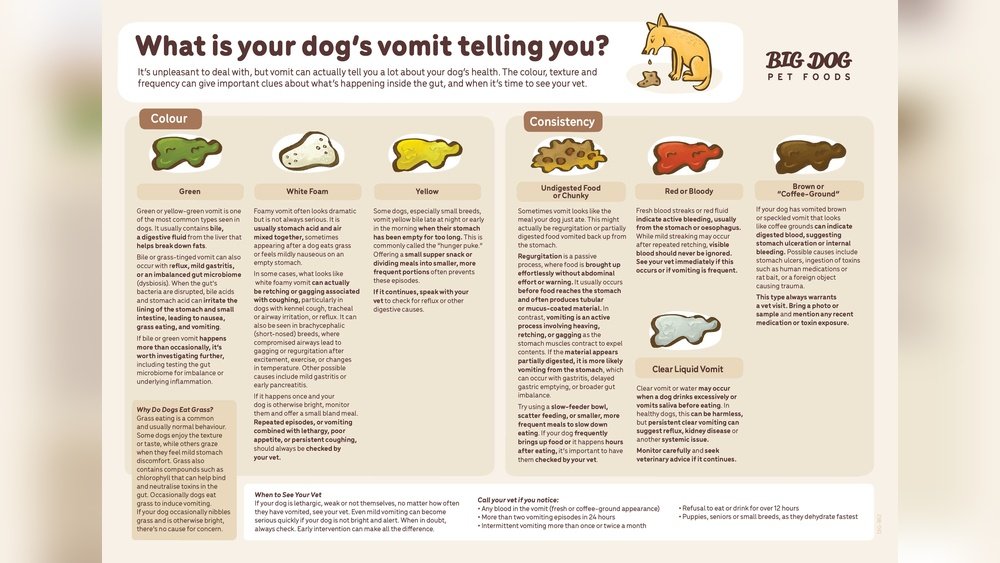
Credit: www.bigdogpetfoods.com
Comparing Minor And Serious Causes
Sometimes you can tell if vomiting is mild or serious by observing your dog’s behavior and symptoms. Here’s a comparison to help you decide:
| Minor Causes | Serious Causes |
|---|---|
| Eating too fast | Intestinal blockage |
| Dietary changes | Bloat (GDV) |
| Food intolerance | Heat stroke |
| Motion sickness | Chronic disease (kidney, liver) |
| Stress/anxiety | Poisoning |
| Medication side effects | Cancer |
Always watch for signs of a serious problem. If vomiting is frequent, severe, or comes with other symptoms, don’t wait.
Signs You Should Call A Vet
Not every vomiting episode needs a vet visit. But some signs mean you should call your vet as soon as possible.
Warning Signs
- Blood in vomit (red or coffee-ground appearance)
- Persistent vomiting (more than twice in a day)
- Lethargy
- Dehydration (dry gums, sunken eyes, skin stays up when pinched)
- Severe abdominal pain
- Swollen belly
- Collapse or seizures
- High fever
- Diarrhea with vomiting
- Vomiting with no food coming up
If your French Bulldog shows any of these signs, seek help right away.
Age Matters
Young puppies and older dogs are at higher risk. Their bodies can’t handle dehydration or illness as well. For these age groups, call your vet sooner.
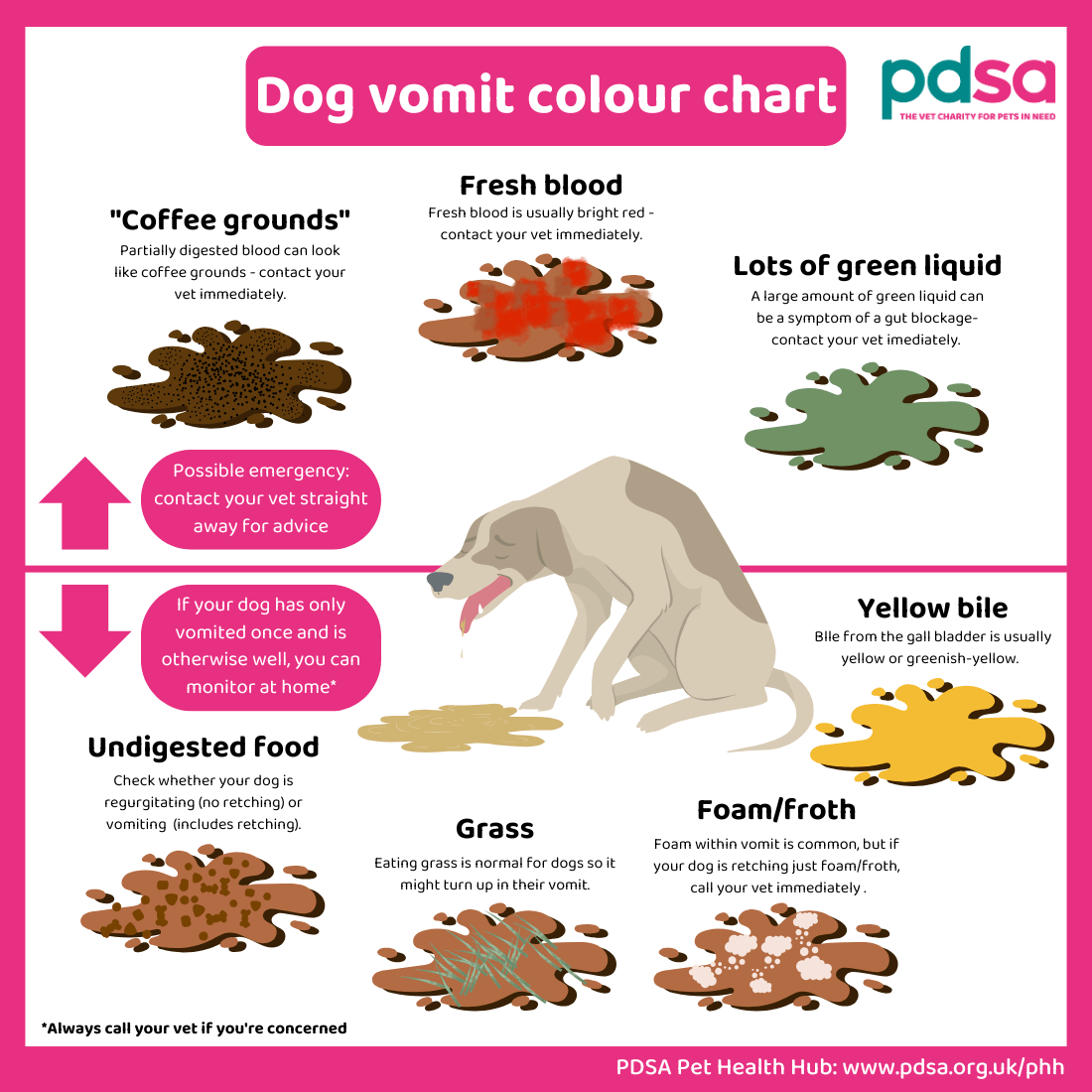
Credit: www.pdsa.org.uk
What To Expect At The Vet
When you visit the vet, they will ask questions and run tests to find the cause. Here’s what usually happens:
Medical History
Your vet will ask:
- When did vomiting start?
- What does the vomit look like?
- Any recent changes in diet, environment, or activity?
- Is your Frenchie eating and drinking normally?
- Any other symptoms?
Physical Exam
The vet will check:
- Temperature
- Heart rate
- Abdominal pain
- Hydration status
- Mucous membranes
Diagnostic Tests
Depending on the case, your vet may recommend:
- Blood tests (check organs, infection)
- X-rays or ultrasound (look for blockages, tumors)
- Fecal tests (check for parasites)
- Urine tests
Here’s a quick comparison of common diagnostic tools:
| Test | Purpose | Speed |
|---|---|---|
| Blood work | Check organ function, infection | 1–2 hours |
| X-ray | Blockage, bloat, tumors | Immediate |
| Ultrasound | Detailed organ view | 30–60 minutes |
| Fecal test | Parasites, infection | 1–2 days |
| Urine test | Kidney, diabetes | 1–2 hours |
Treatment Options
Treatment depends on the cause:
- Mild cases: Rest, bland diet, fluids
- Infections: Antibiotics, anti-parasitic drugs
- Blockages or bloat: Surgery
- Allergies: Diet change, allergy medication
- Chronic disease: Ongoing management, special diets
Most French Bulldogs recover well if treated early.
Home Care For Mild Vomiting
If your French Bulldog vomits once or twice but seems otherwise normal, you can try home care. But be cautious—if symptoms worsen, call your vet.
Steps To Follow
- Remove Food and Water: For 4–6 hours after vomiting, let your dog’s stomach rest. After this, offer small amounts of water.
- Bland Diet: After 12–24 hours, give small meals of boiled chicken (no skin, no bones) and white rice. Avoid treats and rich foods.
- Monitor Closely: Watch for more vomiting, lethargy, or new symptoms.
- Gradually Return to Regular Diet: Once your Frenchie feels better, slowly add their usual food back over several days.
What Not To Do
- Don’t give human medications.
- Don’t force food or water.
- Don’t ignore signs of pain, dehydration, or blood.
Practical Tips
- Use a slow-feed bowl if your dog eats too fast.
- Keep trash and dangerous items out of reach.
- Stick to a routine—French Bulldogs thrive on predictability.
Preventing Vomiting In French Bulldogs
Prevention is always better than cure. While you can’t avoid all problems, you can reduce risk.
Feeding Habits
- Feed smaller meals, more often.
- Use slow-feed bowls or puzzle feeders.
- Avoid sudden diet changes.
- Check food for spoilage or contamination.
Avoid Dangerous Foods
Never give your Frenchie:
- Chocolate
- Grapes
- Onions
- Garlic
- Bones
- Fatty leftovers
- Human medications
Keep The Environment Safe
- Puppy-proof your home.
- Keep trash, cleaning supplies, and small objects away.
- Supervise outside play.
Health Maintenance
- Regular vet checkups (at least once a year)
- Update vaccinations and parasite prevention
- Monitor for signs of allergies or chronic disease
Stress Management
- Keep routines stable.
- Provide safe spaces during loud events.
- Use gentle training methods.
Exercise And Weight Control
Overweight French Bulldogs are at higher risk for vomiting and other health problems. Daily walks and playtime help.
Real-life Example: French Bulldog Vomiting Case
Let’s look at a real case to make things clearer.
Case: Bella, a 3-year-old French Bulldog, started vomiting after eating breakfast. She seemed normal otherwise, but vomited twice more within two hours. Her owner noticed she had eaten her food quickly and found a chewed plastic toy nearby.
Action Taken:
- Bella’s owner withheld food and water for 6 hours.
- After 8 hours, Bella still felt weak and vomited again.
- The owner called the vet.
Vet Findings:
- X-ray showed a small piece of plastic stuck in the stomach.
- Surgery removed the plastic.
- Bella recovered fully after two days in the hospital.
Lesson: Even mild vomiting can signal a serious problem. Always check for swallowed objects and call your vet if vomiting persists.
French Bulldogs Vs Other Breeds
French Bulldogs have unique risks compared to other dogs. Here’s a quick comparison:
| Breed | Vomiting Risk | Common Causes |
|---|---|---|
| French Bulldog | High | Fast eating, allergies, blockages |
| Labrador Retriever | Moderate | Eating trash, dietary changes |
| Poodle | Low | Food intolerance |
| Yorkshire Terrier | High (small size) | Hypoglycemia, stress |
| German Shepherd | Moderate | Bloat, allergies |
French Bulldogs’ anatomy and behavior make them more prone to vomiting. Owners need to be extra vigilant.
Non-obvious Insights Beginners Miss
- Vomiting isn’t always from the stomach. Sometimes, issues in the esophagus (like regurgitation) can look similar. French Bulldogs often have esophageal problems due to their unique anatomy. If vomit comes up quickly and without effort, mention this to your vet.
- Low-grade chronic vomiting is dangerous. If your Frenchie vomits once a week or seems “just a little off,” don’t ignore it. Chronic issues can signal allergies, parasites, or even early organ problems.

Credit: www.frenchie.shop
When Vomiting Needs Emergency Care
Some situations need immediate action. Don’t wait for symptoms to get worse.
Call your vet immediately if:
- Vomiting is frequent and severe
- There is blood in vomit or stool
- Your dog can’t keep water down
- The belly looks swollen or your dog is in pain
- Your French Bulldog collapses or seems confused
French Bulldogs decline quickly if dehydrated. Their small size and compact body make emergencies worse.
Trusted Resources For French Bulldog Health
For more information, always use reliable sources. The American Kennel Club is a trusted place to learn more about French Bulldog health. You can visit AKC French Bulldog Guide for breed-specific tips.
Frequently Asked Questions
What Should I Do If My French Bulldog Vomits Once But Seems Fine?
If your French Bulldog vomits once and acts normal, remove food and water for 4–6 hours. After that, offer small amounts of water. If no more vomiting occurs, feed a bland meal (boiled chicken and rice). Monitor closely for new symptoms.
If vomiting returns or your dog seems unwell, call your vet.
Can French Bulldogs Have Sensitive Stomachs?
Yes, French Bulldogs are famous for sensitive stomachs. Many have food allergies or trouble digesting certain proteins. Feed high-quality, simple diets and avoid sudden changes. Always consult your vet if your Frenchie has recurring stomach issues.
How Can I Prevent My French Bulldog From Eating Too Fast?
Use a slow-feed bowl or puzzle feeder. Divide meals into smaller portions throughout the day. You can also spread food on a flat plate, forcing your dog to eat slowly. Never rush meal times, and supervise eating if your Frenchie competes with other pets.
Are Certain Foods More Likely To Cause Vomiting In French Bulldogs?
Yes. French Bulldogs often react badly to:
- Chicken
- Beef
- Wheat
- Dairy
- Artificial additives
Avoid human foods like chocolate, grapes, onions, and fatty leftovers. Stick to dog-safe foods and treats.
When Is Vomiting An Emergency For My French Bulldog?
Vomiting is an emergency if:
- There is blood in vomit or stool
- Your dog vomits more than twice in 24 hours
- Vomiting comes with lethargy, dehydration, or pain
- The belly is swollen
- Your Frenchie collapses or has trouble breathing
In these cases, call your vet right away.
French Bulldogs are loving, energetic companions. Their unique bodies make them more prone to vomiting, but with careful attention, you can keep your Frenchie healthy. Know the signs, act quickly when needed, and always consult your vet for guidance. With the right care, your French Bulldog can enjoy a happy, comfortable life.
We’re the dedicated team behind MyPawSafe.com, with over a decade of combined experience in veterinary care, pet emergency response, and animal behavior. While we prefer to let our work speak for itself, our mission is clear: to provide science-backed, vet-approved advice that helps pet owners prevent accidents and save lives.