French Bulldog Colors Guide: Common, Rare, And Color Codes
French Bulldogs are one of the most popular dog breeds worldwide. With their compact bodies, adorable faces, and lively personalities, these dogs win hearts everywhere. But there’s another reason Frenchies stand out—their wide range of coat colors and patterns. From classic shades to rare hues, the color of a French Bulldog can affect price, health, and even temperament.
If you’re curious about all the colors French Bulldogs come in, how color codes work, and which are common or rare, this guide covers everything in simple, clear language.
Why French Bulldog Colors Matter
Choosing a French Bulldog color is more than picking a favorite shade. The color can influence:
- Price: Rare colors often cost more.
- Health: Some colors are linked to health issues.
- Breed standards: Not all colors are accepted by major kennel clubs.
- Personality myths: Some believe color affects behavior (though there’s little proof).
Understanding French Bulldog colors helps you make smarter choices, avoid scams, and find a healthy, happy pup.
How French Bulldog Colors Are Created
French Bulldog colors come from genes. Each dog inherits genes from its parents. These genes decide the coat color, patterns, and even nose or eye color.
Basic Color Genetics
- Dominant genes: Show up even if only one parent has them.
- Recessive genes: Only show up if both parents pass them down.
For example, if both parents have the gene for blue (a rare color), their puppies can be blue. If only one parent has the gene, puppies may carry the gene but not show the color.
Color Codes Explained
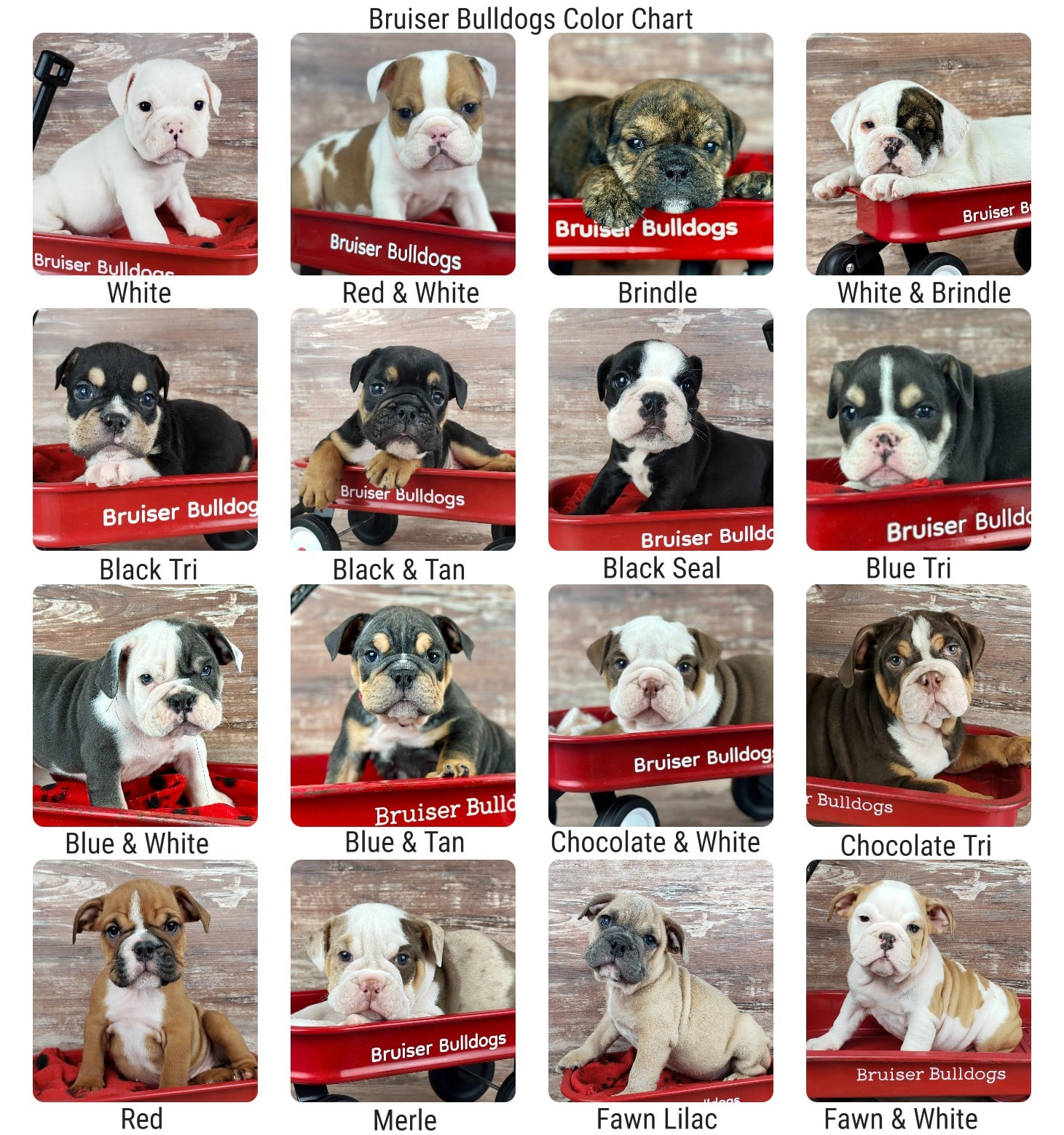
Breeders use color codes to describe a dog’s color. These codes are made up of letters and numbers showing the exact shade or pattern. For example:
- “fawn” may be coded as Sable (AyAy)
- “blue” as dd
- “brindle” as KbrKbr
These codes help breeders know which colors a puppy might have. Color codes are important for health, price, and breeding decisions.
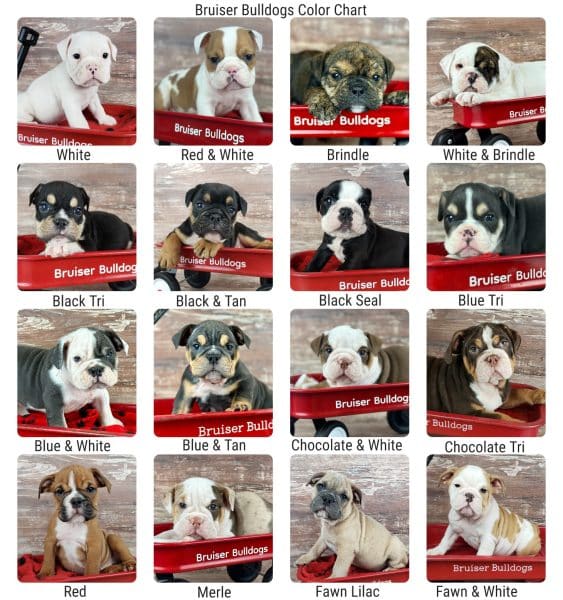
Credit: bruiserbulldogs.com
Common French Bulldog Colors
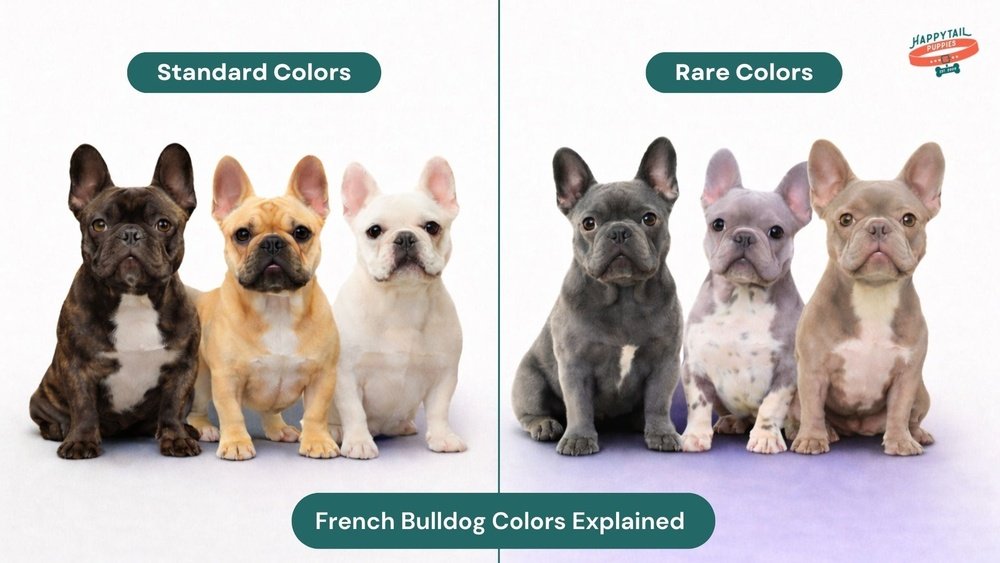
Most French Bulldogs you see in parks, homes, and social media have one of these common colors. These shades are accepted by major kennel clubs like the American Kennel Club (AKC).
Brindle
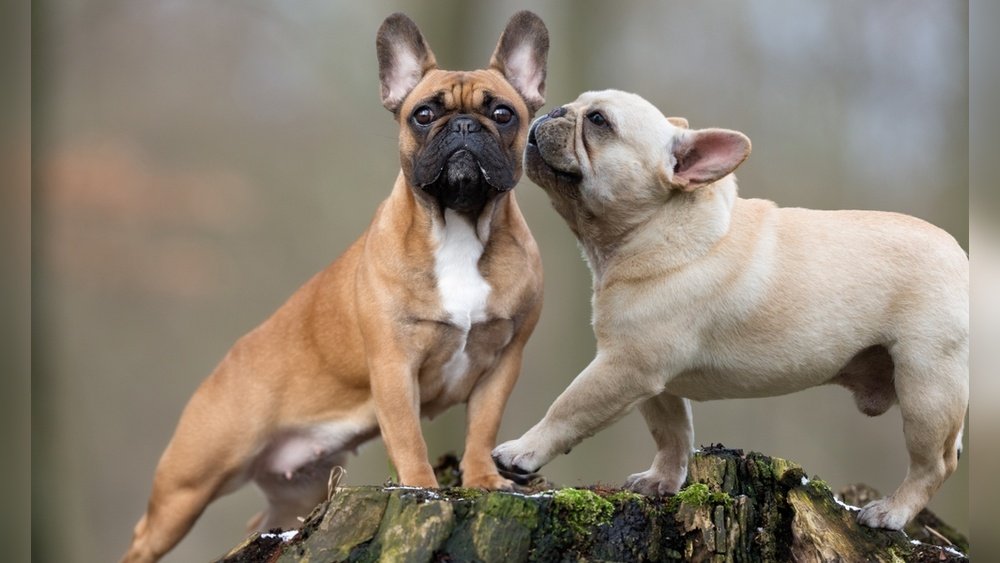
Brindle is the most classic French Bulldog color. It’s a mix of dark and light stripes, usually black and brown.
- Appearance: Tiger-like stripes over a dark background.
- Color code: KbrKbr
- Popularity: Very high. Most Frenchies in the US are brindle.
- AKC approved: Yes.
Brindle Frenchies are easy to spot and often have black noses and dark eyes.
Fawn
Fawn covers a range from light cream to deep reddish-tan.
- Appearance: Solid, warm color. Sometimes with a black mask.
- Color code: Sable (AyAy)
- Popularity: High. Fawn is gentle and classic.
- AKC approved: Yes.
Fawn French Bulldogs may have white markings or a black mask, but the main coat is solid.
Pied
Pied means mostly white with patches of color, usually brindle or fawn.
- Appearance: White base with colored spots.
- Color code: SSp
- Popularity: Common, but less than brindle or fawn.
- AKC approved: Yes.
Pied Frenchies have unique patterns—no two are exactly the same.
Cream
Cream French Bulldogs look almost white but have a warm yellow tone.
- Appearance: Solid pale yellow or off-white.
- Color code: Ee
- Popularity: Moderately common.
- AKC approved: Yes.
Cream Frenchies are gentle in appearance and often have dark noses and eyes.
Comparison Of Common Colors
Here’s a quick comparison of the four common French Bulldog colors:
| Color | Appearance | AKC Approved | Typical Price (USD) |
|---|---|---|---|
| Brindle | Dark stripes over brown | Yes | $2,500–$4,000 |
| Fawn | Solid tan or cream | Yes | $2,800–$4,500 |
| Pied | White with colored patches | Yes | $3,000–$5,000 |
| Cream | Solid pale yellow | Yes | $3,200–$5,200 |
Rare French Bulldog Colors
Some colors are rare because they come from special genes, are not accepted by kennel clubs, or are harder to breed. These rare colors often cost more and sometimes come with health risks.
Blue
Blue French Bulldogs have a grayish-blue coat. It’s not a true blue—just a diluted black.
- Appearance: Shiny gray-blue coat. Sometimes with white markings.
- Color code: Dd
- Popularity: Rare. Very popular on social media.
- AKC approved: No.
Blue Frenchies may have blue or gray noses and lighter eyes.
Chocolate
Chocolate is a rich brown shade. It’s caused by a special gene.
- Appearance: Solid brown, sometimes with tan points.
- Color code: Bb
- Popularity: Rare.
- AKC approved: No.
Chocolate Frenchies often have brown noses and golden eyes.
Lilac
Lilac combines blue and chocolate genes. It’s a soft, light purple-gray.
- Appearance: Pale gray with a hint of purple. Eyes may be light.
- Color code: Bb dd
- Popularity: Very rare. Highly prized.
- AKC approved: No.
Lilac Frenchies are often more expensive than other colors.
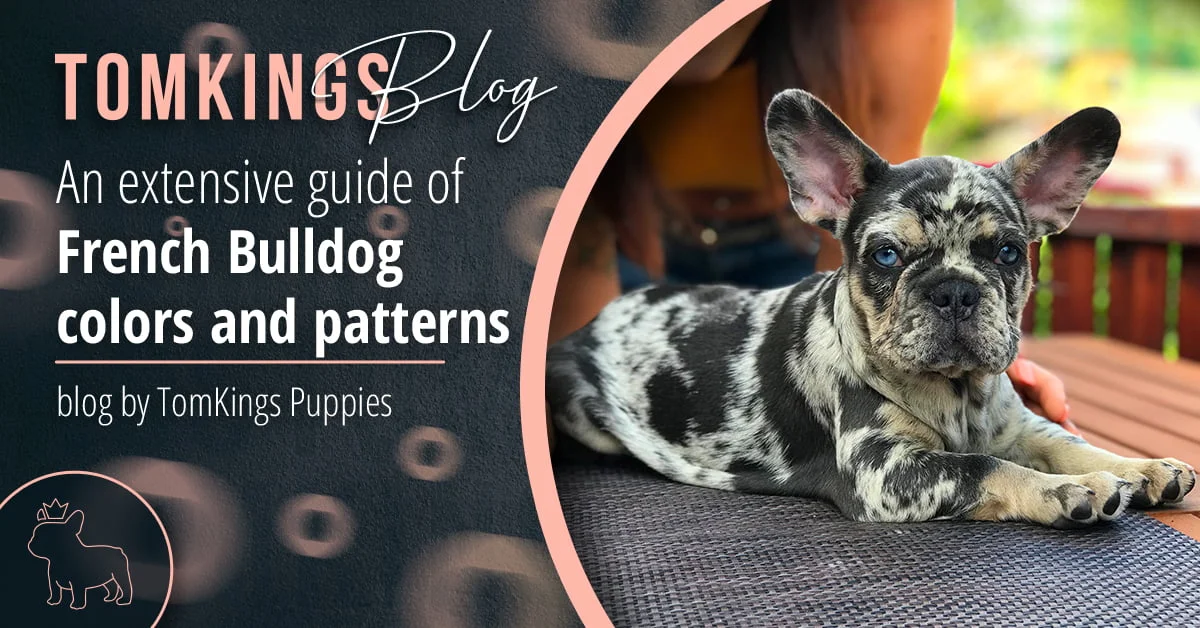
Merle
Merle is a pattern, not a color. It creates spots, patches, and marbling.
- Appearance: Blotchy mix of gray, black, blue, or tan. Unique for each dog.
- Color code: M
- Popularity: Rare and controversial.
- AKC approved: No.
Merle French Bulldogs can have blue eyes and unusual nose colors. Merle gene can lead to health issues if not bred carefully.
Isabella
Isabella is the rarest French Bulldog color. It’s a pale, almost silvery fawn.
- Appearance: Light, silvery brown. Sometimes called “champagne.”
- Color code: Bb dd
- Popularity: Extremely rare.
- AKC approved: No.
Isabella Frenchies often have light eyes and noses.
Black
Solid black French Bulldogs are rare because most have some brindle or white. Pure black without markings is not accepted by AKC.
- Appearance: Jet black, no stripes or patches.
- Color code: K/K
- Popularity: Rare.
- AKC approved: No.
True black Frenchies are hard to find and may cost more.
Platinum
Platinum Frenchies look like cream but have a shiny, silvery undertone.
- Appearance: Pale, almost metallic cream.
- Color code: Special genetic mix.
- Popularity: Rare.
- AKC approved: No.
Platinum is usually a mix of rare genes, making these dogs unique.
New Shade French Bulldogs
Some breeders create “new shade” Frenchies by mixing rare genes. These colors change depending on light and age.
- Appearance: Color shifts from lilac to blue to chocolate.
- Color code: Complex combinations.
- Popularity: Very rare.
- AKC approved: No.
These French Bulldogs are expensive and often bred for show.
Rare Color Comparison
Here’s a table comparing some rare French Bulldog colors:
| Color | Appearance | Health Risks | Price (USD) |
|---|---|---|---|
| Blue | Gray-blue | Possible skin issues | $4,500–$7,000 |
| Chocolate | Rich brown | Few known risks | $5,000–$8,000 |
| Lilac | Pale purple-gray | Higher risk for allergies | $6,000–$9,000 |
| Merle | Spotted/marbled | Vision, hearing issues | $7,000–$10,000 |
| Isabella | Silvery fawn | Possible skin problems | $8,000–$12,000 |
French Bulldog Color Codes: What Do They Mean?
Color codes may seem confusing, but they are useful for breeders and buyers. Each code shows the dog’s genetic makeup for color.
Most Common Color Codes
Below are the main color codes you’ll see for French Bulldogs:
- KbrKbr: Brindle
- AyAy: Fawn/Sable
- Ee: Cream
- Ssp: Pied (white with colored patches)
- Dd: Blue (dilute black)
- Bb: Chocolate
- Bb dd: Lilac/Isabella
- M: Merle
These codes are often written on pedigrees or health documents.
How Color Codes Affect Puppies
If you want a certain color puppy, ask the breeder for the parents’ color codes. For example, two dogs with dd genes can produce blue puppies, but mixing AyAy (fawn) with KbrKbr (brindle) can give you brindle-fawn mixes.
Dna Testing
Some breeders use DNA tests to confirm color codes. These tests are accurate and help avoid surprises. DNA testing is now common in the US and Europe.
Color Code Table
Here’s a quick lookup for major color codes:
| Color | Code | Accepted by AKC? |
|---|---|---|
| Brindle | KbrKbr | Yes |
| Fawn | AyAy | Yes |
| Cream | ee | Yes |
| Pied | Ssp | Yes |
| Blue | dd | No |
| Chocolate | bb | No |
| Lilac | bb dd | No |
| Merle | M | No |
Health And Color: What You Need To Know
Some French Bulldog colors are linked to health problems. This is especially true for rare colors created by special genes.
Blue And Lilac
Blue and lilac French Bulldogs may have skin issues. The gene that makes their coat blue or lilac can also cause:
- Alopecia: Hair loss, bald patches.
- Allergies: Skin itching and redness.
- Dry skin: Needs extra care.
These issues are not guaranteed, but they are more common in blue and lilac Frenchies.
Merle
Merle French Bulldogs are beautiful but risky. The merle gene can cause:
- Deafness
- Blindness
- Odd-colored eyes
- Sensitive skin
Breeding two merle dogs together is dangerous—it can create puppies with severe health problems. Good breeders avoid this.
Isabella
Isabella Frenchies may have skin sensitivity and light eyes. Light-colored dogs sometimes have more allergies and need special care.
Brindle, Fawn, Cream, And Pied
These common colors are usually healthy. There are no extra risks linked to these color genes. But French Bulldogs as a breed have health challenges like breathing problems, regardless of color.
Practical Health Tips
If you want a rare color French Bulldog, ask the breeder about health testing. Look for:
- DNA tests for color genes
- Health checks for skin, ears, and eyes
- Proof that parents are healthy
Most experts recommend choosing a common color if you want a healthier, lower-maintenance dog.
Price Differences: How Color Affects Cost
French Bulldog prices range widely, mainly because of color. Here’s how color impacts price:
- Common colors (brindle, fawn, cream): $2,500–$5,200
- Rare colors (blue, chocolate, lilac, merle, isabella): $4,500–$12,000
Some breeders charge even more for “new shade” or platinum Frenchies.
Why Are Rare Colors Expensive?
- Hard to breed: Rare genes are harder to find.
- High demand: Social media and celebrities make rare colors popular.
- Low supply: Fewer puppies are born with rare colors.
But paying more does not guarantee a healthier or better dog. Always check breeder reputation and health records.
French Bulldog Patterns And Markings
French Bulldogs don’t just come in solid colors—they also have special patterns and markings.
Patterns
- Brindle: Stripes over a base color.
- Pied: White with color patches.
- Merle: Marbled or spotted.
Markings
- Black mask: Dark area around the nose and eyes.
- Ticking: Tiny spots or freckles.
- Tan points: Darker areas on legs and face.
Patterns and markings can change as puppies grow. Puppies sometimes get darker or lighter with age.
Akc Breed Standards Vs. Rare Colors
The American Kennel Club (AKC) sets rules for which colors are “official.” Only certain colors are allowed in dog shows and competitions.
Akc Approved Colors
- Brindle
- Fawn
- Cream
- Pied
Colors like blue, chocolate, lilac, and merle are not accepted by AKC. If you want to show your French Bulldog or breed for AKC events, pick a common color.
Why Does Akc Not Allow Rare Colors?
- Health concerns: Some rare colors are linked to health issues.
- Preserve breed traits: AKC wants to keep French Bulldogs looking classic.
- Prevent unethical breeding: Limiting rare colors stops risky breeding.
But rare colors are still popular with pet owners and on social media.
Choosing The Right French Bulldog Color
Picking a color is a personal choice, but there are smart ways to decide.
What Really Matters
- Health first: Common colors are safer. Rare colors can mean more vet visits.
- Budget: Rare colors cost more—sometimes much more.
- Lifestyle: Some rare colors need extra grooming and skin care.
- Show vs. pet: If you want to show your dog, choose AKC-approved colors.
- Breeder reputation: Avoid breeders who only care about color. Look for health testing and ethical practices.
Common Buyer Mistakes
- Falling for scams: Some breeders fake rare colors or charge too much.
- Ignoring health: Buyers sometimes focus only on looks, not health.
- Not checking color codes: Some puppies are “carriers” of rare genes but don’t show the color.
Non-obvious Insights
- Puppies can change color as they grow. For example, a brindle puppy may become darker or lighter.
- The same color can look different in sunlight vs. indoors. Photos online can be misleading.
Credit: tomkingskennel.com
French Bulldog Color Myths
Some myths surround French Bulldog colors. Let’s clear up a few:
- Color affects personality: There’s no proof that color changes temperament.
- Rare colors are always unhealthy: Not true. Risk is higher, but not guaranteed.
- All rare colors are worth more: Some rare colors are not popular, so price depends on demand.
Practical Tips For French Bulldog Owners
If you already own a French Bulldog or plan to get one, here’s how to care for different colors:
- Dark colors: Watch for heat sensitivity. Black coats absorb more heat.
- Light colors: Check for sunburn or allergies.
- Rare colors: Use gentle shampoos and regular vet checks.
- Merle: Monitor hearing and vision.
No matter the color, French Bulldogs need regular grooming, good food, and lots of love.
French Bulldog Color Trends
The popularity of certain colors changes over time. Social media and celebrity pets drive trends.
- Blue and lilac: These colors are hot right now, often seen on Instagram.
- Merle: Unique patterns are trending, but health concerns are rising.
- Classic colors: Brindle and fawn stay popular for families.
If you want a trendy color, expect to pay more. But trends fade—classic colors stay timeless.
Responsible Breeding And Color Choices
Breeding for color alone can be risky. Ethical breeders focus on health, temperament, and breed standards.
- Avoid “color-only” breeders.
- Ask for health guarantees.
- Check color codes and AKC registration.
A healthy, well-bred French Bulldog is better than a rare color with health issues.
If you want to learn more about French Bulldog genetics and breed standards, check out the Wikipedia French Bulldog page.
Credit: bruiserbulldogs.com
Frequently Asked Questions
What Is The Most Common French Bulldog Color?
The most common color is brindle. It’s the classic Frenchie look—dark stripes over a brown or fawn base. Brindle is widely accepted by kennel clubs and is usually less expensive than rare colors.
Are Rare Colors Like Blue Or Lilac French Bulldogs Less Healthy?
Rare colors like blue and lilac can be linked to more skin problems and allergies. This happens because the genes for these colors may also affect skin and hair. However, not every rare color Frenchie has health issues—good breeders do health tests to reduce risk.
How Do Breeders Use Color Codes For French Bulldogs?
Breeders use color codes (like dd for blue or bb for chocolate) to plan which puppies they might get from a pair. Color codes are based on genetics and help avoid surprises. DNA testing is common, and breeders share codes with buyers for transparency.
Are Merle French Bulldogs Safe To Buy?
Merle French Bulldogs are beautiful, but the merle gene can cause hearing or vision problems, especially if two merle dogs are bred together. Always ask breeders about health testing and avoid buying from anyone who breeds two merle Frenchies.
Why Are French Bulldogs With Rare Colors So Expensive?
Rare colors are expensive because they are harder to breed, have high demand, and low supply. Some rare colors, like isabella or merle, can cost over $10,000. Always check breeder reputation and health records before paying for a rare color Frenchie.
French Bulldogs are wonderful dogs in any color. Whether you choose a classic brindle or a rare lilac, focus on health, ethical breeding, and loving care. Color is important, but a happy, healthy Frenchie is worth more than any shade or pattern.

We’re the dedicated team behind MyPawSafe.com, with over a decade of combined experience in veterinary care, pet emergency response, and animal behavior. While we prefer to let our work speak for itself, our mission is clear: to provide science-backed, vet-approved advice that helps pet owners prevent accidents and save lives.