Golden Retrievers are one of the most beloved dog breeds in the world. Their playful spirit, intelligence, and friendly nature make them perfect family pets. But when it comes to their heat cycle, many owners feel confused or overwhelmed. Knowing how long your Golden Retriever is in heat, what to expect, and how to provide the best care is essential for both her health and your peace of mind. This article breaks down the entire process, offers practical care tips, and answers common questions, all in clear language.
Understanding The Heat Cycle In Golden Retrievers
The heat cycle—also known as the estrus cycle—is a natural process in female dogs. It signals that your Golden Retriever is ready to mate and can become pregnant. This cycle is important because it affects her behavior, health, and even your daily routine.
What Is The Heat Cycle?
The heat cycle is made up of several phases. These phases control when your dog is fertile and when she may show signs like bleeding or changes in mood. The main stages are:
- Proestrus: This is the start of the cycle. You’ll notice swelling and bleeding.
- Estrus: The actual “heat”—when your dog is fertile and can mate.
- Diestrus: The post-heat phase, when fertility drops.
- Anestrus: The resting phase before the next cycle begins.
Each stage has its own symptoms and lasts for different periods. For Golden Retrievers, the full cycle can take several weeks.
How Often Do Golden Retrievers Go Into Heat?
Most female Golden Retrievers go into heat twice a year—about every six months. However, this can vary based on age, health, and environment. Young dogs may have irregular cycles at first, while older dogs usually have more stable patterns.
Typical Cycle Frequency
| Age | Average Cycle Frequency | Notes |
|---|---|---|
| 6-12 months | Every 6-8 months | First heat is unpredictable |
| 1-3 years | Every 6 months | Cycle becomes regular |
| 4+ years | Every 6-7 months | May lengthen with age |
How Long Is A Golden Retriever In Heat?
This is the question most owners want answered first. The “heat” period—when a Golden Retriever is fertile—lasts about 2 to 3 weeks. However, the entire cycle from start to finish is longer.
The Four Phases Explained
Let’s break down each phase, so you know what to expect:
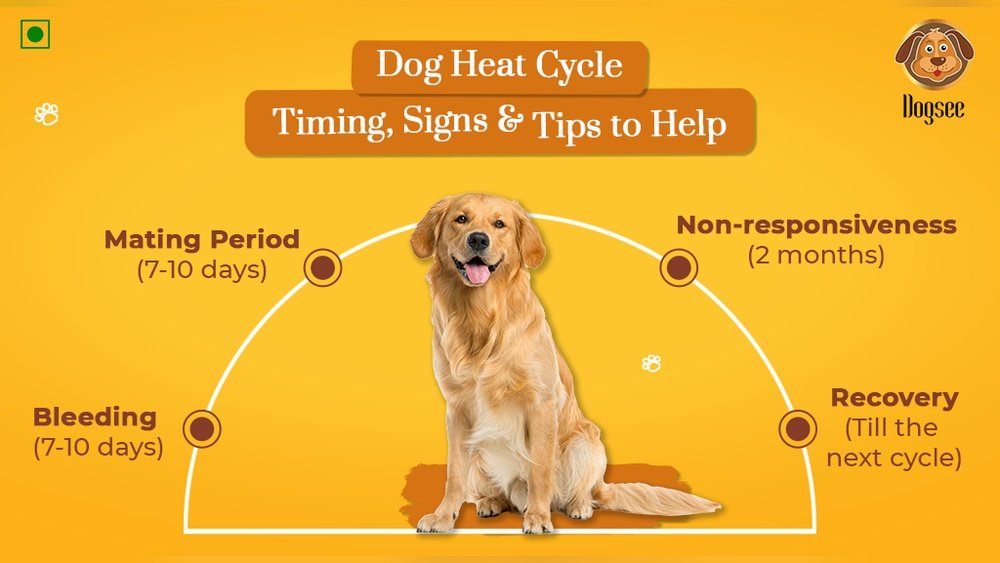
1. Proestrus (7-10 Days)
This phase begins the cycle. Your dog’s vulva swells, and she starts bleeding. She may be restless or stick closer to you. Males will be attracted, but she isn’t ready to mate yet.
2. Estrus (7-10 Days)
This is the true “heat. ” Bleeding slows down or stops. Your dog may seek out male dogs and accept mating. She is fertile during this time.
3. Diestrus (10-14 Days)
Your dog is no longer fertile. The vulva returns to normal, and behavior stabilizes. If pregnancy happens, this phase will include gestation.
4. Anestrus (3-5 Months)
This is the resting stage before the next cycle. There are no signs of heat.
Average Duration Table
| Phase | Duration | Main Symptoms |
|---|---|---|
| Proestrus | 7-10 days | Swelling, bleeding, males attracted |
| Estrus | 7-10 days | Reduced bleeding, receptive to mating |
| Diestrus | 10-14 days | End of fertility, behavioral changes |
| Anestrus | 3-5 months | No signs, resting phase |
Factors That Affect Cycle Length
Some Golden Retrievers have slightly longer or shorter heat cycles. Reasons include:
- Age: Younger dogs may have irregular cycles.
- Health: Illness or poor nutrition can delay or shorten cycles.
- Environment: Stress or changes at home may impact timing.
A non-obvious insight: Golden Retrievers living with other female dogs may synchronize their cycles. This is a natural response seen in many mammals.

Credit: weasypet.com
Signs Your Golden Retriever Is In Heat
Knowing when your dog is in heat helps you plan and care for her. Common signs include:
- Swollen vulva
- Bloody discharge
- Increased urination
- Change in behavior (more affectionate or restless)
- Attraction to male dogs
- Flagging tail (moving tail aside, inviting males)
Early Signs Vs. Peak Signs
Early signs like swelling and bleeding appear during proestrus. By estrus, the bleeding fades, and your dog may actively seek out male dogs. Not all Golden Retrievers show every sign. Some have very mild symptoms, while others are more obvious.
Care Guide For A Golden Retriever In Heat
Caring for your Golden Retriever during her heat cycle is crucial. Proper care keeps her comfortable and prevents unwanted pregnancies or health issues. Here’s how to support her step-by-step.
Hygiene And Cleanliness
- Use doggy diapers or pads to manage bleeding. This protects your furniture and floors.
- Clean her bedding daily. Wash any spots where she rests to prevent odors and bacteria.
- Gently wipe her vulva with a damp cloth. Avoid harsh chemicals.
Many beginners forget to check her tail and hindquarters for dried blood. This can cause irritation or infection if ignored.
Managing Behavior And Safety
Your Golden Retriever may act differently during heat. She might:
- Be more clingy or anxious
- Try to escape to find male dogs
- Mark territory with urine
Tips to keep her safe:
- Never leave her alone outdoors. Male dogs can jump fences or dig to reach her.
- Keep doors and windows secure. Dogs in heat can be surprisingly clever at escaping.
- Leash walks only. Do not visit dog parks or areas with unknown dogs.
A non-obvious insight: Some Golden Retrievers may become less social with humans during heat. Give her space if she seems withdrawn.
Exercise And Activity
While your dog needs exercise, her energy may change. She might tire more easily or seem distracted. Adjust activities as follows:
- Short, calm walks (avoid busy areas)
- Mental games or puzzle toys indoors
- Avoid high-energy play with other dogs
Nutrition And Health
Golden Retrievers in heat may eat less or more, depending on their mood. Offer:
- High-quality dog food
- Fresh water at all times
- Occasional treats for comfort
Monitor for signs of illness. Heat can stress the body, so watch for:
- Vomiting or diarrhea
- Extreme lethargy
- Signs of pain
If you notice anything unusual, contact your vet.
Preventing Unwanted Mating
If you don’t want puppies, be extra careful. Male dogs can smell a female in heat from miles away. Simple steps:
- Keep her indoors as much as possible
- Supervise all outdoor time
- Avoid contact with male dogs
Some owners use pheromone sprays or temporary barriers, but these are not foolproof.
Comfort And Emotional Support
Your Golden Retriever may feel anxious or confused during heat. Comfort her with:
- Gentle petting (if she wants it)
- Soft, clean bedding
- Quiet, safe spaces
Some dogs like to hide or nest. Let her choose where she feels safe.
Common Mistakes Owners Make
Even experienced owners can make errors during their dog’s heat cycle. Here are a few to avoid:
- Ignoring signs of heat: Missing early symptoms can lead to surprise pregnancies.
- Letting her roam unsupervised: Even a short walk can lead to mating if a male is nearby.
- Poor hygiene: Not cleaning her bedding or body increases risk of infection.
- Over-exercising: Pushing her too hard can stress her body.
- Not consulting a vet: If symptoms are unusual or severe, professional advice is essential.
A practical tip: Keep a calendar or journal. Record the start and end of each heat cycle. This helps track patterns and spot irregularities.
What Happens If Your Golden Retriever Gets Pregnant?
If mating occurs during heat, pregnancy is possible. The gestation period for Golden Retrievers is about 63 days. Signs of pregnancy include:
- Enlarged abdomen
- Increased appetite
- Nesting behavior
Pregnancy care is very different from heat care. You’ll need to:
- Visit the vet for check-ups
- Provide extra nutrition
- Prepare a safe place for delivery
If you’re not ready for puppies, consider spaying your dog after her heat cycle ends.
Credit: www.dogseechew.in
Spaying: Should You Consider It?
Spaying is the surgical removal of your dog’s ovaries and uterus. It prevents heat cycles and pregnancy. Many owners choose spaying to avoid the stress and risks of heat.
Benefits Of Spaying
- Stops heat cycles completely
- Prevents unwanted litters
- Reduces risk of uterine infections and some cancers
- Calms behavior in some dogs
When To Spay
Vets recommend waiting until your Golden Retriever is at least 6 months old. Some suggest after her first heat, others before. Discuss with your vet to decide the best timing.
Risks Of Spaying
- Surgery has risks, especially in older dogs
- May cause weight gain if diet is not managed
- Rare hormonal changes
A data point: According to the American Veterinary Medical Association, spayed dogs live longer on average and have lower risks of serious health issues.
Heat Cycle Vs. Other Dog Breeds
Golden Retrievers have a heat cycle similar to other medium to large breeds. But some differences exist.
| Breed | First Heat Age | Cycle Frequency | Heat Duration |
|---|---|---|---|
| Golden Retriever | 6-15 months | Twice a year | 2-3 weeks |
| German Shepherd | 6-12 months | Twice a year | 2-3 weeks |
| Labrador | 6-14 months | Twice a year | 2-3 weeks |
| Yorkshire Terrier | 6-9 months | Three times a year | 2-4 weeks |
Small breeds often have more frequent cycles. Larger breeds, like Golden Retrievers, typically have fewer cycles per year.
What To Expect After The Heat Cycle Ends
When the heat cycle finishes, your dog returns to normal. She will:
- Stop bleeding
- Behave as usual
- No longer attract male dogs
Monitor for any lingering symptoms, such as swelling or mood changes. If these last more than a week, contact your vet.
Tracking And Predicting Future Heat Cycles
Keeping track of your Golden Retriever’s cycles helps you plan ahead. Here’s how:
- Mark the start and end date of each cycle in a calendar
- Note any unusual symptoms or behaviors
- Use reminders for future cycles
Some smartphone apps help track pet health and cycles. This is especially useful for breeders or multi-dog households.
What If The Cycle Is Irregular?
Irregular cycles can signal health problems. Common causes:
- Hormonal imbalances
- Stress
- Illness
If your dog skips a cycle or shows strange symptoms, see your vet. Early detection can prevent bigger issues.
Golden Retriever Heat Cycle Myths And Facts
There are many myths about the heat cycle. Let’s clear up a few:
- Myth: Only older dogs go into heat.
Fact: Most dogs start heat between 6-15 months.
- Myth: You must let your dog have one litter before spaying.
Fact: There’s no medical reason for this.
- Myth: Bleeding means your dog is ready to mate.
Fact: She is fertile during estrus, when bleeding slows.
- Myth: All dogs have the same cycle length.
Fact: Cycle length varies between breeds and individuals.
A practical insight: Some dogs have “silent” heats with few symptoms. If you suspect your Golden Retriever is in heat but see no signs, consult your vet.
When To Contact The Vet
Most heat cycles are normal and require only basic care. But you should contact your vet if you notice:
- Very heavy bleeding
- Bleeding lasts longer than 21 days
- Extreme pain or discomfort
- No heat cycle by 18 months of age
- Signs of infection (pus, odor, swelling)
Prompt action prevents complications like pyometra, a dangerous uterine infection.

Credit: www.mygoldenretrieverpuppies.com
Breeding Considerations
If you plan to breed your Golden Retriever, timing is everything. Breeders aim for mating during the estrus phase (days 7-10 of heat). Key tips:
- Check for readiness: Flagging tail, reduced bleeding
- Use a vet to confirm ovulation
- Avoid over-breeding; limit to once per year
Responsible breeding means health checks, genetic testing, and finding good homes for puppies.
Real-life Example: Golden Retriever Heat Cycle
Let’s look at a typical scenario:
Lucy, a 2-year-old Golden Retriever, starts her heat cycle with swelling and light bleeding. Her owner notes the date and keeps her indoors. For the next 10 days, Lucy is restless and urinates more often. Around day 11, bleeding stops, and Lucy begins flirting with male dogs on walks.
Her owner uses a leash and avoids parks. By day 21, Lucy’s symptoms fade, and she returns to normal. The owner marks the cycle end in her calendar. Six months later, Lucy goes into heat again.
This simple tracking method avoids surprises and helps with planning spaying or breeding.
Frequently Asked Questions
How Long Does A Golden Retriever Stay In Heat?
A Golden Retriever is in heat for about 2 to 3 weeks. The fertile phase (estrus) lasts 7–10 days, but the whole cycle includes proestrus, diestrus, and anestrus, totaling several weeks.
What Are The Signs My Golden Retriever Is In Heat?
Look for swollen vulva, bloody discharge, increased urination, changes in behavior, and attraction to male dogs. Some dogs are more affectionate or restless during heat.
Can I Walk My Golden Retriever During Heat?
Yes, but always use a leash and avoid areas with male dogs. Short, calm walks are best. Do not visit dog parks or let her off-leash.
Should I Spay My Golden Retriever To Prevent Heat Cycles?
Spaying stops heat cycles and prevents pregnancy. It also reduces health risks like uterine infections. Discuss timing with your vet, as early spaying is usually recommended.
What If My Golden Retriever’s Heat Cycle Is Irregular?
Irregular cycles can be normal for young dogs. If your dog skips several cycles or shows unusual symptoms, consult your vet. Hormonal issues or illness may be involved.
Golden Retrievers are wonderful companions, and understanding their heat cycles helps keep them safe, healthy, and happy. Careful observation, practical care, and planning ahead are key. If you have more questions or want scientific details, visit the Wikipedia Dog Reproduction page for further reading. With the right knowledge, you can confidently guide your Golden Retriever through every stage of her life.

We’re the dedicated team behind MyPawSafe.com, with over a decade of combined experience in veterinary care, pet emergency response, and animal behavior. While we prefer to let our work speak for itself, our mission is clear: to provide science-backed, vet-approved advice that helps pet owners prevent accidents and save lives.