German Shepherd Colors Chart: Coat Colors And Patterns Explained
German Shepherds are famous for their intelligence, loyalty, and versatility. But one thing that surprises many new owners is how many colors and patterns these dogs can have. From classic black and tan to striking sable, German Shepherd coat colors are more varied than most people realize.
Choosing a German Shepherd often starts with picking the right color or pattern, whether for personal preference or for show standards. In this article, you’ll discover every recognized and rare color, see clear comparisons, and understand how genetics shape the coats of these amazing dogs.
The Importance Of Coat Color In German Shepherds
Coat color is more than just looks. For breeders, color can affect eligibility for dog shows and breeding programs. Some colors are preferred by kennel clubs, while others are considered faults. For families, color can impact grooming needs, visibility, and even health in rare cases.
Knowing the differences helps you make the right choice whether you’re buying, adopting, or just curious.
Many first-time owners don’t realize that certain colors can make a dog stand out in competitions, while others may limit their dog’s chances. For example, a solid black German Shepherd might catch the eye for its striking look, but in some regions, judges may prefer the classic black and tan.
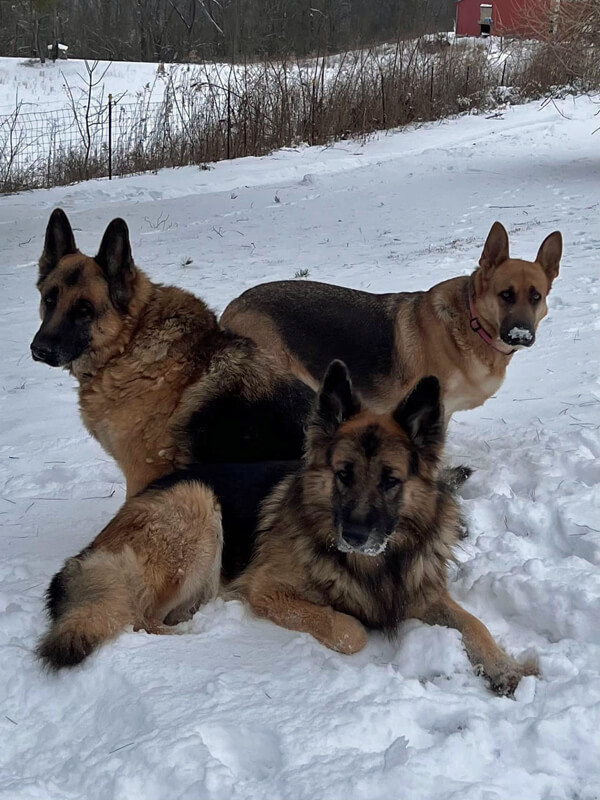
Color also affects how easy it is to spot your dog at night or in the snow. White dogs can be harder to see in winter, while black dogs may be less visible after sunset.
Another practical consideration is grooming. Some colors show dirt or shedding more clearly. Owners of white German Shepherds often say their dogs need more frequent baths and brushing to keep their coats bright. On the other hand, dark colors like black or sable can hide stains but may show more dandruff or loose fur.
Overview Of German Shepherd Coat Colors
German Shepherds have a wide palette of colors. The most common are black and tan, black and red, and sable. There are rarer colors like solid black, white, blue, and liver. Patterns also vary, including saddle, blanket, and sable.
Below is a quick comparison of the main color categories:
| Color | Pattern | Commonness | Show Eligibility |
|---|---|---|---|
| Black & Tan | Saddle, Blanket | Very Common | Accepted |
| Black & Red | Saddle, Blanket | Common | Accepted |
| Sable | Sable | Common | Accepted |
| Solid Black | Solid | Less Common | Accepted |
| White | Solid | Rare | Disqualified |
| Blue | Solid | Very Rare | Disqualified |
| Liver | Solid | Very Rare | Disqualified |
Not all colors are equally common in every country. For example, sable is especially popular in Germany and Eastern Europe, while black and tan dominates in the United States. Show eligibility also changes based on kennel club rules, so always check local standards if you plan to compete.
Common German Shepherd Colors
Let’s dive deeper into the most popular and recognized colors.
Black And Tan
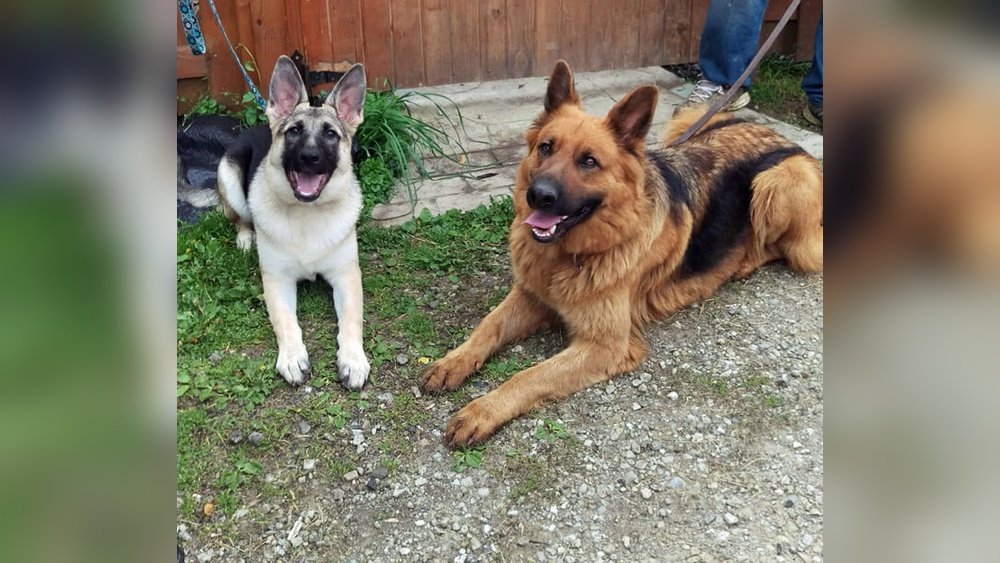
The black and tan German Shepherd is the classic image most people picture. Black covers the back (saddle pattern), face, and tail, while tan appears on the legs, underbelly, and cheeks. This color is accepted by all major kennel clubs and is the most commonly seen in working, show, and pet lines.
Key Features:
- Saddle pattern: Black across the back, sometimes with a “blanket” covering more of the body.
- Tan markings: Range from pale cream to rich gold.
- Popularity: About 60% of German Shepherds are black and tan.
Tan shades can vary greatly. Some dogs have almost yellow tan, while others have deep gold. The black saddle often changes as dogs age, sometimes shrinking or expanding. Puppies born black and tan may start with darker coats and lighten as they mature.
The black areas usually remain strong, but tan areas may brighten or fade with time.
Black and tan is seen in both show and working lines, making it a safe choice for families who want a traditional look or hope to compete in dog sports. One non-obvious detail: Some black and tan German Shepherds develop gray hair as they get older, especially around the muzzle and eyebrows.
Black And Red
Black and red looks similar to black and tan but with deeper, more vibrant red areas. The red can be almost mahogany, giving a striking appearance.
Key Features:
- Saddle or blanket pattern
- Red markings: Often richer and more intense than tan.
- Show lines: Many top show dogs are black and red.
This color is especially popular in European show lines, where breeders aim for the darkest, richest red possible. The red shades can be so dark that some dogs look almost two-toned. Owners often report that red markings deepen with age, making older dogs even more impressive.
Show judges sometimes favor black and red for its bold appearance. If you want a dog for conformation shows, black and red is a strong choice. Another insight: Black and red dogs often have fuller, longer coats, which can require more grooming.
Sable
Sable is a unique color pattern where each hair has multiple colors, usually black at the tip and lighter shades near the root. This gives a “wolf-like” appearance.
Key Features:
- Color shifts: Puppies often darken or lighten with age.
- Range: Sable can be gray, silver, tan, or red-based.
- Genetics: Sable is dominant, so two sable parents almost always produce sable puppies.
Sable is not just a color, but a pattern. Each hair is “banded,” so the dog’s coat may appear to change color in different lighting or as they move. Sable coats often look lighter in summer and darker in winter due to undercoat changes.
Sable is highly respected in working lines, especially police and military dogs. The pattern provides natural camouflage, which is helpful in outdoor work. Owners sometimes notice their sable dogs look almost gray in low light and golden in sunlight.
Solid Black
Solid black German Shepherds are completely black, with no tan or red markings. Their coats are shiny and sleek, and their eyes stand out against the dark fur.
Key Features:
- No markings: Pure black from nose to tail.
- Less common: Only about 6–8% of German Shepherds are solid black.
- Show eligibility: Accepted by most clubs.
Solid black dogs are often praised for their bold, powerful look. They can appear larger due to the uniform color. One detail beginners may miss: Black coats sometimes get a brownish tint if the dog spends lots of time in the sun or swims often. This is normal and does not affect health.
Solid black is popular in working lines for its dramatic appearance and practical benefits. Black dogs are harder to spot at night, which can be useful for certain jobs.
Rare And Unusual Colors
Some German Shepherd colors are rare, either due to genetics or because they’re not preferred by breeders.
White
White German Shepherds are striking, with pure white coats. However, the American Kennel Club (AKC) and most international clubs disqualify them from conformation shows, although they are still bred as pets or working dogs.
Key Features:
- Solid white coat
- Not albino: They have normal pigment in eyes and skin.
- Popularity: Less than 2% of German Shepherds.
White German Shepherds often have dark eyes and noses, making them different from true albinos. Some breeders focus on white dogs for their gentle appearance, and they are popular as family pets. Owners report that white coats can show stains easily, especially from grass or mud. One tip: Use gentle, whitening shampoos to keep the coat bright without damaging the skin.
White dogs are sometimes mistaken for other breeds, so it’s important to check paperwork and pedigree if you’re buying a puppy.
Blue
Blue German Shepherds have a steel-gray or bluish coat, caused by a recessive dilution gene. This color is not accepted in shows, and is rare.
Key Features:
- Diluted black pigment
- Often lighter nose and eye color
- Health: No proven health problems linked to blue color.
Blue dogs may have noses and paw pads that are gray instead of black. Their eyes are often lighter, sometimes amber or grayish-brown. Many owners choose blue dogs for their unusual appearance, but be aware that finding a reputable breeder is harder.
One non-obvious detail: Blue coats can appear more silver in sunlight, giving the dog a metallic sheen. Careful grooming helps maintain this effect.
Liver
Liver German Shepherds have a brown coat, with a reddish or chocolate hue. Like blue, liver is caused by a recessive gene and is not accepted by most kennel clubs.
Key Features:
- Brown coat, nose, paw pads
- Very rare
- No health issues: Liver color is only cosmetic.
Liver dogs often look like chocolate Labs, but their body shape and temperament are pure German Shepherd. The liver color can change as puppies grow, sometimes getting lighter or darker. Owners may find that liver coats need extra care to prevent fading in sun.
A common mistake is thinking liver dogs are unhealthy or mixed breed. In reality, they are purebred but simply carry a rare gene.
Panda
Panda German Shepherds are a genetic anomaly, with white markings on the chest, face, and sometimes legs, along with black and tan. This pattern was first documented in the 2000s.
Key Features:
- White patches
- Not related to white GSDs
- Controversial: Not accepted by major clubs.
Panda German Shepherds have unique, random white markings. This is not the same as piebald or merle found in other breeds. The panda gene is different from the gene for white coats, and dogs with this pattern can still have healthy, normal lives.
Some breeders try to produce panda markings, but most kennel clubs do not allow them for shows. Owners often find panda dogs attract a lot of attention and questions.
Patterns And Markings Explained
German Shepherds are not only defined by color, but also by their patterns. Patterns can change the look of the dog even with the same base color.
Saddle Pattern
Most German Shepherds have a saddle pattern, which looks like a black “saddle” on their back. This covers the spine and often extends to the sides.
The saddle can be wide or narrow, and sometimes changes shape as the dog ages. Puppies may start with a “blanket” pattern, which becomes a saddle as they mature.
Blanket Pattern
A blanket pattern is similar, but the black covers more of the body, sometimes the entire back and the sides.
This pattern is common in dogs bred for work, where darker coats provide better camouflage. Owners often notice that blanket patterns fade slightly with age, especially after the first shedding season.
Sable Pattern
In the sable pattern, every hair is banded in color, giving a mixed or “salt and pepper” look. Sable dogs can appear darker or lighter depending on the lighting and their age.
This pattern is dominant in working lines and is prized for its natural look. Sable dogs may seem almost gray in winter and golden in summer. The pattern also helps hide shedding, making grooming easier.
Solid Pattern
Solid color German Shepherds, like black, white, blue, or liver, have no markings.
Solid patterns are rare, and some owners prefer them for simplicity. However, solid dogs may show dandruff or loose fur more easily, especially in sunlight.
Bi-color
Bi-color dogs have mostly black bodies, with minimal tan or red markings on feet and eyebrows.
Bi-color is less common but accepted in shows. Bi-color dogs often look like solid black from a distance but reveal tan markings up close. This pattern is popular in police and guard dogs for its bold look.
Comparison Of Patterns
Here’s a table showing the difference between the main patterns:
| Pattern | Main Colors | Markings | Frequency |
|---|---|---|---|
| Saddle | Black & Tan, Black & Red | Black on back, tan/red elsewhere | Very Common |
| Blanket | Black & Tan, Black & Red | More black covering sides | Common |
| Sable | Sable | Banding on each hair | Common |
| Solid | Black, White, Blue, Liver | No markings | Rare |
| Bi-color | Black & Tan | Mostly black, minimal tan | Rare |
Understanding patterns helps you predict how your dog’s appearance may change with age. For example, the saddle may shrink, and sable banding may become lighter after the first shedding.
Genetics Behind Coat Colors
Understanding the genetics behind German Shepherd colors helps explain why some are common and others rare. Coat color comes from a mix of genes passed from parents.
Dominant And Recessive Genes
- Sable gene is dominant. If a puppy gets this gene, it will be sable regardless of other color genes.
- Black and tan is recessive to sable but dominant over solid colors.
- Solid black is recessive. Both parents must carry the gene for a puppy to be black.
- White, blue, and liver are caused by recessive genes. They only appear if both parents carry these genes.
Non-obvious insight: Sometimes dogs carry hidden color genes. A black and tan dog may carry the gene for liver or blue, which only shows up if bred with another carrier.
Example: Breeding For Color
If you breed two sable dogs, almost all puppies will be sable. If you breed two black and tan dogs, you may get black and tan, but only get solid black if both parents carry the black gene. Rare colors like blue or liver are even harder to produce.
Some breeders use genetic tests to check for hidden color genes. This helps plan litters, especially if you want a specific color. However, focusing too much on color can ignore more important traits like temperament and health.
Color Chart By Genetics
Here is a simple chart showing how colors are inherited:
| Parent Colors | Possible Puppy Colors | Probability |
|---|---|---|
| Sable x Sable | Sable | 90%+ |
| Black & Tan x Black & Tan | Black & Tan, Black | 80% Black & Tan, 20% Black |
| Black x Black & Tan | Black, Black & Tan | 50% Black, 50% Black & Tan |
| Liver x Liver | Liver | 100% |
Color And Health
Most color variations in German Shepherds are only cosmetic. However, some rare colors have been linked to health concerns in other breeds, so it’s important to know the facts.
- White GSDs: No evidence of higher health risks. They are not albino; they have normal pigment.
- Blue and liver GSDs: No proven health problems related to coat color.
- Panda GSDs: No evidence of health issues, but breeding practices should be ethical.
One insight many beginners miss: Color does not affect temperament or intelligence. A sable German Shepherd is just as smart and loyal as a black and tan one.
Another tip: Always prioritize health and temperament over color when choosing a puppy. Reputable breeders focus on strong genetics and healthy puppies, not just rare or fashionable colors.
Show Standards And Disqualifications
German Shepherds are judged by strict standards in dog shows. The AKC and other clubs have clear rules about which colors are allowed.
- Accepted colors: Black and tan, black and red, sable, solid black.
- Disqualified colors: White, blue, liver, panda.
If you plan to show your dog, pick a color accepted by the club. If not, any color can make a great family pet.
Not all clubs have the same rules. For example, some European clubs accept bi-color, while others don’t. Always check the rules of your local kennel club before entering a dog in shows.

Credit: wustenbergerland.com
Working Vs. Show Lines
Color can also indicate whether a German Shepherd comes from working lines or show lines.
- Working lines: Often sable, black, or bi-color. Focus is on ability, not appearance.
- Show lines: Usually black and red, black and tan. Focus is on looks and conformation.
Sable and solid black are common in police or military dogs, while black and red are seen in top show champions.
Owners looking for a dog to compete in sports or work should consider working line colors. Show lines are often bred for beauty, while working lines prioritize intelligence, stamina, and drive.
Grooming And Care By Color
While all German Shepherds shed, lighter colors may show dirt more easily. White German Shepherds need regular grooming to keep their coats clean. Black and darker colors may hide dirt but can get hot in summer.
- Sable and black: Hide dirt well, but still shed heavily.
- White: Dirt and stains show more; frequent baths needed.
- Red and tan: Moderate grooming; color does not affect shedding.
Another insight: Some owners believe darker dogs are less visible at night, so consider safety if your dog will be outdoors after sunset.
A practical tip: If you live in a hot climate, avoid solid black or dark sable, as these dogs absorb more heat. Lighter colors can be more comfortable in summer.
Choosing The Right Color For Your Family
Choosing a color often depends on personal preference, but also practical factors:
- Visibility: Lighter colors are easier to spot.
- Grooming needs: White dogs need more cleaning.
- Show or pet: Only certain colors are allowed for shows.
- Health: No proven risks for any color.
- Availability: Rare colors may be expensive or hard to find.
Avoid common mistakes: Don’t assume a rare color is automatically better or healthier. Focus on temperament and health first.
One non-obvious detail: The right color for your family may depend on your lifestyle. If you hike or camp often, sable or black dogs blend in outdoors. If you live in the city, lighter colors are easier to spot in busy parks.
Myths And Misconceptions
Many myths surround German Shepherd coat colors. It’s important to separate fact from fiction.
- Myth: White GSDs are albino.
- Fact: They have normal pigment; albino dogs have pink eyes.
- Myth: Rare colors like blue are unhealthy.
- Fact: No evidence supports this.
- Myth: Color affects intelligence.
- Fact: Intelligence is not linked to color.
Some people believe coat color can predict behavior. There is no scientific proof for this. All German Shepherds are intelligent, loyal, and energetic, no matter their color.
Credit: vonshap.com
German Shepherd Color Chart Summary
Here’s a summary chart for quick reference:
| Color | Description | Pattern | Show Accepted |
|---|---|---|---|
| Black & Tan | Classic black saddle, tan markings | Saddle, Blanket | Yes |
| Black & Red | Deep red markings, black saddle | Saddle, Blanket | Yes |
| Sable | Banding on each hair, “wolf-like” | Sable | Yes |
| Solid Black | Pure black, no markings | Solid | Yes |
| White | Solid white coat, not albino | Solid | No |
| Blue | Steel gray/blue coat | Solid | No |
| Liver | Chocolate brown coat | Solid | No |
| Panda | White patches, black & tan | Panda | No |
| Bi-color | Mostly black, minimal tan | Bi-color | Yes |
Frequently Asked Questions
What Is The Most Common German Shepherd Color?
The most common color is black and tan. It’s seen in about 60% of all German Shepherds worldwide. This color is accepted by all kennel clubs and is popular in both show and working lines.
Are White German Shepherds Albino?
No, white German Shepherds are not albino. They have normal eye and skin pigment. Albino dogs have pink eyes and skin, which white GSDs do not.
Does Coat Color Affect German Shepherd Health?
Coat color in German Shepherds is almost always cosmetic. There is no proven link between color and health issues. Rare colors like blue or liver do not make dogs sick.
Can I Show A German Shepherd With A Rare Color?
Only certain colors are accepted in shows: black and tan, black and red, sable, solid black, and bi-color. Colors like white, blue, liver, or panda are disqualified in conformation shows. However, these dogs can compete in performance or working events.
How Do I Know What Color Puppies Will Be?
Puppy color depends on the genetics of the parents. Sable is dominant, so two sable parents usually produce sable puppies. For rare colors like blue or liver, both parents must carry the recessive gene. Breeders can use genetic testing to predict puppy colors.
German Shepherds are more than their color. Their loyalty, intelligence, and energy make them one of the world’s most loved breeds. Whether you prefer classic black and tan, striking sable, or a rare color, understanding coat patterns and genetics helps you make the best choice for your family or breeding program. For more in-depth breed standards and history, visit Wikipedia. With the right knowledge, you can appreciate the beauty and diversity of German Shepherd colors—and choose the perfect companion for your home.

Credit: wustenbergerland.com

We’re the dedicated team behind MyPawSafe.com, with over a decade of combined experience in veterinary care, pet emergency response, and animal behavior. While we prefer to let our work speak for itself, our mission is clear: to provide science-backed, vet-approved advice that helps pet owners prevent accidents and save lives.