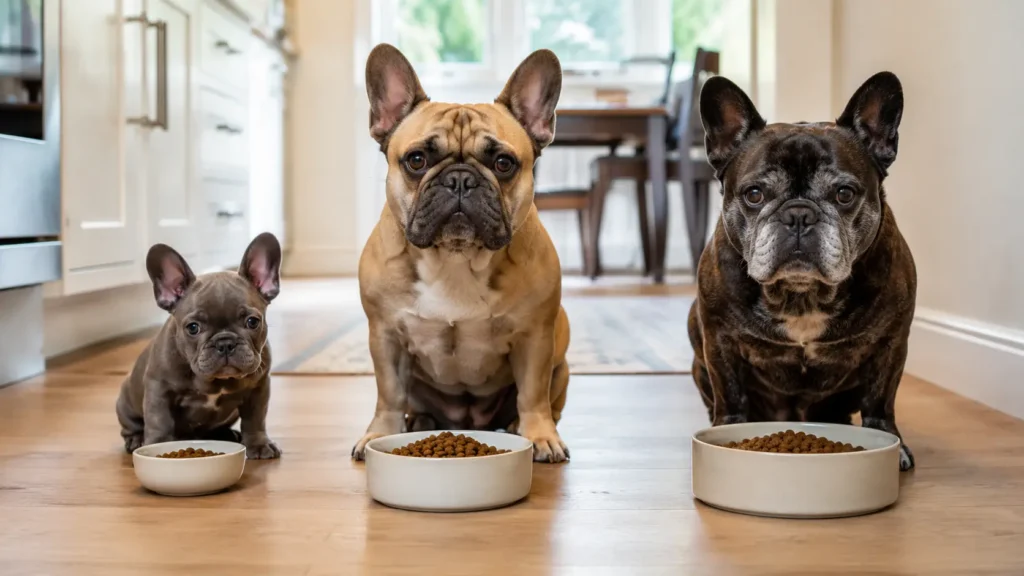
Stop guessing how much to feed your Frenchie. This complete guide gives you exact portion sizes, calorie needs, and meal schedules based on your dog’s current weight and life stage — backed by veterinary nutrition guidelines.
📌 Quick Answer: How Much to Feed a French Bulldog?
An adult French Bulldog weighing 20–28 lbs needs 1.5 to 2.5 cups of dry kibble per day, split into 2 meals. Puppies (8 weeks–6 months) need 3–4 smaller meals daily, and seniors (8+ years) need 10–20% fewer calories. Scroll down for the full chart, or use our instant calculator.
French Bulldog Feeding Chart by Age & Weight
Every French Bulldog is different, but this chart gives you a reliable starting point. Always adjust based on your specific dog food’s calorie density (kcal/cup is printed on the bag) and your vet’s advice.
| Age | Weight Range | Daily Food (dry kibble) | Meals Per Day | Daily Calories |
|---|---|---|---|---|
| 8–12 weeks | 1.5–4 lbs | ¾ – 1 cup | 4 meals | 200–350 kcal |
| 3–4 months | 5–10 lbs | 1 – 1.5 cups | 3–4 meals | 350–500 kcal |
| 5–6 months | 10–16 lbs | 1.5 – 2 cups | 3 meals | 480–620 kcal |
| 7–9 months | 15–22 lbs | 1.5 – 2 cups | 2–3 meals | 550–680 kcal |
| 10–12 months | 18–27 lbs | 1.5 – 2.5 cups | 2 meals | 580–720 kcal |
| 1–3 years (Adult) | 20–28 lbs | 1.5 – 2.5 cups | 2 meals | 600–760 kcal |
| 4–7 years (Adult) | 20–28 lbs | 1.5 – 2.25 cups | 2 meals | 580–720 kcal |
| 8+ years (Senior) | 18–26 lbs | 1.25 – 2 cups | 2 meals | 480–620 kcal |
French Bulldog Feeding Calculator
Get a personalized feeding estimate in seconds. Fill in your Frenchie’s details below — the calculator uses standard veterinary RER (Resting Energy Requirement) formulas.
Personalized Daily Portion Estimator
Feeding Your French Bulldog at Every Life Stage
French Bulldogs have dramatically different nutritional needs as they grow. What’s right for a 10-week-old puppy can actually harm an 8-year-old senior. Here’s what changes — and why it matters.
French Bulldog Weight Chart: Male vs. Female
Is your Frenchie growing on track? Compare your puppy’s weight to these veterinary averages. Remember — being slightly outside the range is normal; consistent growth direction matters more than hitting exact numbers.
| Age | Male (lbs) | Male (kg) | Female (lbs) | Female (kg) | Growth Stage |
|---|---|---|---|---|---|
| 1 month | 4–7 | 1.8–3.2 | 3–6 | 1.4–2.7 | Rapid |
| 2 months | 9–12 | 4.1–5.4 | 7–10 | 3.2–4.5 | Rapid |
| 3 months | 10–14 | 4.5–6.4 | 8–12 | 3.6–5.4 | Rapid |
| 4 months | 12–16 | 5.4–7.3 | 10–15 | 4.5–6.8 | Active |
| 5 months | 15–20 | 6.8–9.1 | 11–17 | 5.0–7.7 | Active |
| 6 months | 17–22 | 7.7–10.0 | 13–20 | 5.9–9.1 | Active |
| 8 months | 19–27 | 8.6–12.3 | 15–22 | 6.8–10.0 | Slowing |
| 10 months | 20–28 | 9.1–12.7 | 17–24 | 7.7–10.9 | Slowing |
| 12 months | 20–28 | 9.1–12.7 | 17–24 | 7.7–10.9 | Mature |
| Adult (full) | 20–28 | 9.1–12.7 | 17–24 | 7.7–10.9 | Stable |
Source data based on AKC breed standards and veterinary growth references. Individual dogs may vary.
Is Your Frenchie a Healthy Weight? Body Condition Score
Weight numbers alone aren’t enough. French Bulldogs are muscular and stocky — a 28 lb Frenchie could be either perfect or obese depending on their build. The Body Condition Score (BCS) is the gold standard vets use, and you can do it at home.
Ribs, spine clearly visible
Ribs easily felt, no fat cover
Ribs felt easily, waist visible
Hard to feel ribs, waist lost
Ribs buried in fat, belly sags
How to Check at Home (3-Step Rib Test)
Step 1: Feel the Ribs
Place your thumbs on your Frenchie’s spine and spread your fingers over the ribcage. Press lightly — you should feel ribs without pushing hard.
Step 2: Check the Waist
Looking from above, you should see a subtle narrowing behind the ribs. French Bulldogs are stocky — don’t expect a dramatic hourglass, but a slight tuck is healthy.
Step 3: Check the Belly
From the side, the belly should tuck up slightly behind the chest. A belly that droops lower than the chest is a sign of excess weight.
Trusted Veterinary Resources for Frenchie Health
French Bulldogs have unique health needs beyond diet. These veterinary-reviewed resources can help you make informed decisions about your dog’s care.
French Bulldog Food Type Comparison
Not all dog food is equal — and for French Bulldogs with sensitive digestive systems and skin, the type and quality of food matters enormously. Here’s an honest breakdown to help you choose.
| Food Type | Best For | Digestibility | Cost/Month | Skin/Coat | Vet Rating |
|---|---|---|---|---|---|
| Premium Dry Kibble | Most Frenchies | Good | $30–$70 | Good | Recommended |
| Wet / Canned Food | Seniors, picky eaters | Excellent | $60–$150 | Good | Good Option |
| Raw / BARF Diet | Experienced owners | Excellent | $100–$250 | Excellent | Use Caution |
| Fresh Cooked (e.g. Ollie) | Sensitive stomachs | Excellent | $80–$180 | Excellent | Recommended |
| Freeze-Dried Raw | Quality-focused owners | Excellent | $90–$200 | Excellent | Good Option |
| Budget Kibble | Not recommended for Frenchies | Poor | $15–$30 | Poor | Avoid |
What to Look for on the Ingredient Label
- Named protein first (chicken, salmon, beef)
- 25–30%+ protein on dry matter basis
- Omega-3 & Omega-6 fatty acids
- Probiotics / digestive enzymes
- AAFCO “complete & balanced” statement
- Limited carbohydrate sources
- “Meat by-products” or “animal derivatives”
- Corn syrup or artificial sweeteners
- Artificial colors (Red 40, Yellow 5)
- BHA, BHT, ethoxyquin (synthetic preservatives)
- High carb fillers: corn, wheat, soy as #1 ingredient
- Propylene glycol
How Activity Level Affects Calorie Needs
French Bulldogs are not built for high-impact exercise — their flat faces make breathing hard during intense activity. But activity level still significantly affects how many calories your Frenchie needs. Here’s how it breaks down for a typical 25 lb adult Frenchie:
Foods That Are Toxic to French Bulldogs
Some human foods that seem harmless — even healthy — can be life-threatening to French Bulldogs. Post this list somewhere visible in your kitchen and share it with everyone in your household.
Sample French Bulldog Feeding Schedules
Consistency is one of the most underrated aspects of feeding. Dogs thrive on routine — regular mealtimes improve digestion, reduce begging, and make house-training easier. Here are sample schedules to work around your life.
Young Puppy (8–16 weeks) — 4 Meals
7:00 AM — ¼ of daily portion
12:00 PM — ¼ of daily portion
5:00 PM — ¼ of daily portion
9:00 PM — ¼ of daily portion
Growing Puppy (4–6 months) — 3 Meals
7:00 AM — ⅓ of daily portion
1:00 PM — ⅓ of daily portion
6:30 PM — ⅓ of daily portion
Adult (1–7 years) — 2 Meals
7:00 AM — ½ of daily portion
6:00 PM — ½ of daily portion
At least 12 hours between meals
Senior (8+ years) — 2 Smaller Meals
8:00 AM — ½ of daily portion
5:30 PM — ½ of daily portion
Softer food or moistened kibble may help
Feeding Adjustments for Special Circumstances
After Spay/Neuter Surgery
Hormonal changes after sterilization reduce metabolic rate by approximately 20–30%. Reduce daily calories by 15–25% within the first month post-surgery. Monitor weight closely and adjust — many Frenchies gain weight quickly in the months after being fixed.
During Illness or Recovery
A sick Frenchie may have reduced appetite or need a bland diet (boiled chicken and plain rice at a 1:1 ratio). Never force-feed. If your Frenchie refuses food for more than 24 hours or shows other symptoms, contact your vet promptly.
Food Allergies & Sensitivities
French Bulldogs are among the most allergy-prone breeds. Common triggers: chicken, beef, wheat, dairy. Signs include chronic ear infections, itchy paws, and loose stools. An elimination diet (novel protein like duck or venison for 8–12 weeks) is the gold-standard diagnostic approach.
Weight Loss Plan
If your vet recommends weight loss, reduce daily calories by 10–20% and increase activity gradually. Never reduce by more than 25% — extreme restriction can cause muscle loss and nutritional deficiency. Weigh your dog every 2 weeks and check in with your vet monthly.
French Bulldog Specific Health Concerns to Discuss With Your Vet
Feeding is deeply connected to these breed-specific conditions. Ask your vet about nutritional support for each.
French Bulldog Feeding FAQ
🐾 Give Your Frenchie the Best Start
You now have everything you need to feed your French Bulldog correctly at every stage of life. Bookmark this page for future reference, and share it with other Frenchie owners who might be guessing at portion sizes.
Sources: American Kennel Club (AKC), American Veterinary Medical Association (AVMA), World Small Animal Veterinary Association (WSAVA), ASPCA Animal Poison Control, Association of American Feed Control Officials (AAFCO).

We’re the dedicated team behind MyPawSafe.com, with over a decade of combined experience in veterinary care, pet emergency response, and animal behavior. While we prefer to let our work speak for itself, our mission is clear: to provide science-backed, vet-approved advice that helps pet owners prevent accidents and save lives.