
Border Collie Complete Guide: Temperament, Size, And Care
Few breeds can match the intelligence, energy, and versatility of the Border Collie. For decades, these remarkable dogs have been celebrated as the world’s top sheep herders. But their talents go far beyond the farm. Today, Border Collies thrive in homes, sports, and therapy work. Whether you’re considering bringing one home or already own a Border Collie, understanding their temperament, size, and care needs is essential.
People often underestimate how demanding and rewarding this breed can be. Border Collies are not your average house pet—they are working dogs at heart. This guide will help you decide if their unique personality and requirements fit your lifestyle. You’ll learn about their nature, growth, health, training, and daily needs, with helpful comparisons and practical advice.
The Border Collie’s Temperament
The temperament of the Border Collie is legendary. They’re known for being highly intelligent, hardworking, and loyal. But there’s more beneath the surface.
Intelligence And Trainability
Border Collies regularly top lists of the world’s smartest dog breeds. In fact, Dr. Stanley Coren’s famous research placed them at #1 for working intelligence. This means they can learn new commands in just a few repetitions. Owners report that Border Collies often understand routines and signals with minimal instruction.
But high intelligence comes with challenges. If not mentally stimulated, Border Collies can become bored and destructive. They thrive when given puzzles, tasks, and training sessions. Unlike many breeds, they enjoy learning tricks, agility, and even complex chores.
Energy And Drive
Border Collies are bred to run all day herding sheep. Their energy levels are unmatched. Even after hours of play, they’re rarely tired. For people who jog, hike, or compete in dog sports, this is a bonus. But for casual pet owners, it can be overwhelming.
They need at least 1-2 hours of intense exercise daily. Without this, they may develop behaviors like digging, chewing, or barking. Border Collies also have a strong “herding instinct.” This can show up as chasing cars, bikes, or children. Training helps manage this, but the instinct never disappears.
Loyalty And Social Behavior
Border Collies form close bonds with their families. They tend to be loyal and responsive, often following their humans from room to room. Many owners describe them as “velcro dogs”—they want to be involved in everything.
They can be reserved around strangers, sometimes appearing shy or cautious. Proper socialization from a young age reduces this. They usually get along with other dogs, but may try to “herd” them or assert control. Cats and small pets may be chased unless the Border Collie is taught boundaries.
Sensitivity And Emotional Intelligence
Border Collies are deeply sensitive. They read human emotions well and often respond to tone and mood. This trait makes them excellent therapy dogs. But it also means they dislike harsh corrections or loud environments. Positive, gentle training works best.
Non-obvious insight: Their sensitivity can lead to anxiety if routines change suddenly. Border Collies do best in stable homes with predictable schedules.
Border Collie Size: Growth And Appearance
Border Collies are medium-sized dogs, but their exact size can vary based on genetics and activity level. Let’s look at their average measurements and compare them to other popular breeds.
Average Height And Weight
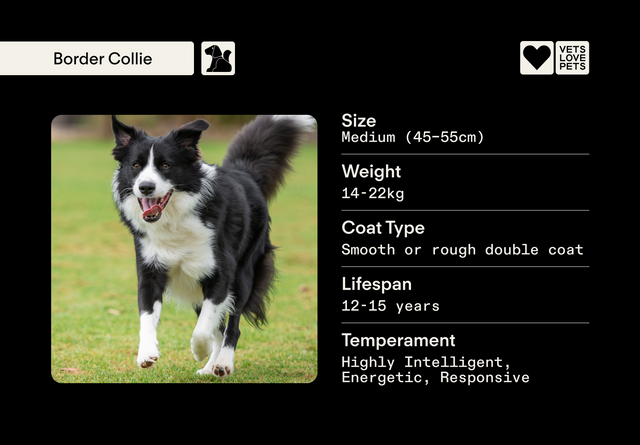
Adult Border Collies stand between 18 and 22 inches at the shoulder. Their weight ranges from 30 to 45 pounds. Males are usually larger than females, but both stay agile and athletic.
Puppies grow quickly, reaching their full height by about 12 months. However, they continue to fill out until age two. Some working lines are lighter and leaner, while show lines may appear stockier.
Appearance And Coat Types
The Border Collie’s look is iconic: sharp eyes, pointed ears, and a well-balanced body. Their coats can be smooth or rough, with colors including black and white, red, merle, and tricolor.
The rough coat is longer and feathered, while the smooth coat is shorter and easier to maintain. Both shed year-round, but more heavily during spring and fall.
Comparison With Other Breeds
To see how Border Collies stack up, here’s a comparison with other popular medium breeds:
| Breed | Height (inches) | Weight (lbs) | Energy Level |
|---|---|---|---|
| Border Collie | 18-22 | 30-45 | Very High |
| Australian Shepherd | 18-23 | 40-65 | High |
| Golden Retriever | 20-24 | 55-75 | Moderate |
| Cocker Spaniel | 13.5-15.5 | 20-30 | Moderate |
Non-obvious insight: Border Collies can appear smaller in person due to their lean build and constant movement. Their athleticism often surprises new owners.
Health And Lifespan
Border Collies are generally healthy dogs, but like any breed, they face specific risks. Knowing these helps you spot issues early and give the best care.
Expected Lifespan
Border Collies live 12-15 years on average. Some reach 17 or older with proper care. Their active lifestyle and working genetics contribute to their longevity.
Common Health Issues
The most frequent health concerns include:
- Hip Dysplasia: A genetic condition where the hip joint doesn’t develop properly. It can cause pain and arthritis. Reputable breeders test for this.
- Collie Eye Anomaly (CEA): An inherited eye disorder. Most cases are mild, but severe cases can lead to blindness.
- Epilepsy: Some Border Collies develop seizures. Medication can help, but it requires ongoing vet care.
- Osteochondritis Dissecans (OCD): A joint issue affecting young, fast-growing dogs.
- Progressive Retinal Atrophy (PRA): Gradual vision loss due to retinal degeneration.
Preventive Care
Regular vet checkups, vaccinations, and flea/tick prevention are vital. Border Collies benefit from annual eye and hip exams. Early detection keeps them active and comfortable.
Health Comparison Table
Here’s a quick look at how Border Collies compare to other breeds for key health risks:
| Breed | Hip Dysplasia Risk | Eye Disorders Risk | Average Lifespan (years) |
|---|---|---|---|
| Border Collie | Moderate | Moderate | 12-15 |
| German Shepherd | High | Low | 9-13 |
| Labrador Retriever | Moderate | Low | 10-12 |
| Poodle | Low | Moderate | 12-15 |
Daily Care And Exercise Needs
Caring for a Border Collie goes beyond the basics. Their mental and physical needs are demanding, but rewarding if you know what to expect.
Exercise Requirements
Border Collies need more exercise than most breeds. Aim for:
- 1-2 hours of vigorous activity daily (running, hiking, fetch, agility)
- Mental stimulation (training, puzzle toys, scent games)
- Change of scenery (walks in new places, trips to the park)
If you miss a day, your Border Collie may act out. Even older dogs crave activity.
Grooming And Hygiene
Their coats require regular attention:
- Brushing 2-3 times a week (daily during shedding seasons)
- Bathing every 2-3 months or when dirty
- Ear checks (Border Collies can develop ear infections)
- Nail trimming monthly
Smooth-coated Border Collies need less brushing, but both types shed. Vacuuming and lint rollers are part of life with this breed.
Diet And Nutrition
Border Collies burn calories fast. Feed a high-quality dog food with:
- 25-30% protein for muscle maintenance
- 12-15% fat for energy
- Balanced carbs for active days
Puppies and working adults may need more calories. Always monitor weight—Border Collies rarely get overweight, but some slow down with age.
Training And Mental Stimulation
Training is not optional; it’s essential. Border Collies excel in:
- Obedience
- Agility
- Search and rescue
- Canine sports
Sessions should be short and positive. Use rewards, not punishment. Challenge them with new tricks and tasks often.
Practical tip: Rotate toys and games weekly to keep your Border Collie interested. They quickly lose interest in repetitive play.
Socialization
Expose Border Collies to new people, places, and animals from puppyhood. Proper socialization prevents fearfulness and helps manage their strong herding drive.
Living With A Border Collie: Home And Environment
Your home setup affects your Border Collie’s happiness. They thrive in active families and spacious environments, but can adapt to city life if their needs are met.
Ideal Home Environment
Border Collies do best in homes with:
- A fenced yard for safe play
- Access to parks or trails
- Active owners who enjoy outdoor activities
Apartment living is possible, but you must commit to daily exercise and training. Border Collies don’t do well left alone for long periods.
Family Compatibility
Border Collies are great with children who respect boundaries. Their herding instinct can make them nip at heels or chase running kids. Training and supervision are key.
They fit well in multi-pet households if introduced slowly. Some may try to herd other pets, but this fades with routine and clear rules.
Work And Alone Time
Border Collies need company and purpose. They become anxious if bored or isolated. If you work long hours, consider dog daycare or hiring a dog walker.
Non-obvious insight: Border Collies often thrive when given jobs, even simple ones like fetching the newspaper or helping with chores. Purpose is as important as exercise.
Border Collie Activities And Sports
If you want to unlock your Border Collie’s potential, explore dog sports and activities. They excel in many fields due to their intelligence and drive.
Popular Activities
- Agility: Border Collies dominate in agility competitions. Their speed and focus are unmatched.
- Flyball: A relay race with jumps and balls, perfect for their energy.
- Obedience trials: They learn commands quickly and perform with precision.
- Herding: Even in city settings, herding trials are popular.
- Frisbee: Their jumping ability makes them star disc dogs.
Therapy And Service Work
Border Collies also work as therapy dogs and service animals. Their sensitivity and intelligence make them ideal for emotional support and specialized tasks.
Activity Comparison Table
Here’s how Border Collies compare to other breeds in various dog sports:
| Sport | Border Collie | Australian Shepherd | Golden Retriever |
|---|---|---|---|
| Agility | Excellent | Very Good | Good |
| Flyball | Excellent | Good | Moderate |
| Obedience | Excellent | Good | Very Good |
| Herding | Excellent | Excellent | Low |

Credit: www.bellaandduke.com
Border Collie Puppies: Choosing And Raising
Bringing home a Border Collie puppy requires preparation. Their early months shape their adult behavior.
Choosing A Puppy
Look for breeders who:
- Health test parents (hips, eyes, genetic disorders)
- Socialize puppies from birth
- Provide pedigree and medical records
- Avoid puppy mills or backyard breeders
Rescue organizations also offer Border Collie puppies and adults.
Puppy Growth Stages
- 8 weeks: Ready for new homes. Socialization begins.
- 3-6 months: Rapid learning. Basic training starts.
- 6-12 months: Growth slows. Adolescence brings testing boundaries.
- 12-24 months: Full maturity. Consistent routine needed.
Raising Tips
- Start training early. Use positive methods.
- Socialize with people, pets, and environments.
- Set clear boundaries—avoid rough play or chasing games that encourage herding.
- Provide safe chew toys and puzzles.
Common mistake: Many owners underestimate the energy and intelligence of Border Collie puppies, leading to frustration and behavioral issues.
Border Collie Grooming: Step-by-step
Border Collie grooming is simple but must be regular. Here’s a practical routine:
- Brush coat 2-3 times weekly (use slicker brush for rough coats)
- Check for mats behind ears and under legs
- Trim nails monthly (use dog nail clippers)
- Clean ears weekly (use dog-safe ear wipes)
- Bath every 2-3 months (dog shampoo, rinse thoroughly)
- Check teeth weekly (brush or use dental chews)
Tip: During shedding season, increase brushing to daily. This prevents mats and reduces shedding.
Credit: www.infinibandta.org
Nutrition And Feeding Guide
Proper nutrition keeps your Border Collie healthy and active. Their energy needs change with age and activity.
Puppy Feeding
- Feed puppy formula until 12 months.
- 3-4 meals daily until 6 months, then 2 meals.
- Look for high protein and healthy fats.
Adult Feeding
- 2 meals daily.
- Choose food with 25-30% protein and 12-15% fat.
- Monitor weight—adjust portions as needed.
Senior Feeding
- Lower calorie intake if activity drops.
- Add joint supplements (glucosamine, chondroitin).
- Keep protein moderate for muscle maintenance.
Common mistake: Overfeeding treats or table scraps. Border Collies are prone to food allergies. Stick to dog-formulated foods.
Training Your Border Collie: Practical Steps
Training is the key to a happy Border Collie. Use short, clear sessions and reward-based methods.
Basic Commands
- Sit
- Stay
- Come
- Heel
- Leave it
Master these before moving to advanced tricks.
Advanced Training
- Agility obstacles
- Complex tricks (e.g., opening doors)
- Scent work
- Herding commands
Common Training Mistakes
- Using harsh corrections (Border Collies are sensitive)
- Training too long (they lose focus after 10-15 minutes)
- Not providing enough variety (they get bored quickly)
Practical tip: Switch training locations and tasks. This keeps your Border Collie engaged.
)
Credit: lyka.com.au
Finding A Border Collie: Adoption And Purchase
Border Collies can be found through breeders, rescues, and shelters. Each option has pros and cons.
Breeder Vs Rescue
- Breeder: Offers puppies with known health history and pedigree. Higher price ($800-$2,500).
- Rescue: Offers adults and puppies. Adoption fees ($100-$400). Dogs may have unknown pasts but are often screened and trained.
What To Ask
- Are the parents health tested?
- Has the puppy been socialized?
- Does the dog have any known health issues?
- What is the return policy?
External resource: For more information, visit the Border Collie Wikipedia page.
Frequently Asked Questions
How Much Exercise Does A Border Collie Need Daily?
Border Collies need at least 1-2 hours of intense exercise every day. This includes running, hiking, agility, or playing fetch. Mental activities are also important, like puzzle toys or training sessions. Without enough exercise, they may become bored and destructive.
Are Border Collies Good Family Pets?
Yes, Border Collies can be excellent family pets for active households. They are loyal, intelligent, and enjoy being part of family activities. However, they need consistent training and exercise. Their herding instinct means supervision is necessary around young children and small pets.
What Are Common Health Problems In Border Collies?
Border Collies are prone to hip dysplasia, Collie Eye Anomaly (CEA), epilepsy, and progressive retinal atrophy (PRA). Regular vet checkups and health screenings help catch these early. Reputable breeders test for genetic conditions.
How Do I Groom A Border Collie?
Groom your Border Collie by brushing 2-3 times a week, checking for mats, cleaning ears weekly, trimming nails monthly, and bathing every 2-3 months. Rough-coated Border Collies need extra brushing during shedding seasons.
Are Border Collies Easy To Train?
Border Collies are very easy to train due to their intelligence and willingness to please. Use positive methods and keep sessions short (10-15 minutes). Vary tasks to prevent boredom. Early socialization and consistency are essential.
Border Collies are remarkable companions for those ready to meet their needs. Their intelligence, energy, and devotion set them apart, but their demanding nature means they’re not suited for everyone. If you’re prepared for daily exercise, training, and mental stimulation, a Border Collie will reward you with loyalty and joy for years to come.
With the right care, they become more than pets—they’re partners and friends.

We’re the dedicated team behind MyPawSafe.com, with over a decade of combined experience in veterinary care, pet emergency response, and animal behavior. While we prefer to let our work speak for itself, our mission is clear: to provide science-backed, vet-approved advice that helps pet owners prevent accidents and save lives.