
The Staffordshire Bull Terrier is a breed that sparks strong feelings. Some see them as loyal family protectors; others worry about their muscular frame and strong jaws. The truth? Staffies are one of the most misunderstood dogs in the world. With the right care, they become affectionate, playful companions who thrive with people. If you’re considering bringing a Staffordshire Bull Terrier into your life—or you want to understand the breed better—this guide covers everything you need to know. We’ll explore their temperament, size, and care, bust common myths, and give you real advice to help your Staffy live a happy, healthy life.
History And Origins Of The Staffordshire Bull Terrier
Understanding the Staffordshire Bull Terrier’s background helps you make sense of their personality today. This breed’s story starts in 19th-century England. Back then, bull-baiting and dog fighting were common—harsh and violent sports that demanded tough, muscular dogs. Early breeders crossed bulldogs with terriers to create a dog that was strong, agile, and brave. The result was the ancestor of today’s Staffy.
When blood sports were banned, responsible breeders worked to refine the breed’s temperament. The goal was to keep their courage and physical strength but remove aggression towards humans. By the 1930s, the Staffordshire Bull Terrier had won the hearts of many British families. The Kennel Club (UK) officially recognized the breed in 1935.
Today, Staffies are popular around the world, known for their love of people and their distinctive “smiling” faces. They are especially popular in the UK and Australia, but their reputation as a loyal companion is growing in the United States and other countries as well.
Physical Characteristics
Size And Build
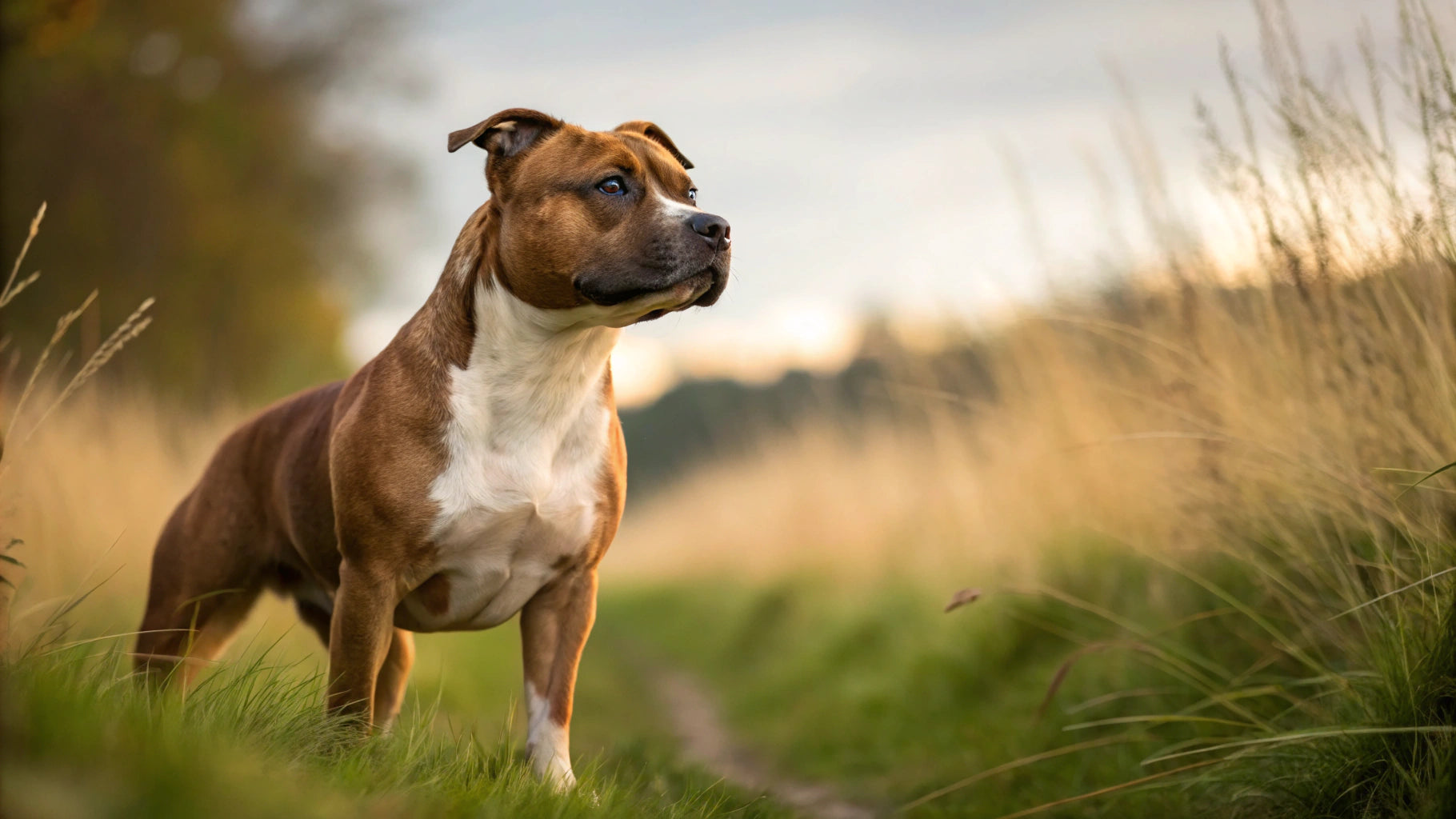
The Staffordshire Bull Terrier is a compact, muscular dog. They are not large, but their body is powerful and athletic. Here’s a detailed look at their size:
| Sex | Height (at shoulder) | Weight |
|---|---|---|
| Male | 14–16 inches (36–41 cm) | 28–38 lbs (13–17 kg) |
| Female | 13–15 inches (33–38 cm) | 24–34 lbs (11–15 kg) |
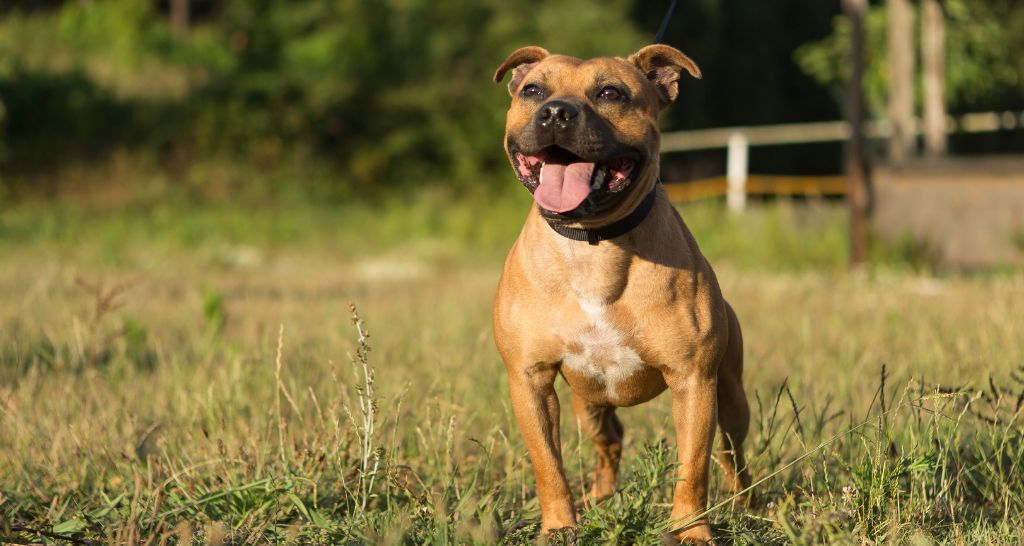
Their head is broad with pronounced cheek muscles, and they have a short, deep muzzle. Their ears are small and can be half-pricked or rose-shaped. Staffies have a short, straight back and a low-set tail that tapers to a point.
Coat And Colors
Staffies have a short, smooth coat that is easy to care for. Their fur lies close to the body, giving them a sleek appearance. They come in a variety of colors, including:
- Black
- Blue (a grayish shade)
- Fawn (light tan)
- Red
- White
- Brindle (a mix of dark and light stripes)
- Any of these colors with white markings
The coat may look simple, but it shines when the dog is healthy and well cared for.
Face And Expression
One thing that makes the Staffordshire Bull Terrier so charming is their expression. They often look like they’re smiling, with bright eyes and a gentle, friendly face. Their eyes are round and dark, full of intelligence and curiosity.
Temperament: What Are Staffies Really Like?
The People-loving Breed
If you ask owners to describe their Staffy’s personality, you’ll hear words like affectionate, loyal, and fun-loving. This breed is famous for its strong bond with people. Staffies crave human company and often think of themselves as lap dogs—even when they’re full-grown.
With Children
Staffies are sometimes called “nanny dogs” because they are so gentle and patient with kids. They love to play and can handle a bit of rough-and-tumble. Of course, supervision is important with any dog, especially around small children. But with proper training and socialization, Staffies are among the best breeds for family life.
With Other Dogs And Animals
Here’s where things get tricky. Staffies were bred to be bold and not back down from a challenge. While they are typically friendly with people, they can be reactive or dominant with other dogs, especially of the same sex. Socialization from an early age is critical. Many Staffies do well in multi-dog households, but introductions should be careful and controlled.
Small animals like cats, rabbits, or hamsters are not always safe with a Staffy, especially if the dog has a high prey drive. Some Staffies learn to live peacefully with other pets, but always monitor interactions and never leave them alone together until you are certain they can coexist.
Energy And Playfulness
Staffordshire Bull Terriers are high-energy dogs. They love to play, run, and explore. Without enough exercise, they can become bored and destructive. But with daily activity, they are happy, calm, and eager to please.
Intelligence And Trainability
Staffies are intelligent and quick to learn. They respond well to positive reinforcement—treats, praise, and fun games. Harsh training methods do not work with this breed and can damage trust. Consistency and patience are key.
One non-obvious insight: Staffies are sometimes stubborn. If they don’t see a good reason to obey, they may ignore commands. Make training fun and keep sessions short. Use games and challenges to keep their minds sharp.
Loyalty And Attachment
Staffies form deep attachments to their families. They want to be involved in everything you do. Some Staffies even develop separation anxiety if left alone too long. This breed is not ideal for people who work long hours away from home.
Aggression: Myth Vs. Reality
Staffies often face unfair stereotypes as “dangerous” or “aggressive” dogs. In reality, a well-bred, well-socialized Staffy is not naturally aggressive toward people. Problems usually arise from poor training, lack of socialization, or irresponsible ownership.
In the UK Kennel Club’s annual temperament test, Staffies consistently score as one of the most friendly and reliable breeds with people. The American Temperament Test Society reports a pass rate of over 90% for Staffies—higher than many popular breeds, including Golden Retrievers.
Living With A Staffordshire Bull Terrier
Is A Staffy Right For You?
Before you bring home a Staffy, ask yourself these questions:
- Do you have time for daily exercise and play?
- Can you provide leadership with patience and kindness?
- Are you home often enough to meet their social needs?
- Are you ready to train and socialize your dog from puppyhood?
- Do you have the energy for a playful, active companion?
If you answer yes, a Staffy could be a perfect fit. If you’re looking for a low-energy or independent dog, consider a different breed.
Apartment Or House?
Staffies adapt well to most living situations. They can be happy in apartments if they get enough exercise. A fenced yard is a bonus but not a requirement. Remember, Staffies are indoor dogs—they want to be with their people, not left outside alone.
Secure Environment
Staffies are strong and sometimes determined escape artists. They can jump or climb low fences. Make sure your yard is secure and supervise outdoor time.
Exercise And Activity Needs
How Much Exercise Does A Staffy Need?
Staffies require at least one hour of exercise every day. This can be divided into two walks, plus playtime in the yard or at home. Energetic Staffies may need even more activity.
Good Exercise Ideas
- Brisk walks or jogs
- Fetch and tug-of-war games
- Agility training
- Obedience or trick training
- Playdates with friendly dogs
Mix up activities to keep your Staffy interested and fit. Staffies love new challenges and will excel in dog sports like agility, flyball, or rally.
Mental Stimulation
Physical exercise is only part of the equation. Staffies are smart and need mental work, too. Puzzle toys, scent games, and training sessions keep their minds sharp. A bored Staffy may invent their own entertainment—which often means chewing or digging!
Caution With Extreme Weather
Staffies have a short coat and can struggle in both hot and cold weather. In summer, exercise during cool parts of the day and provide plenty of water. In winter, consider a dog sweater or jacket for walks. Staffies do not tolerate extreme temperatures well.
Training Your Staffordshire Bull Terrier
Start Early
Early training is critical for Staffies. Start socializing your puppy as soon as possible—invite friends and family to meet your dog, and introduce them to different environments, sounds, and other animals.
Basic Training Goals
Focus on these key commands:
- Sit
- Stay
- Come
- Leave it
- Heel (walking nicely on a leash)
Short, positive sessions are best. Use treats, toys, and praise as rewards.
Socialization
Socialization means exposing your dog to new experiences in a safe, positive way. The more new things your Staffy experiences as a puppy, the more confident and calm they’ll be as adults. Dog classes, visits to parks, and car rides are all helpful.
Advanced Training
Many Staffies excel in advanced obedience or trick training. Their intelligence and eagerness to please make them stand out in competitions. Activities like agility or scent work can help channel their energy.
Dealing With Problem Behaviors
Common issues in Staffies include chewing, jumping up, and pulling on the leash. These are usually signs of boredom or lack of training. Provide plenty of exercise and redirect unwanted behavior to something positive.
A non-obvious tip: Teach your Staffy to settle on a mat or bed. This gives them a “safe place” and helps calm them when excited guests arrive.
When To Seek Help
If your Staffy shows signs of aggression, anxiety, or other serious behavior issues, consult a professional trainer or behaviorist with positive reinforcement experience. Early help can prevent bigger problems later.

Credit: mywoof.com
Grooming And General Care
Coat Care
Staffies have easy-care coats. They shed moderately, but regular brushing (once a week) keeps hair under control and their coat shiny.
- Use a soft-bristle or rubber brush.
- Bathe your Staffy only when needed (every 2–3 months or if dirty).
- Check for skin irritation, as Staffies can be prone to allergies.
Nail, Ear, And Dental Care
- Trim nails every 2–3 weeks to prevent painful overgrowth.
- Clean ears gently with a dog-safe solution—Staffies are prone to ear infections.
- Brush teeth several times a week to prevent dental disease.
Feeding Your Staffy
A balanced diet is essential for a healthy Staffy. Choose high-quality commercial food, or prepare home-cooked meals with your vet’s advice. Staffies are prone to weight gain, so measure portions and limit treats.
Sample Feeding Guide
| Age | Meals per Day | Amount (total per day) |
|---|---|---|
| Puppy (2-6 months) | 3-4 | 1–1.5 cups |
| Adult (6+ months) | 2 | 1.5–2 cups |
| Senior (7+ years) | 2 | 1–1.5 cups |
Always adjust the amount based on your dog’s activity level, age, and health. Staffies love food and can become overweight, which stresses their joints and organs.
Common Health Issues
Staffordshire Bull Terriers are generally healthy, but there are some conditions to watch for:
Hereditary Issues
- L-2-HGA (L-2-hydroxyglutaric aciduria): A metabolic disorder that can cause seizures.
- Hereditary Cataracts: Vision problems that may appear in young dogs.
Ask breeders for health test results for both parents. Responsible breeders screen for these issues.
Other Health Concerns
- Skin allergies: Staffies may react to certain foods, pollens, or fleas.
- Hip dysplasia: Less common in Staffies than some breeds, but still possible.
- Patellar luxation: Loose kneecaps can cause limping.
- Elbow dysplasia: Joint development issues.
- Demodectic mange: A skin problem caused by mites.
Lifespan
The typical lifespan for a Staffordshire Bull Terrier is 12–14 years. With good care, some Staffies live even longer. Regular vet checkups, vaccinations, and a healthy weight help your dog live a full, happy life.
Choosing A Staffordshire Bull Terrier Puppy
Finding A Responsible Breeder
Not all breeders are the same. A good breeder tests their dogs for genetic problems, raises puppies in a clean, loving environment, and is happy to answer your questions.
Red flags to watch for:
- Puppies or parents kept in poor conditions
- No health certificates or test results
- Breeder avoids showing you where dogs live
- Multiple breeds or many litters available at once
Ask to meet both parent dogs. See how they behave and interact. Healthy, well-socialized puppies are curious, playful, and not fearful.
Adoption And Rescue
Many wonderful Staffies are waiting for homes in shelters and rescues. Adopting a dog can save a life and bring you a loyal friend. Look for local or breed-specific rescues—many provide ongoing support and advice.
Puppy Vs. Adult Staffy
Puppies are adorable but require patience and training. Adult Staffies may already be house-trained and know basic commands. Both can make fantastic companions.
Socialization: Key To A Well-behaved Staffy
Socialization is more than just meeting other dogs. It means teaching your Staffy to handle new situations calmly. Expose your puppy to:
- Different people (ages, sizes, clothing)
- Other friendly dogs and animals
- New sights and sounds (traffic, vacuum cleaners, children playing)
- Car rides, vet visits, and walks in busy places
Aim for positive experiences. Reward calm behavior and never force your dog into scary situations. The goal is confidence, not fear.
Staffy Myths And Misconceptions
“staffies Are Dangerous”
This is the biggest myth. Staffies, when raised with love, are friendly, loyal, and safe family pets. Aggression is not a breed trait—poor socialization, mistreatment, or irresponsible ownership cause problems.
“staffies Can’t Live With Other Pets”
With proper training, many Staffies live peacefully with other dogs and even cats. Early socialization is essential, and introductions should be slow and supervised.
“staffies Don’t Need Much Exercise”
Staffies are active and need daily physical and mental workouts. Skipping exercise leads to boredom and destructive behaviors.
“staffies Are Not Intelligent”
Staffies are smart and enjoy learning new things. Many compete successfully in dog sports and obedience trials.
Cost Of Owning A Staffordshire Bull Terrier
Owning any dog is a financial commitment. Here’s a realistic view of what you might spend:
| Expense | Estimated Yearly Cost (USD) |
|---|---|
| Food | $300–$600 |
| Vet care (routine) | $200–$500 |
| Insurance | $300–$800 |
| Grooming supplies | $50–$100 |
| Toys/treats | $100–$200 |
| Training classes | $100–$300 |
| License/microchip | $50–$100 |
| Emergency vet fund | Variable ($500+ recommended) |
Unexpected costs—like accidents or illness—can happen. Pet insurance or a savings fund provides peace of mind.
Traveling With A Staffy
Staffies are people-oriented and often love adventures. Most travel well with preparation:
- Use a secure, well-ventilated crate or harness in the car.
- Bring familiar items (blanket, toys) for comfort.
- Stop for breaks every 2–3 hours.
- Bring water and a portable bowl.
- Make sure your destination allows Staffies—breed bans exist in some places.
Some airlines and countries have restrictions on Staffordshire Bull Terriers. Always check rules before planning a trip.
Credit: www.barkbusters.com
Staffordshire Bull Terrier In Sports And Activities
Staffies are natural athletes. They excel in:
- Agility: Navigating obstacle courses
- Obedience: Following commands and routines
- Flyball: Relay races with balls and jumps
- Rally: A mix of obedience and agility
- Canine Good Citizen: Tests for well-mannered dogs
Many Staffies also work as therapy dogs, bringing comfort to hospitals and care homes. Their cheerful nature and love of people make them ideal for this role.
Finding A Community
Staffy owners are a passionate group. Online forums, local clubs, and social media groups can provide support, training tips, and fun meetups. Connecting with other owners helps you share experiences and solve problems.
A useful resource is the official Staffordshire Bull Terrier Wikipedia page for breed history, standards, and global recognition.
Credit: www.houndsy.com
Frequently Asked Questions
How Much Exercise Does A Staffordshire Bull Terrier Need Each Day?
A healthy adult Staffy needs at least one hour of exercise daily. This can include brisk walks, playtime, or training games. Some energetic Staffies need more. Puppies and seniors need less, but all benefit from daily activity.
Are Staffordshire Bull Terriers Good With Children?
Yes, Staffies are famous for being gentle and loving with kids. They are often called “nanny dogs.” Supervise play between dogs and young children to prevent accidents. Teach kids to respect the dog’s space, especially during meals or rest.
Do Staffies Get Along With Other Dogs?
Staffies can live with other dogs, especially if raised together and properly socialized. Some may be dominant or reactive, particularly with dogs of the same sex. Careful introductions and ongoing training help prevent conflicts.
What Health Problems Are Common In Staffordshire Bull Terriers?
Common health issues include hereditary cataracts, L-2-HGA (a rare metabolic disorder), skin allergies, and joint problems like hip dysplasia. Responsible breeders test for genetic conditions. Regular vet checkups catch problems early.
Are Staffordshire Bull Terriers Allowed Everywhere?
Some countries, cities, or housing areas have breed restrictions or bans on Staffordshire Bull Terriers. Always check local laws before moving or traveling. Responsible ownership and positive training help improve the breed’s reputation.
Owning a Staffordshire Bull Terrier is a rewarding experience. Their love, courage, and zest for life make them unforgettable companions. With the right care, training, and socialization, your Staffy will thrive as a loyal, playful member of your family for many years.

We’re the dedicated team behind MyPawSafe.com, with over a decade of combined experience in veterinary care, pet emergency response, and animal behavior. While we prefer to let our work speak for itself, our mission is clear: to provide science-backed, vet-approved advice that helps pet owners prevent accidents and save lives.