
The Doberman Pinscher: Complete Guide To Temperament, Size, And Care
Standing tall and alert, the Doberman Pinscher is one of the most recognizable dog breeds in the world. Known for their intelligence, loyalty, and striking appearance, Dobermans have been both admired and misunderstood. Many people see them as natural protectors, but few understand the complexity behind their behavior and needs. If you’re considering bringing a Doberman into your home or simply want to learn more about these fascinating dogs, this complete guide will give you a clear and honest picture.
We will explore the Doberman’s temperament, physical traits, and what it really takes to care for one. You’ll discover facts that often surprise new owners, plus practical advice to help you make the right choices. Whether you’re a first-time dog owner or already have experience with large breeds, you’ll find valuable insights here.
Doberman Pinscher Origins And History
The story of the Doberman Pinscher begins in late 19th-century Germany. Karl Friedrich Louis Dobermann, a tax collector, wanted a dog that was both protective and loyal. He combined breeds like the Rottweiler, German Pinscher, Greyhound, and Weimaraner to create the ideal companion for his risky job.
Dobermans quickly became popular with police and military organizations because of their courage and trainability. During World War II, they served as messenger dogs, search-and-rescue dogs, and even helped locate wounded soldiers. Over time, the breed’s image softened as people realized their potential as loving family pets.
Today, the Doberman is found in homes around the world, known for its balance of strength and affection. Still, the breed’s history as a protector shapes much of its temperament and behavior.
Physical Characteristics And Size
Dobermans are medium-to-large dogs with a sleek, athletic build. Their appearance is a blend of elegance and power, which often makes them stand out in any crowd.
Height And Weight
Adult male Dobermans typically stand between 26 to 28 inches at the shoulder, while females are slightly smaller at 24 to 26 inches. Weight varies depending on sex, build, and genetics.
Here’s a quick reference:
| Sex | Height (inches) | Weight (pounds) |
|---|---|---|
| Male | 26–28 | 75–100 |
| Female | 24–26 | 60–90 |
It’s important to note that Dobermans should not be overweight. Their athletic frame is meant for agility and speed, not bulk.
Coat And Colors
Dobermans have a short, smooth coat that lies close to the body. The most common color is black with rust markings, but they also come in red, blue, and fawn. These markings appear above the eyes, on the muzzle, chest, legs, and under the tail.
Their coat is easy to maintain, but it does shed year-round. A quick weekly brushing helps control loose hair and keeps the coat shiny.
Ears And Tail
Traditionally, Doberman puppies have their ears cropped and tails docked. This practice started for health and working reasons, but today, it’s mostly for appearance. Some countries have banned ear cropping and tail docking, so you’ll see more Dobermans with natural, floppy ears and long tails.
Non-obvious insight: Natural ears and tails do not affect the Doberman’s temperament or health. However, they can be more expressive with their ears and tail, which helps with communication.
Doberman Temperament And Personality
There’s a common myth that Dobermans are aggressive or dangerous. In reality, a well-bred and well-trained Doberman is confident, intelligent, and deeply loyal to its family. Understanding their temperament is key to forming a strong bond.
Loyalty And Attachment
Dobermans are known for their strong attachment to family members. They often choose a favorite person but usually love everyone in the household. This loyalty means they want to be close to you, not left alone in the yard.
Separation anxiety is common if they are left alone for long periods. These dogs thrive on companionship and can become unhappy or destructive without enough attention.
Intelligence And Trainability
One of the Doberman’s most impressive traits is its intelligence. They are ranked among the top five most intelligent dog breeds. This means they learn commands quickly but also get bored with repetition.
Training sessions should be short, positive, and varied. Dobermans excel in activities like:
- Obedience trials
- Agility courses
- Search and rescue
- Service work
Many Dobermans enjoy having a “job,” even if it’s as simple as fetching the newspaper or performing tricks.
Protective Instincts
Dobermans have a natural instinct to protect their home and family. They are alert and will quickly let you know if something is wrong. Unlike some breeds that bark at everything, Dobermans are usually quiet but will react if they sense a real threat.
Proper socialization is essential. A Doberman who meets many people, animals, and situations as a puppy will grow into a confident, stable adult.
Social Behavior
With proper upbringing, Dobermans are friendly and playful with children and other pets. Early socialization helps prevent shyness or fearfulness. They can sometimes be reserved with strangers but should not be aggressive without reason.
Non-obvious insight: Dobermans are sensitive to their owner’s mood. If you’re stressed or anxious, your dog may pick up on this and act similarly. Calm, consistent leadership helps them feel secure.
Doberman Pinscher Care Requirements
Owning a Doberman is a rewarding experience, but it comes with responsibilities. These dogs need more than just food and water—they need daily interaction, exercise, and mental challenges.
Nutrition And Feeding
A healthy Doberman needs a high-quality diet that matches their age, size, and activity level. Most adult Dobermans eat 2. 5 to 3. 5 cups of dry dog food daily, split into two meals.
Nutritional needs:
- Protein: At least 25% for muscle support
- Fat: 12–18% for energy
- Omega fatty acids: For coat and skin health
Avoid foods with fillers, artificial colors, or excessive grains. Dobermans are prone to bloat (gastric torsion), a life-threatening stomach problem. Feeding two smaller meals instead of one large meal and avoiding vigorous exercise right after eating can reduce the risk.
Exercise And Activity
Dobermans are energetic and athletic. Without enough exercise, they can become restless or develop behavioral issues.
Minimum exercise needs:
- 1–2 hours of activity daily
- Activities like brisk walks, jogging, agility, or playing fetch
These dogs love to run but should only be allowed off-leash in safe, fenced areas. Mental stimulation is just as important—puzzle toys, training games, and new challenges keep them happy.
Practical tip: Rotate toys and activities to prevent boredom. Dobermans will invent their own “fun” (often at your expense) if not mentally engaged.
Grooming
Dobermans are low-maintenance when it comes to grooming. Their short coat doesn’t mat, but they do shed.
Weekly brushing with a rubber grooming mitt removes loose hair and distributes natural oils. Bathing is needed only every 6–8 weeks unless the dog gets dirty. Regular nail trimming, ear checks, and dental care are essential.
Health And Lifespan
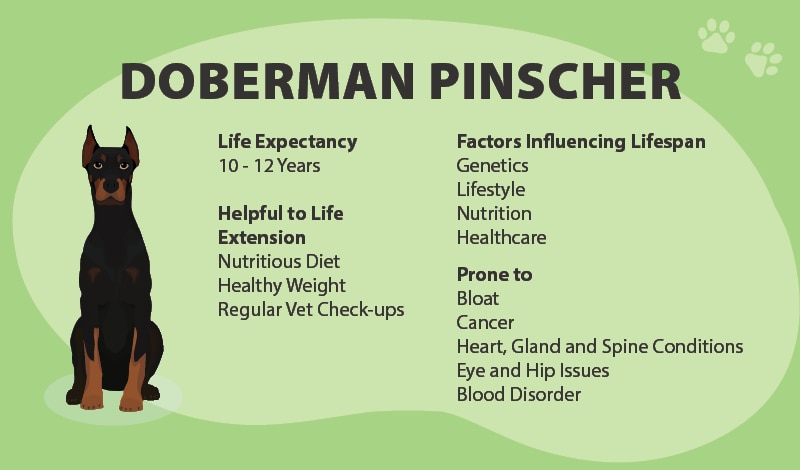
Dobermans are generally healthy, but like all breeds, they have some genetic risks. The average lifespan is 10–13 years, though some live longer with excellent care.
Common health concerns:
- Dilated cardiomyopathy (DCM): A heart disease common in the breed
- Von Willebrand’s disease: A blood-clotting disorder
- Hip dysplasia: Abnormal development of the hip joint
- Hypothyroidism: Low thyroid hormone production
- Bloat (gastric torsion): Swelling and twisting of the stomach
Regular veterinary check-ups, a healthy diet, and daily exercise can prevent or manage many health issues. Responsible breeders screen for these problems, so always ask about health testing before adopting a puppy.
Living Environment
Dobermans adapt well to many living situations if their needs are met. They are not suited to outdoor-only living or being left alone for long periods.
Ideal living conditions:
- Indoor family life with access to a secure yard
- Enough room for exercise and play
- A stable routine and plenty of human interaction
Dobermans can live in apartments if exercised properly, but they do best with a yard to run in. They are sensitive to cold because of their short coat—consider a dog sweater or jacket in winter.
Experience-based insight: Dobermans thrive with structure. They feel secure when they know what to expect from their day and from you.
Training And Socialization
Training is not just for fun—it’s essential for a well-behaved Doberman. These dogs want to please but need clear rules and consistent leadership.
Early Socialization
Start socializing your Doberman puppy as soon as possible. Expose them to different people, dogs, places, sounds, and experiences. Well-socialized Dobermans are less likely to develop fear or aggression as adults.
Puppy classes are a great way to start. The critical window for socialization is between 8 and 16 weeks of age.
Obedience Training
Dobermans excel at obedience, but they do not respond well to harsh training methods. Positive reinforcement (treats, praise, play) works best.
Basic commands to teach:
- Sit
- Stay
- Come
- Down
- Leave it
Advanced obedience, agility, and canine sports are excellent ways to keep their minds sharp.
Managing Behavior Problems
Dobermans can develop unwanted behaviors if bored, lonely, or untrained. Common issues include jumping, digging, chewing, or barking.
To prevent problems:
- Provide enough exercise and mental stimulation
- Use consistent rules and limits
- Reward good behavior, ignore or redirect bad behavior
If problems persist, consult a professional dog trainer with experience in working breeds.
Doberman Vs. Other Popular Guard Dog Breeds
Dobermans are often compared to other guard dog breeds. Here’s how they stack up against two popular choices: the German Shepherd and the Rottweiler.
| Breed | Size | Temperament | Trainability | Exercise Needs |
|---|---|---|---|---|
| Doberman Pinscher | Medium-Large | Loyal, Alert, Energetic | Very High | High |
| German Shepherd | Large | Confident, Smart, Courageous | Very High | High |
| Rottweiler | Large | Calm, Protective, Strong-Willed | High | Moderate |
Notable difference: Dobermans are generally more agile and have higher energy needs compared to Rottweilers, but are a bit more sensitive than German Shepherds.

Credit: puppyheaven.com
Choosing A Doberman: Puppy Or Adult?
Deciding between a puppy and an adult Doberman is a big step. Both options have benefits and challenges.
Getting A Puppy
Puppies require a lot of time and patience. Early training and socialization are crucial. A good breeder will help match you with a puppy suited to your lifestyle.
What to look for in a breeder:
- Health testing for parents (heart, hips, eyes, blood disorders)
- Puppies raised in a home environment
- Willingness to answer questions and provide support
Adopting An Adult
Adult Dobermans are often available through rescues. Many are already house-trained and know basic commands. Adoption can be rewarding, especially for those who want to give a dog a second chance.
Key considerations:
- Ask about the dog’s history and temperament
- Spend time with the dog before deciding
- Be prepared for an adjustment period
Non-obvious insight: Adult Dobermans may adjust more quickly to a calm, predictable routine than puppies, especially in a busy household.
Doberman Myths And Truths
Many myths surround the Doberman Pinscher. Let’s clear up a few:
- Myth: Dobermans turn on their owners.
Truth: This is false. Well-bred, well-socialized Dobermans are loyal and devoted. Aggression is usually the result of poor breeding, neglect, or lack of training.
- Myth: Dobermans are dangerous with children.
Truth: With proper upbringing, Dobermans can be gentle, playful companions for children. Supervise all interactions, as with any breed.
- Myth: They need a big house and yard.
Truth: Dobermans can live happily in apartments if exercised daily and given enough attention.
- Myth: All Dobermans are black and tan.
Truth: While black and rust is most common, Dobermans come in other colors like red, blue, and fawn.
Credit: www.carecredit.com
Activities And Enrichment
Dobermans need more than physical exercise—they need activities that challenge their minds and bodies.
Recommended activities:
- Agility: Fast-paced obstacle courses that build confidence and fitness.
- Obedience trials: Compete in precision training events.
- Tracking: Use their nose to find hidden objects or people.
- Canine sports: Try dock diving, flyball, or rally.
Home enrichment ideas:
- Interactive puzzle toys
- Scent games (hide treats around the house)
- Teaching new tricks
Dobermans enjoy working with their people. Including them in daily routines, such as jogging or hiking, builds a stronger bond.
Common Mistakes Doberman Owners Make
Even experienced dog owners can make mistakes with Dobermans. Here are some common pitfalls:
- Not providing enough exercise: Dobermans need daily physical and mental activity.
- Leaving them alone too long: They are prone to separation anxiety and can become destructive.
- Using harsh training methods: These dogs respond best to positive, gentle guidance.
- Skipping early socialization: Fear or aggression can develop if not exposed to new experiences as puppies.
- Ignoring health checks: Regular vet visits and health screening are essential for long-term wellbeing.
Costs Of Owning A Doberman
Dobermans are not low-cost dogs. Consider these expenses before bringing one home.
| Expense | Estimated Annual Cost (USD) |
|---|---|
| Food | $500–$900 |
| Routine vet care | $300–$700 |
| Vaccinations & preventive meds | $200–$400 |
| Training classes | $100–$300 |
| Grooming supplies | $50–$100 |
| Insurance (optional) | $400–$700 |
Unexpected health costs can add up quickly, especially with genetic conditions like DCM. Investing in pet insurance or a dedicated savings fund is a wise choice.
Is A Doberman Pinscher Right For You?
The Doberman Pinscher is not a “starter” dog, but for the right person, they are unmatched companions. Ask yourself:
- Can you provide at least 1–2 hours of exercise daily?
- Are you home enough to give attention and prevent loneliness?
- Are you comfortable with consistent training and clear rules?
- Can you afford the costs of care, vet visits, and emergencies?
If you answered yes, a Doberman could be a rewarding addition to your life.
Final tip: Meet Dobermans in person before deciding. Volunteer with a rescue, attend breed events, or talk to experienced owners. Real-world experience is the best way to know if this breed fits your lifestyle.
For more breed standards and health information, you can visit the Doberman Pinscher Wikipedia page.

Credit: puppyheaven.com
Frequently Asked Questions
Are Dobermans Good With Children?
Dobermans can be excellent with children when raised and socialized properly. They are playful, tolerant, and protective. Always supervise interactions, especially with young children, to prevent accidental injuries.
How Much Exercise Does A Doberman Need?
Dobermans need at least 1 to 2 hours of activity every day. This can include walks, playtime, and mental challenges. Without enough exercise, they may develop unwanted behaviors.
Do Dobermans Shed A Lot?
Dobermans have short coats and shed moderately throughout the year. Weekly brushing helps control shedding and keeps their coat healthy. They are considered low-maintenance compared to long-haired breeds.
Are Dobermans Aggressive?
A well-bred and socialized Doberman is not naturally aggressive. They are alert and protective but respond well to training and socialization. Aggression usually results from poor breeding, lack of training, or neglect.
What Health Problems Are Common In Dobermans?
Dobermans are prone to several genetic health issues, including dilated cardiomyopathy (DCM), Von Willebrand’s disease, hip dysplasia, and bloat. Regular vet check-ups and choosing a responsible breeder can help reduce the risks.
The Doberman Pinscher is a loyal, intelligent, and energetic breed that thrives with the right owner. If you are ready to meet their needs, you’ll find a companion who is both a devoted friend and a guardian. Take the time to learn, prepare, and enjoy the unique journey that comes with sharing your life with a Doberman.

We’re the dedicated team behind MyPawSafe.com, with over a decade of combined experience in veterinary care, pet emergency response, and animal behavior. While we prefer to let our work speak for itself, our mission is clear: to provide science-backed, vet-approved advice that helps pet owners prevent accidents and save lives.