
The Neapolitan Mastiff is a breed that stops people in their tracks. With their loose, wrinkled skin and massive size, these dogs look straight out of ancient history—and in many ways, they are. Sometimes called the “gentle giant” of the dog world, the Neapolitan Mastiff combines a striking appearance with a calm, loyal temperament.
But this isn’t a breed for everyone. If you’re thinking about bringing one into your life, you’ll need to know much more than basic facts. How big do they really get? What personality traits can you expect? How much care, training, and space do they need?
This guide covers everything you need to know about the Neapolitan Mastiff, whether you’re a first-time owner or a seasoned dog lover considering a new challenge.
History And Origins
The Neapolitan Mastiff’s roots go deep into the history of southern Italy, especially around Naples. Historians believe their ancestors were Roman war dogs, used for guarding homes, fighting alongside soldiers, and even battling in arenas. Over centuries, the breed evolved into a guardian for farms and estates, prized for their intimidating looks and protective instincts.
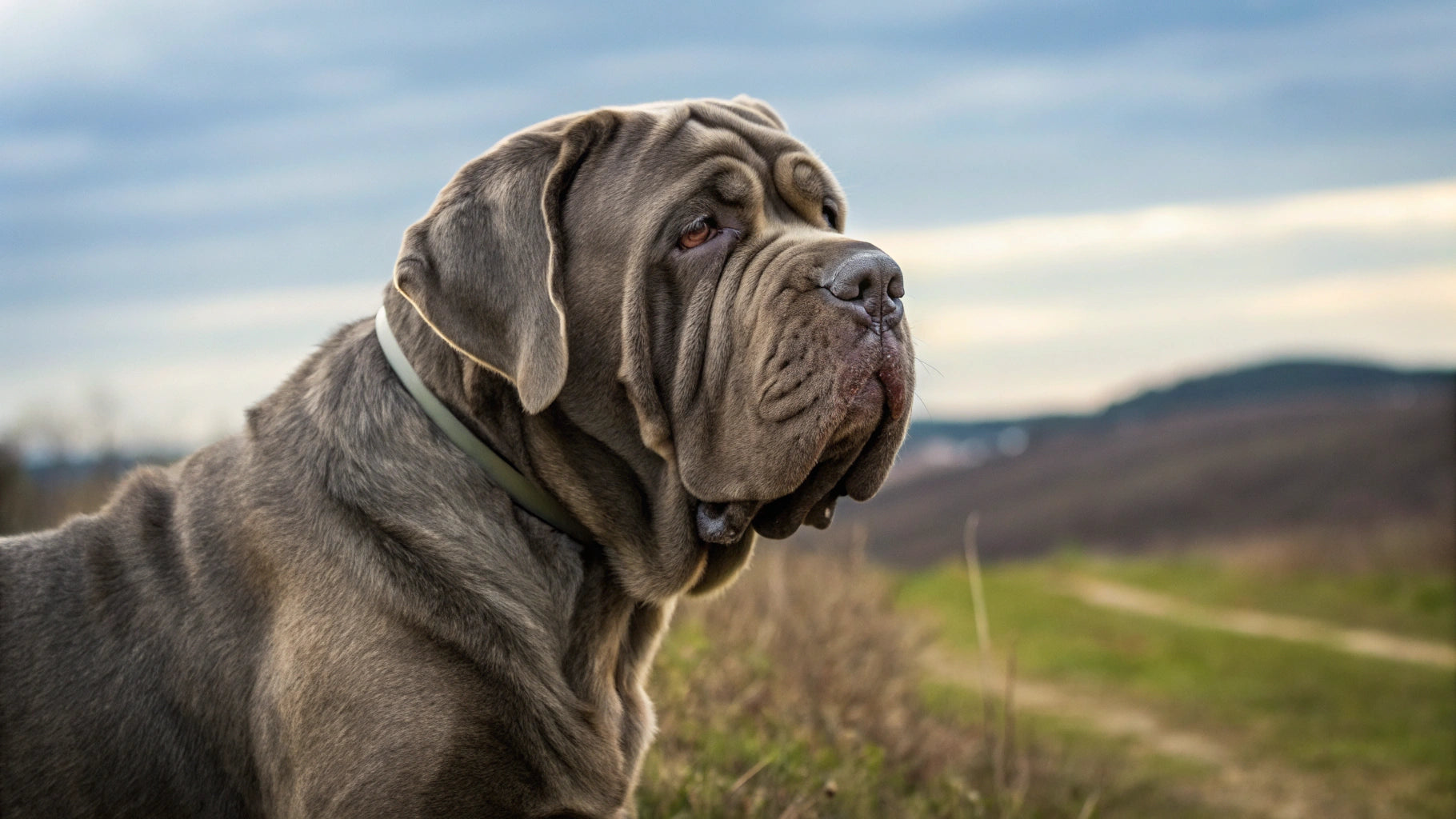
A key feature that sets the Neapolitan Mastiff apart is its dramatic, loose skin and heavy wrinkles. This was developed to help protect the dog in fights; if grabbed by another animal, the loose skin allowed the Mastiff to turn and defend itself. The breed was relatively unknown outside Italy until the mid-20th century, when enthusiasts began to standardize its features and promote it internationally.
Today, the Neapolitan Mastiff is recognized by major kennel clubs, including the American Kennel Club (AKC), and is valued as a family guardian with a unique appearance.
Physical Appearance And Size
If you want a small or even medium-sized dog, look elsewhere. The Neapolitan Mastiff is massive, both in height and overall body mass. Their silhouette is unmistakable: a broad, muscular body, thick neck, huge head, and lots of loose, hanging skin.
Standard Size
| Gender | Height (at shoulder) | Weight |
|---|---|---|
| Male | 26–31 inches | 150–200 lbs |
| Female | 24–29 inches | 120–175 lbs |
That means a Neapolitan Mastiff can weigh as much as a grown man. This size isn’t just for show—it’s part of what made them such effective guardians.
Coat And Colors
Their coat is short, dense, and smooth. Common colors include blue, black, mahogany, and tawny, often with small white patches on the chest or toes. The coat is easy to care for, but the skin folds require extra attention (more on this later).
Distinct Features
- Wrinkles and folds: Deep wrinkles cover the head and body, with especially dramatic folds around the face and neck.
- Eyes: Set deep under heavy brows, often giving a serious or even sad expression.
- Tail: Thick at the base, tapering to a point, usually carried low.
Non-obvious insight: Many people underestimate just how much space these dogs take up—not just physically, but also with drool, hair, and the occasional clumsy bump into furniture.

Credit: www.houndsy.com
Temperament And Personality
The Neapolitan Mastiff’s heart is as big as its body. They’re known for a calm, steady temperament and strong loyalty to their family. They might look intimidating, but most are gentle with those they trust.
Loyalty And Protective Instincts
This breed is deeply attached to its people. Most Neapolitan Mastiffs form a close bond with their primary family and are especially protective of children. They are naturally wary of strangers—this makes them excellent watchdogs, but it also means early socialization is critical.
Without proper exposure to different people and situations, their guarding instinct can become overactive.
Gentleness And Sensitivity
Despite their huge size, Neapolitan Mastiffs are often surprisingly gentle in the home. They are known to be patient with kids, but adult supervision is still needed, especially because of the dog’s sheer size and strength. They can be sensitive to the tone of voice and mood in the home; harsh discipline is not effective, and positive reinforcement works much better.
Social Behavior
- With family: Affectionate, loyal, sometimes “clingy.”
- With strangers: Reserved, sometimes suspicious, but rarely aggressive without cause.
- With other pets: Can get along with other animals if raised together, but may be dominant, especially with other dogs of the same sex.
Practical tip: Their protective nature means you need to teach visitors how to approach calmly. Never force a Neapolitan Mastiff to interact if they seem uncomfortable.
Common Behavior Issues
Because of their guarding instincts, Neapolitan Mastiffs can develop territorial behaviors if not properly socialized. They can also be stubborn, and their large size means that any unwanted behavior (like jumping up) can be a serious problem.
Non-obvious insight: Many first-time owners are surprised by how sensitive these dogs are to routine changes. A Neapolitan Mastiff that feels insecure may become anxious or destructive.
Living Environment And Space Needs
If you live in a small apartment, the Neapolitan Mastiff is probably not the breed for you. Their size, energy level, and need for space all point to a home with a large, securely fenced yard.
Home Requirements
- Indoor space: High ceilings and sturdy furniture are helpful. These dogs like to be near their family, so expect them to follow you from room to room.
- Outdoor space: A large, fenced yard is ideal. Fences should be at least six feet tall and very secure—Neapolitan Mastiffs are strong and can push through weak barriers.
- Climate: They tolerate moderate cold but can struggle with high heat because of their heavy skin folds and brachycephalic (broad, short) head. Always provide shade and fresh water in warm weather.
Living With Other Pets
While they can coexist peacefully with other pets, introductions should be careful and gradual. Early socialization is key—if you raise a Neapolitan Mastiff puppy with cats or small dogs, they are more likely to get along. However, due to their size, supervision is always important.
Urban Vs Rural Living
- Urban: Possible, but challenging. Needs regular walks and a safe, private space.
- Suburban/Rural: Better suited for these environments, where they can stretch out and patrol.
Important note: Neapolitan Mastiffs are not escape artists, but their strength means they can accidentally break through poorly built fences or gates.
Exercise And Activity Levels
Despite their size, Neapolitan Mastiffs are not high-energy dogs. In fact, they’re often described as “couch potatoes. ” But don’t confuse low energy with no need for exercise.
Daily Exercise Needs
- Adult dogs: 30 to 60 minutes of moderate exercise daily (split into two or more walks).
- Puppies and young adults: Should avoid heavy exercise or rough play to protect their growing joints.
Neapolitan Mastiffs enjoy walks, gentle play in a fenced yard, and mental stimulation. They do not make good jogging partners, and too much exercise can be harmful, especially while growing.
Common Mistakes
- Over-exercising puppies: Can lead to joint and bone issues.
- Under-stimulating adults: Leads to boredom and destructive behaviors.
- Ignoring mental needs: These dogs need challenges—training sessions, puzzle toys, or new experiences.
Activities To Avoid
- Jumping from heights
- Long runs on hard surfaces
- Agility or obstacle courses with high jumps
Non-obvious insight: Many people think a big dog needs lots of activity. In reality, a bored Neapolitan Mastiff is more likely to chew the couch than ask for a run in the park.
Training And Socialization
Training a Neapolitan Mastiff is both rewarding and challenging. Their intelligence and desire to please are strong, but so is their independent streak.
Early Socialization
The most critical period is from 8 to 20 weeks old. Expose your puppy to as many new sights, sounds, people, and animals as possible. Use positive reinforcement—treats, praise, play—to create positive associations.
Basic Obedience
Focus on these commands from day one:
- Sit
- Stay
- Come
- Leave it
- Down
- No jump
Neapolitan Mastiffs are strong-willed. Consistency is key. Training sessions should be short and engaging—never harsh.
House Training
Large breeds can take longer to develop full bladder control. Be patient, keep a regular schedule, and reward good behavior. Crate training can help, but the crate must be large enough for comfort.
Leash Training
Start early. Their strength means that pulling can be a serious issue. Use a sturdy, wide collar or harness. Reward walking calmly at your side.
Advanced Training And Guarding
Neapolitan Mastiffs have natural guarding instincts. Formal guard dog training is not recommended for most families—this can make them overly aggressive or suspicious. Instead, focus on socialization and basic obedience to manage their protective nature.
Common mistake: Owners sometimes skip training because the dog seems calm. Without boundaries, a Neapolitan Mastiff can become stubborn or even aggressive.
Example: Socialization Plan For A Puppy
- Meet 2–3 new people every day
- Visit different environments (park, busy street, quiet area)
- Introduce to other friendly dogs and pets
- Expose to household sounds (vacuum, doorbell, TV)
Non-obvious insight: A well-socialized Neapolitan Mastiff is a confident, calm companion. Poorly socialized dogs can develop fear-based aggression.
Credit: www.houndsy.com
Grooming And Skin Care
While their short coat is simple to maintain, the Neapolitan Mastiff’s skin and wrinkles require special care.
Brushing And Bathing
- Brushing: Once a week with a soft-bristle brush to remove dead hair and dirt.
- Bathing: Every 6–8 weeks or as needed. Use a gentle dog shampoo.
Skin Fold Care
This is the most important part of grooming. Dirt, moisture, and bacteria can collect in the folds, leading to infections.
- Wipe folds with a damp cloth, then dry thoroughly.
- Check for redness, odor, or sores.
- Use vet-recommended products if irritation occurs.
Ears, Nails, And Teeth
- Ears: Clean weekly to prevent infections.
- Nails: Trim every 2–3 weeks. Their weight can cause painful splits if nails get too long.
- Teeth: Brush 2–3 times a week with dog-safe toothpaste.
Shedding
Neapolitan Mastiffs are moderate shedders. Regular brushing helps control loose hair.
Non-obvious insight: Many owners struggle with drool management. Keep towels handy and wipe the face after eating or drinking.
Health And Lifespan
Neapolitan Mastiffs are generally robust, but their size and unique features make them prone to certain health issues. Responsible breeding and preventive care are crucial.
Average Lifespan
Most Neapolitan Mastiffs live 7–9 years. Some reach 10 years or older with excellent care, but shorter lifespans are common due to their size.
Common Health Problems
| Condition | Description | Prevention/Treatment |
|---|---|---|
| Hip Dysplasia | Malformed hip joint causes pain and lameness | Screening, maintain healthy weight, joint supplements |
| Elbow Dysplasia | Similar to hip dysplasia but affects elbows | Screening, careful exercise |
| Bloat (GDV) | Stomach twists, life-threatening emergency | Feed small meals, avoid exercise after eating |
| Cherry Eye | Prolapsed gland in the eyelid | Surgery if severe |
| Skin Infections | Bacteria/fungus in skin folds | Clean and dry folds regularly |
Veterinary Care
- Annual exams: More frequent for seniors.
- Vaccinations: As recommended by your vet.
- Parasite control: Year-round prevention for fleas, ticks, and worms.
Nutrition And Weight Management
Obesity is a serious risk. Even a few extra pounds put stress on their joints and heart. Feed a high-quality, large-breed formula, and avoid free-feeding. Measure food and monitor weight regularly.
Non-obvious insight: Rapid growth in puppies can cause orthopedic problems. Use puppy food designed for giant breeds and do not overfeed.
Feeding And Nutrition
The Neapolitan Mastiff’s diet is the foundation of its health. Because of their size and rapid growth, they need careful management from puppyhood.
How Much To Feed
- Puppies: 3–4 small meals per day. Use large-breed puppy food.
- Adults: 2 meals per day. Total daily amount varies (usually 6–10 cups split into two meals), but always check your dog’s body condition.
What To Feed
- Protein: High-quality animal protein should be the main ingredient.
- Fat: Moderate levels for energy.
- Calcium and Phosphorus: Balanced to support bone health (especially important for puppies).
Feeding Tips
- Do not allow free feeding.
- Avoid exercise for 1 hour after meals to reduce risk of bloat.
- Provide fresh water at all times.
- Use heavy, tip-proof bowls.
Foods To Avoid
- Table scraps (especially fatty foods)
- Cooked bones
- Grapes, chocolate, onions, and other toxic foods
Supplements
Ask your vet before adding supplements. Some Neapolitan Mastiffs may benefit from joint supplements or fish oil, but too much calcium or vitamin D can be dangerous.
Practical tip: Regularly check your dog’s weight and body condition. You should be able to feel ribs but not see them.
Living With A Neapolitan Mastiff: Real-world Insights
Having a Neapolitan Mastiff is a unique experience. Here’s what daily life with one of these gentle giants looks like.
The Good
- Deep loyalty and affection
- Low barking (unless something’s wrong)
- Impressive presence as a natural deterrent
- Calm and relaxed in the home
The Challenges
- Drool: Lots of it, especially after eating or drinking
- Shedding: Moderate, but hair is short and thick
- Space needs: Not for small apartments
- Vet bills: Higher than average due to their size
- Travel: Hard to fit in most cars or planes
Not-so-obvious Experiences
- Attention in public: Expect to be stopped often—these dogs are rare and attract questions.
- Furniture damage: Their weight can crush cushions and scratch floors.
- Time commitment: Regular skin care, training, and socialization require ongoing effort.
Cost Of Ownership
Owning a Neapolitan Mastiff is a serious financial commitment. Here’s a breakdown of the main expenses:
| Expense | Estimated Annual Cost (USD) |
|---|---|
| Food | $1,200–$2,000 |
| Veterinary Care | $500–$1,500 (routine), higher if emergencies |
| Grooming Supplies | $100–$300 |
| Insurance | $600–$1,200 |
| Training | $200–$600 |
| Miscellaneous (toys, beds, etc.) | $200–$500 |
Tip: Giant breeds are more expensive to treat for almost any health issue, and medications are dosed by weight.
Choosing A Neapolitan Mastiff: What To Consider
Before bringing home a Neapolitan Mastiff, consider these key points:
- Space: Do you have room for a dog that can weigh 200 lbs?
- Time: Are you able to commit to training, socialization, and daily care?
- Experience: Not ideal for first-time dog owners.
- Children and pets: Supervision is always necessary.
- Finances: Can you afford higher food and vet bills?
Finding A Responsible Breeder Or Rescue
Work only with breeders who screen for common health issues and allow you to meet the puppy’s parents. Ask about health clearances and temperament testing.
Adoption is also an option. Contact breed-specific rescue groups for opportunities to rehome an adult Neapolitan Mastiff.
For more information on breed standards and health, visit the Neapolitan Mastiff Wikipedia page.
Is The Neapolitan Mastiff Right For You?
The Neapolitan Mastiff is a special breed that rewards the right owner with loyalty, calm companionship, and impressive presence. But their size, drool, and need for socialization are not for everyone. If you want a gentle giant, have plenty of space, and are ready for the responsibility, the Neapolitan Mastiff could be the perfect match.
Frequently Asked Questions
What Is The Average Lifespan Of A Neapolitan Mastiff?
Most Neapolitan Mastiffs live 7–9 years. With excellent care, some reach 10 years, but their large size means they often have shorter lifespans than smaller breeds.
Are Neapolitan Mastiffs Good With Children?
Yes, they are usually gentle and protective with children in their family. However, because of their size, all interactions should be supervised to prevent accidental injuries.
How Much Exercise Does A Neapolitan Mastiff Need?
Adult Neapolitan Mastiffs need 30–60 minutes of moderate exercise daily. Too much exercise, especially as puppies, can harm their joints. Short walks and gentle play are best.
Are Neapolitan Mastiffs Difficult To Train?
They are intelligent but stubborn. Early socialization, positive reinforcement, and consistent rules are essential. They need a confident owner who can set boundaries.
Do Neapolitan Mastiffs Drool A Lot?
Yes, this breed is well known for drooling. Keep towels nearby, and expect to wipe faces after meals, drinks, and excitement.
Bringing a Neapolitan Mastiff into your life is not a small decision. With the right preparation and commitment, these extraordinary dogs can be loyal, loving companions who leave a big mark—both on your heart and your couch.

Credit: www.purina.com
We’re the dedicated team behind MyPawSafe.com, with over a decade of combined experience in veterinary care, pet emergency response, and animal behavior. While we prefer to let our work speak for itself, our mission is clear: to provide science-backed, vet-approved advice that helps pet owners prevent accidents and save lives.